
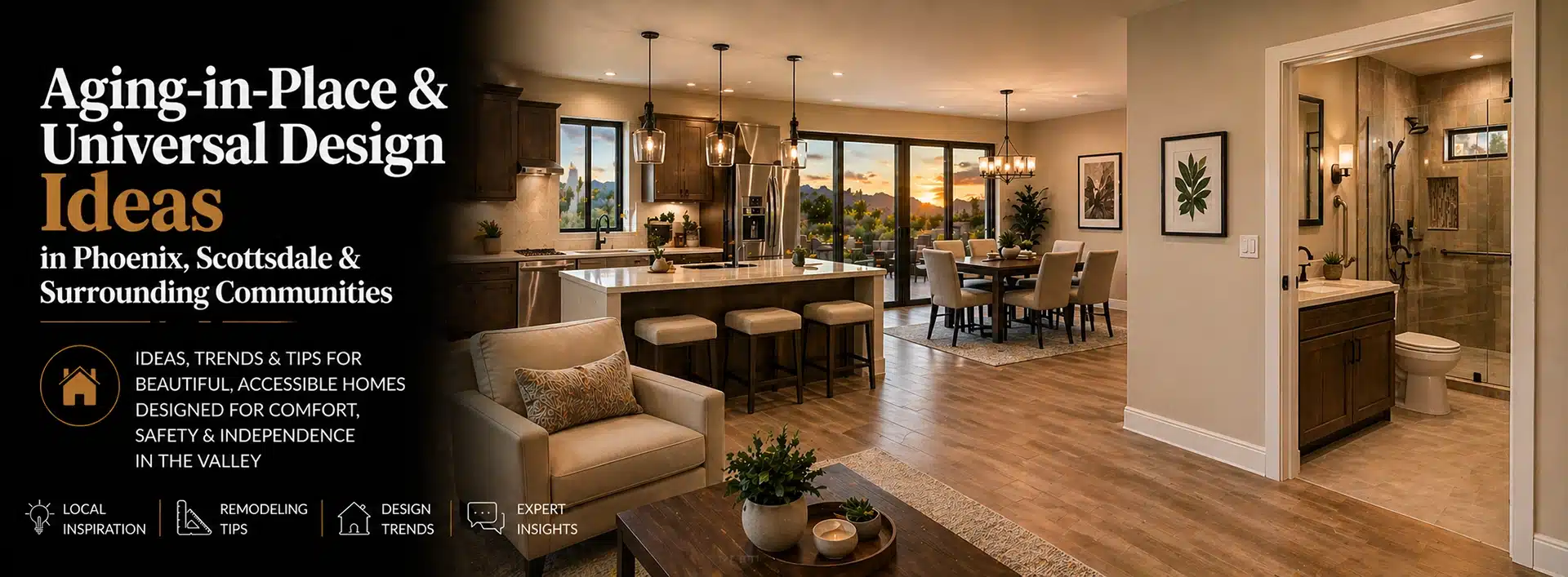
Aging-in-Place & Universal Design Ideas in Phoenix, Scottsdale & Surrounding Communities
Designing Homes That Continue to Work as Life Changes
Most homeowners don’t begin a remodel thinking about aging in place.
They begin with something more immediate. A bathroom that feels difficult to use. A kitchen that doesn’t quite support daily routines. A layout that requires more effort than it used to.
Over time, those small frustrations start to point toward a larger idea: the home should adapt to you—not the other way around.
In Phoenix, Scottsdale, and surrounding communities, more homeowners are beginning to think about how their homes can continue to support them comfortably over the long term. Not in a way that feels clinical or restrictive, but in a way that feels natural.
At Homework Remodels, this approach is known as universal design. It’s not about making a home look different. It’s about making it work better—now and in the future.
If you’re starting to explore these ideas, understanding the Design-Build Remodeling Process can help you see how thoughtful planning turns into lasting comfort.
Why Homeowners Begin Thinking About Aging in Place
The shift usually happens gradually.
A step into a shower feels a little higher than it should. Reaching for items in a cabinet becomes less convenient. Navigating tight spaces begins to feel less intuitive.
Individually, these moments are small. But together, they change how a home feels to live in.
Rather than waiting for those challenges to become limiting, many homeowners begin making adjustments earlier—when they can approach the process thoughtfully instead of reactively.
That’s what makes aging-in-place remodeling different. It’s proactive, not urgent.
What Universal Design Really Means
Universal design is often misunderstood.
It’s sometimes associated with visible accessibility features or spaces that feel institutional. In reality, the goal is the opposite.
A well-designed home doesn’t draw attention to these changes. It simply feels easier to use.
Walkways feel more open. Showers feel easier to enter. Storage feels more accessible. Lighting feels more supportive. These improvements are subtle, but they change the daily experience of the home in meaningful ways.
When done well, universal design blends seamlessly into the architecture and design of the space.
Designing for Comfort Without Changing the Character of the Home
One of the most common concerns homeowners have is whether these changes will alter the look of their home.
The reality is that thoughtful design enhances the home rather than changing its identity.
In a Scottsdale home, that might mean maintaining a clean, refined aesthetic while improving usability. In a historic Phoenix neighborhood, it may involve preserving architectural character while subtly improving function.
The goal is never to introduce features that feel out of place. It’s to integrate improvements so naturally that they feel like part of the original design.
Bathrooms That Are Easier to Use Every Day
Bathrooms are often the first place where homeowners notice the need for change.
Stepping over a high tub edge, navigating a tight shower, or working within a cramped layout can become more challenging over time.
A well-designed bathroom addresses these issues in a way that feels natural.
Showers become more open and easier to enter. Layouts allow for better movement. Storage becomes more accessible. Lighting improves visibility without feeling harsh.
These changes don’t just prepare the home for the future—they improve daily comfort right now.
If you’re considering this type of update, exploring Bathroom Remodeling can help you see how these ideas come together.
Kitchens That Support the Way You Move and Work
Kitchens are another area where universal design can have a significant impact.
The way a kitchen is used involves movement, reach, and coordination. When those elements are supported by thoughtful design, the space becomes easier and more enjoyable to use.
This might involve adjusting counter heights, improving access to storage, or creating a layout that allows for smoother movement between work areas.
Like the bathroom, these changes are often subtle—but they make a noticeable difference over time.
Open Layouts and Ease of Movement
In many homes, layout plays a major role in how easy the space is to navigate.
Tight hallways, narrow doorways, and segmented rooms can make movement feel more difficult than it needs to be. Opening up these spaces can create a sense of ease that improves both function and comfort.
This doesn’t necessarily mean removing every wall. It means creating a layout that allows for smoother transitions between spaces.
If you’re considering this type of change, you can explore Open Concept Remodeling Ideas to see how layout transformations improve flow.
Planning for Long-Term Living Without Compromise
One of the most important aspects of aging-in-place design is planning for flexibility.
A home that works well today should continue to work as needs change. That doesn’t require predicting every future scenario—it simply means creating a space that can adapt over time.
This might involve planning for future modifications, selecting materials that are durable and easy to maintain, or designing spaces that can be used in different ways as life evolves.
The goal is to create a home that remains comfortable without requiring major changes later.
Understanding What’s Possible in Your Home
Every home presents a different starting point.
The layout, structure, and age of the home all influence what can be done and how changes are implemented. Some homes may require structural adjustments to improve flow, while others may benefit from more subtle refinements.
Understanding those possibilities early is one of the most valuable parts of the process.
If you’re beginning to explore these ideas, Pre-Construction Planning is where those decisions begin to take shape.
Seeing These Ideas in Real Homes
Universal design is best understood through real examples.
Each home presents different challenges and opportunities, and seeing how those are addressed can help clarify what might be possible in your own space.
You can explore a range of projects in the Homework Remodels portfolio, where thoughtful design has improved both comfort and functionality across a variety of homes.
Aging-in-Place Design by Area
The way these ideas are applied often reflects the character of the surrounding community.
In Scottsdale, designs may emphasize openness, natural light, and seamless indoor-outdoor transitions. In central Phoenix neighborhoods, projects may focus on preserving architectural character while improving usability. Other communities may offer opportunities for more expansive layout changes.
If you’re exploring ideas in your area, you can see how these approaches are applied locally:
Why the Process Matters for Long-Term Design
Aging-in-place remodeling requires thoughtful coordination between design and construction.
The decisions made early in the process influence how well the final space performs over time. When planning and construction are aligned, the result is more cohesive and more durable.
A design-build approach brings these elements together from the beginning, helping ensure that the vision for the space translates effectively into the finished home.
If you’re comparing approaches, you can explore Design-Build vs Traditional Remodeling.
What a Home Designed for Long-Term Living Feels Like
When these ideas come together, the difference isn’t dramatic—it’s subtle.
The home feels easier to live in. Movement feels more natural. Everyday tasks require less effort.
It doesn’t feel like the home has been changed.
It feels like it has been refined.
Start Exploring Aging-in-Place Ideas with Clarity
If you’re beginning to think about how your home can better support you over time, the most valuable step is understanding what’s possible within your existing space.
With the right approach, these changes can feel seamless, natural, and aligned with the home you already love.
👉 Schedule your free consultation to begin exploring your aging-in-place and universal design ideas with clarity.