
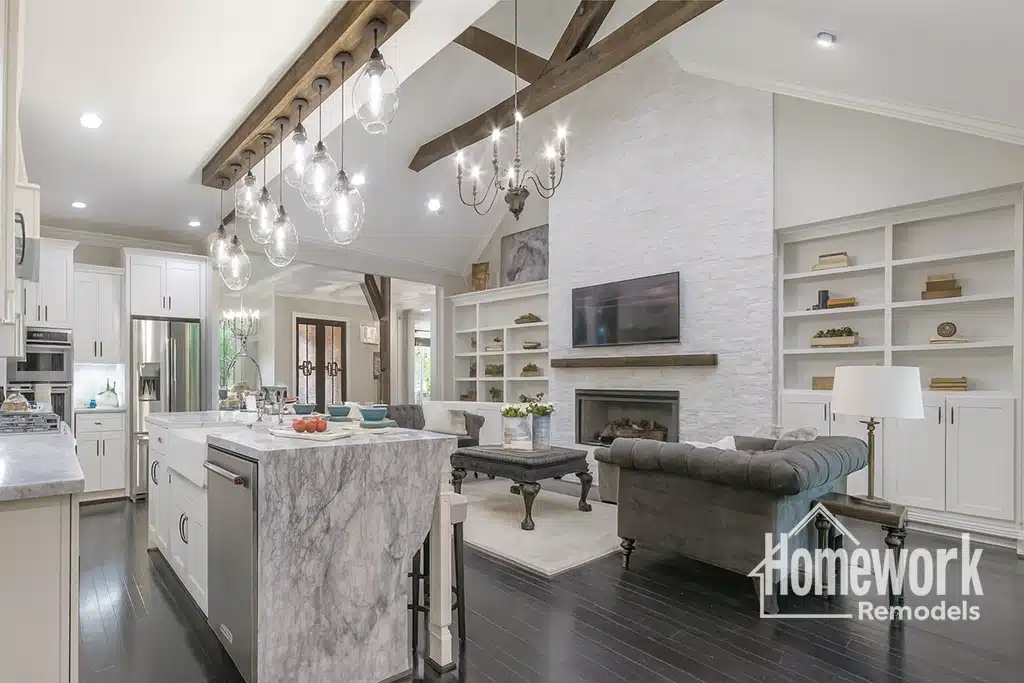
Many homeowners know they want to remodel—but not all at once. Budgets, schedules, family needs, and timing often point toward a multi-phase approach. In Scottsdale, where homes range from mid-century ranches to contemporary desert estates, phased remodeling is common. What’s less common is a strategy that keeps those phases aligned over time.
Multi-phase remodels succeed or fail based on coordination. Without a unifying plan, early decisions create obstacles later. Design-build simplifies multi-phase remodeling by treating the home as a single, evolving system rather than a series of unrelated projects.
Why Homeowners Choose Multi-Phase Remodeling
Phased remodeling is rarely about hesitation. It’s about realism.
Common reasons include:
- Budgeting improvements over time
- Living in the home during construction
- Aligning work with life transitions
- Testing changes before committing further
These reasons are valid—but they require foresight to manage well.
The Hidden Risk of Fragmented Phases
When each phase is planned independently, problems accumulate.
Typical issues include:
- New work conflicting with future plans
- Redundant demolition
- Inconsistent finishes and proportions
- Missed infrastructure opportunities
These inefficiencies cost more over time—even when phases feel smaller individually.
Design-Build Starts With the End in Mind
The defining advantage of design-build is holistic planning.
Instead of asking, “What are we doing now?” design-build asks:
- What does the home ultimately need to become?
- How will each phase support that vision?
- What should be prepared now—even if built later?
This perspective protects long-term outcomes while allowing short-term flexibility.
Master Planning Without Forcing Commitment
Design-build does not require building everything at once.
It allows homeowners to:
- Establish a long-range plan
- Prioritize phases logically
- Adjust timing without losing alignment
A clear master plan becomes a reference point—not a rigid schedule.
Infrastructure Planning Is Where Phases Win or Lose
Many of the most expensive mistakes in phased remodels involve infrastructure.
Design-build planning anticipates:
- Electrical capacity upgrades
- Plumbing routing
- Structural reinforcement
- HVAC zoning
Preparing infrastructure early—even if finishes wait—prevents costly rework.
Structural Decisions Have Long Tails
Structural changes ripple through future phases.
Removing or altering structure without a long-term plan can:
- Limit layout options later
- Require additional engineering
- Increase future costs
Evaluating needs early—sometimes including options like removing load-bearing walls safely—keeps later phases feasible rather than constrained.
Consistency Without Monotony
Phased remodels often struggle with visual consistency.
Design-build addresses this by:
- Establishing material and proportion guidelines
- Planning transitions between old and new
- Avoiding trend-driven decisions that age quickly
Consistency doesn’t mean sameness. It means cohesion.
Budget Clarity Across Phases
Design-build improves financial clarity by showing how decisions today affect costs tomorrow.
Homeowners gain insight into:
- Which upgrades save money later
- Where postponement increases cost
- How scope shifts impact future phases
This transparency supports smarter timing decisions.
Living in the Home While Remodeling
Phased remodels are often chosen to minimize disruption.
Design-build sequencing can:
- Group disruptive work efficiently
- Protect finished areas
- Reduce repeated inconvenience
Planning phases around daily life—not just construction logic—improves livability throughout the process.
Adapting as Life Changes
One reason homeowners hesitate to plan far ahead is uncertainty.
Design-build accommodates change by:
- Designing flexible layouts
- Allowing phased decisions within a stable framework
- Adjusting scope without losing direction
Flexibility works best when anchored by intention.
Avoiding the “Patchwork House” Effect
Homes remodeled over time can feel disjointed.
Patchwork results from:
- Inconsistent ceiling heights
- Mismatched finishes
- Awkward transitions
Design-build prevents this by coordinating proportions and transitions from the start—even if construction spans years.
Kitchens and Baths as Phased Anchors
Kitchens and bathrooms often anchor phased remodels.
Design-build planning ensures:
- Early decisions don’t block future layouts
- Plumbing and electrical upgrades are future-ready
- Finishes selected early won’t clash later
This foresight protects both function and aesthetics.
Permitting and Long-Term Planning
Permits obtained in isolation can limit future phases.
Design-build teams anticipate:
- How current permits affect future scope
- When to bundle approvals
- How to avoid re-review
This strategy saves time and reduces uncertainty.
Energy and Comfort Improvements Over Time
Whole-home comfort upgrades are often phased.
Design-build planning allows:
- Insulation and air-sealing strategies to align
- HVAC improvements to scale logically
- Energy efficiency gains to compound
Comfort improves progressively rather than unevenly.
Communication Reduces Decision Fatigue
Multi-phase remodels involve many decisions over time.
A design-build relationship provides:
- Continuity of understanding
- Reduced relearning at each phase
- A shared design language
This continuity reduces fatigue and increases confidence.
When Design-Build Is Especially Valuable
Design-build is particularly effective for:
- Whole-home remodels planned over years
- Homes with structural complexity
- Families expecting changing needs
The more interconnected the phases, the greater the benefit.
Clarity Turns Phases Into Progress
Phased remodeling doesn’t have to feel uncertain.
With design-build, each phase:
- Advances a clear vision
- Protects future options
- Builds toward a cohesive whole
Progress becomes cumulative—not corrective.
Let’s Plan Your Remodel for Today—and Tomorrow
If you’re considering a multi-phase remodel and want a clear plan that adapts over time without wasted effort, design-build can make the difference. You can schedule a free consultation with our design-build team to discuss phased remodeling strategies for your Scottsdale home.