
Phoenix, Arizona
A Kitchen Made for Entertaining
A raised ceiling, open views, and a quartz seating peninsula connect this kitchen to the rooms around it—while preserving a layout that already worked.
Residential Kitchen $60,001–$100,000
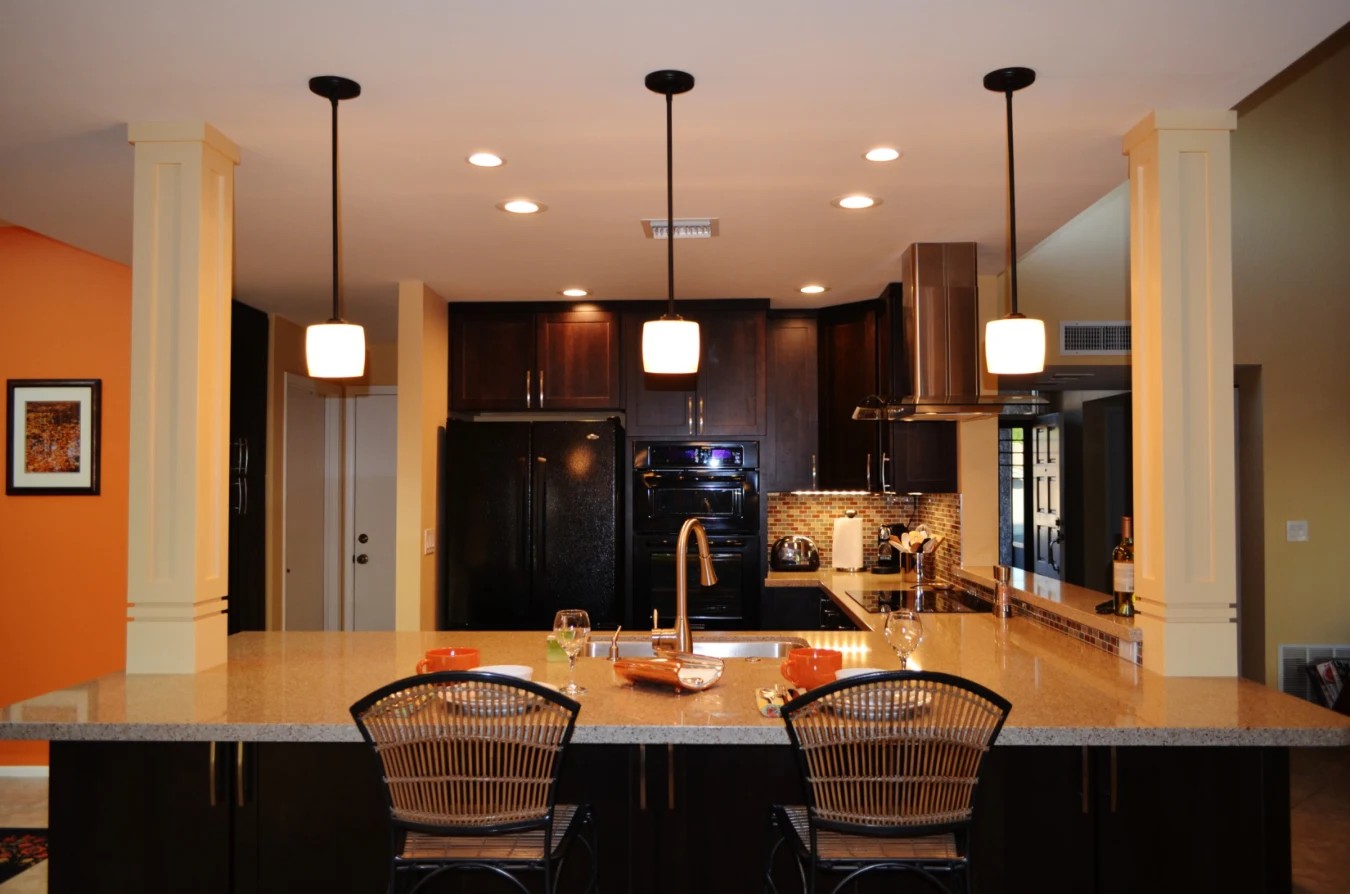
The homeowner had wanted to open her boxed-in kitchen since moving into the house. The kitchen’s working layout was useful; the walls and low ceiling were the problem.
This open-concept kitchen remodel in Phoenix began with a specific wish list: raise the ceiling, open the kitchen to the living and sitting areas, add dark cabinetry that complemented the furniture, and bring more daylight into the dining room. The existing tile floors and most of the newer appliances would stay.
The finished space makes those choices visible. Espresso-stained maple cabinets frame the work areas. Three pendants mark the seating peninsula. Views extend through the kitchen into adjoining rooms, with full-height posts carrying the structural support the new openings require.
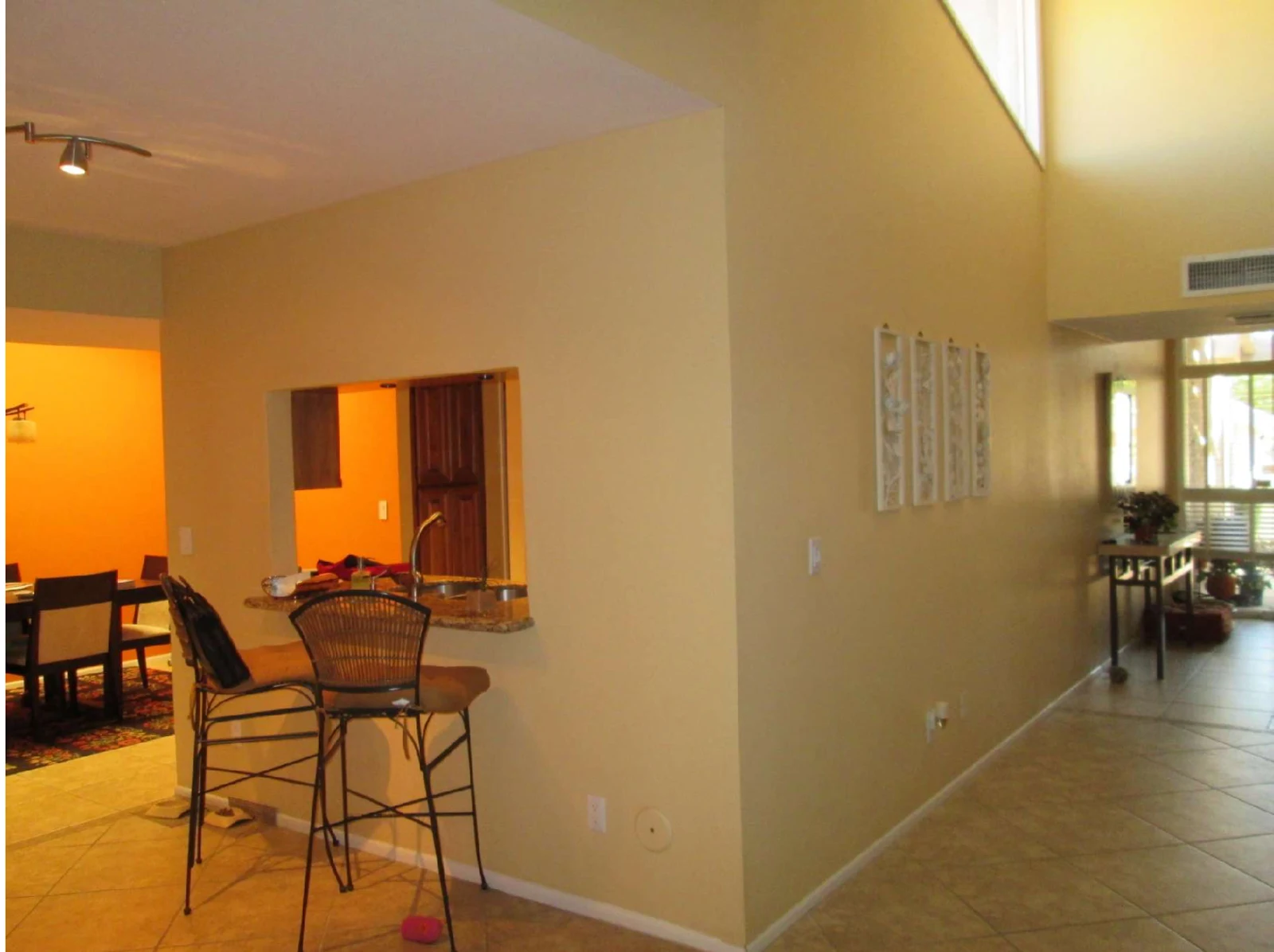
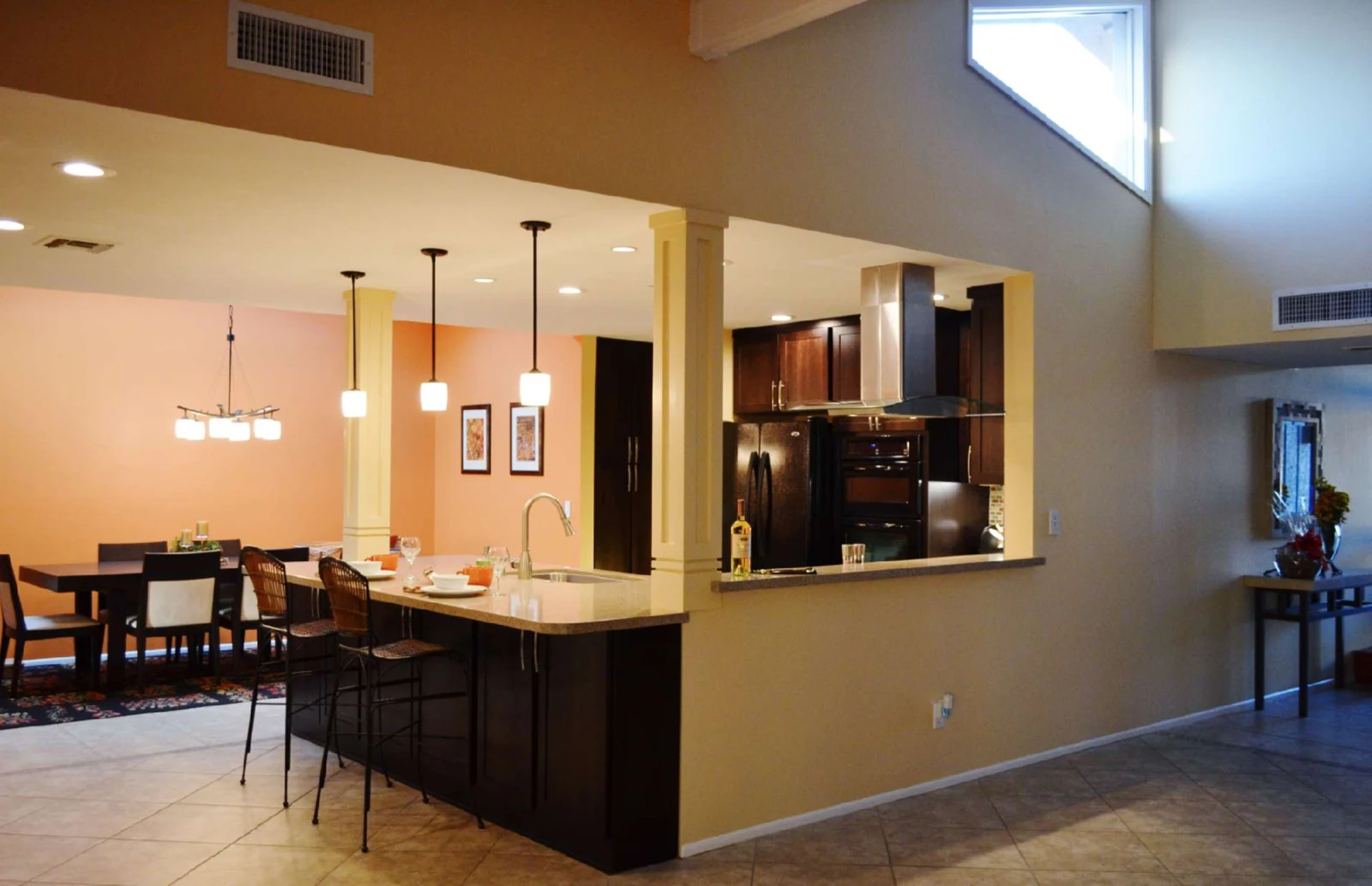
Before & after
Keeping the kitchen’s function, changing its connection
The original walls separated the kitchen from the surrounding living spaces. Dropped soffits made the ceiling feel lower and concealed the ductwork that would need to move.
Rather than relocate every work area, the design kept the useful cooking layout and opened two enclosing walls from counter height to the new ceiling. A peninsula with an overhang gives guests a place to sit close to the kitchen without occupying the preparation area.
Design before construction
Planning the openings, support, and light together
An exploratory opening in the hall soffit helped the team determine that the ceiling could rise to eight feet. The designer then developed alternative space plans with the homeowner, balancing the desired openness with cabinet storage and the roof-support requirements.
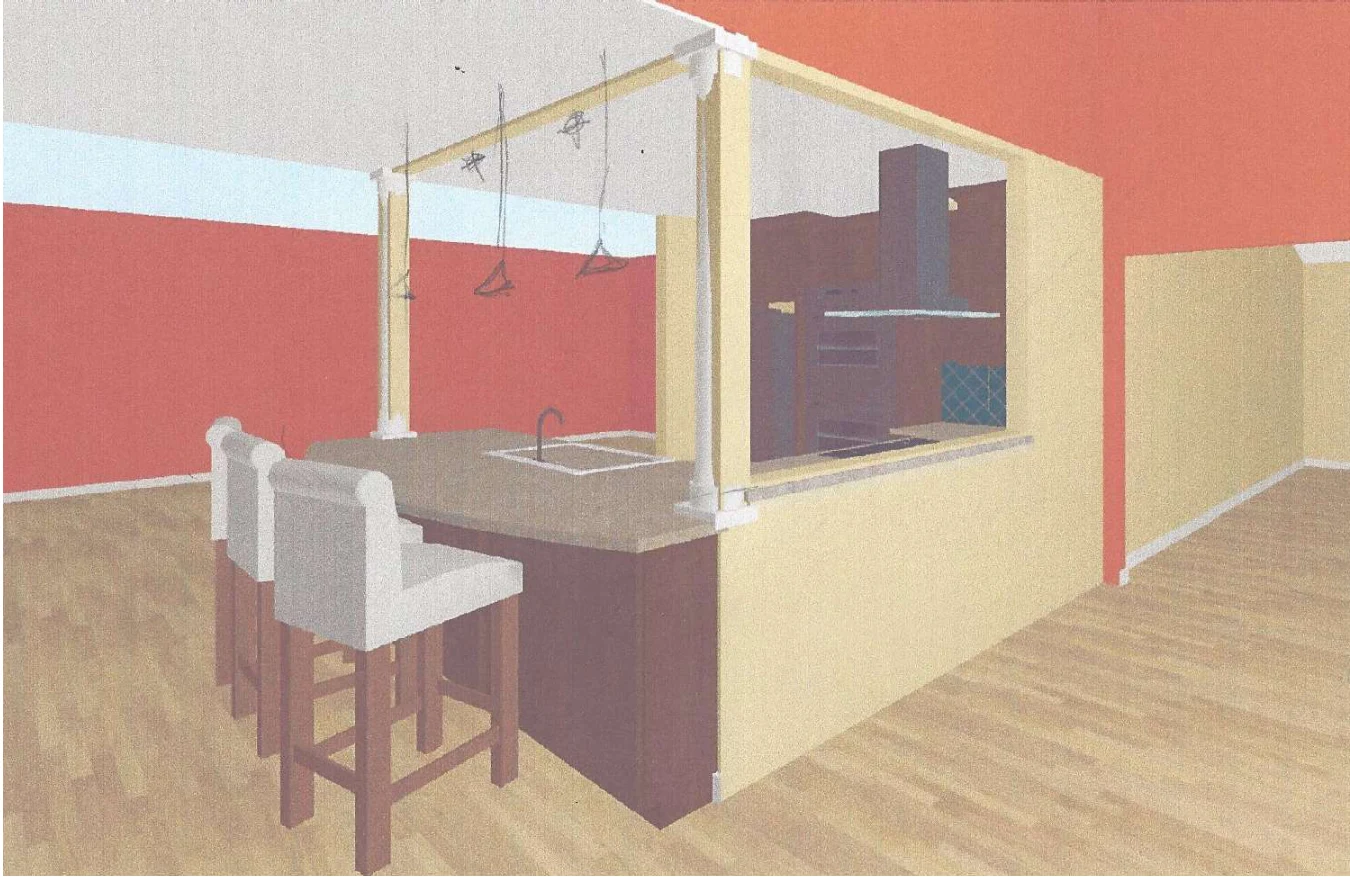
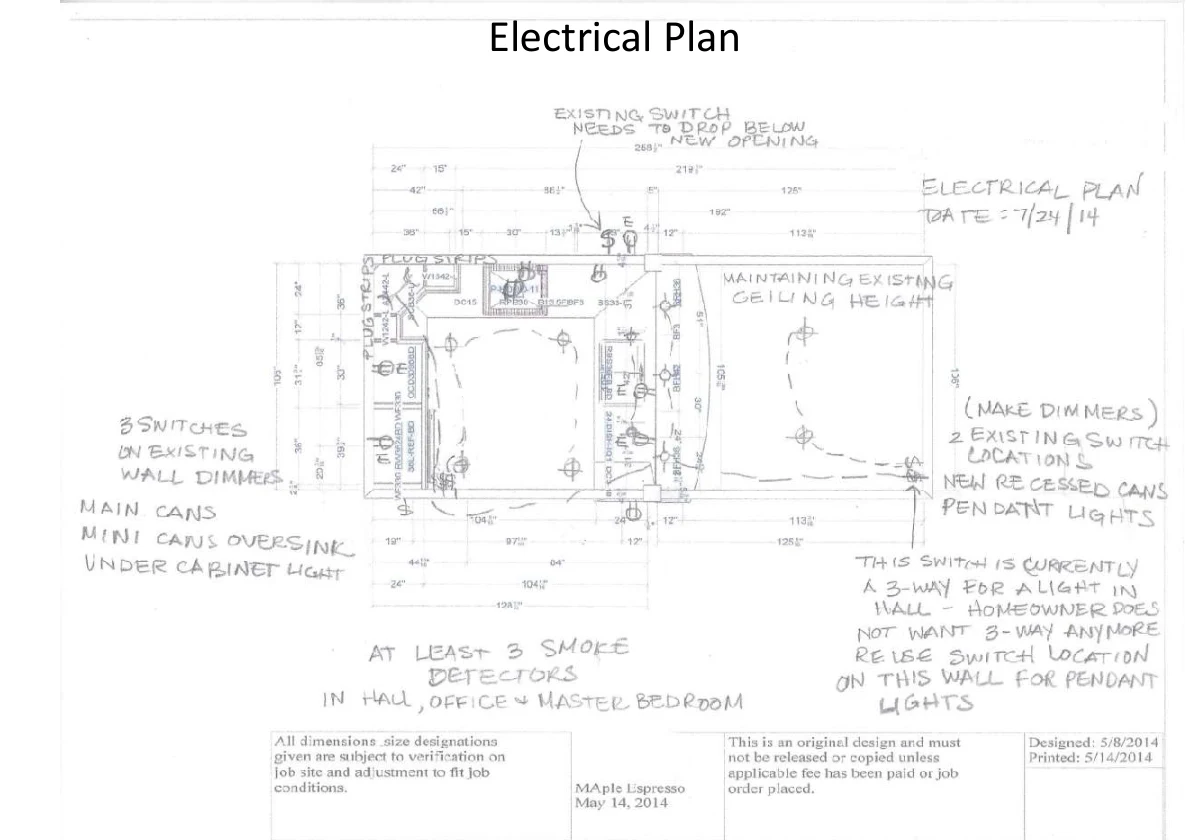
Chief Architect perspectives and 20-20 cabinet drawings made the proposal easier to discuss. The planning work also included an electrical layout, cabinet elevations, countertop drawings, and post details. The illustration below shows the proposed relationship between the peninsula, openings, and full-height supports; it is a design drawing, not a completed-project photo.
What the walls revealed
An unexpected roof condition changed the structural work
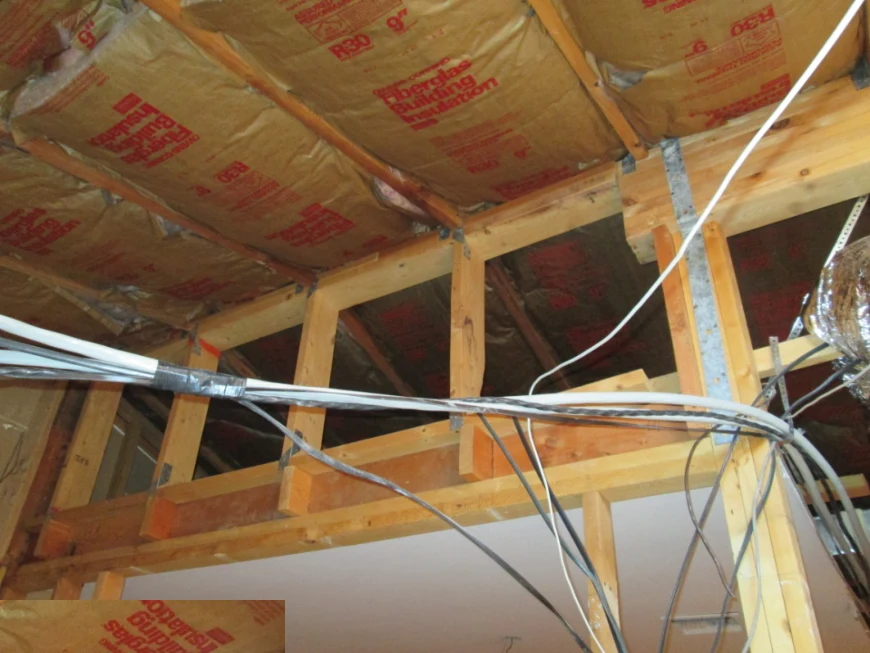
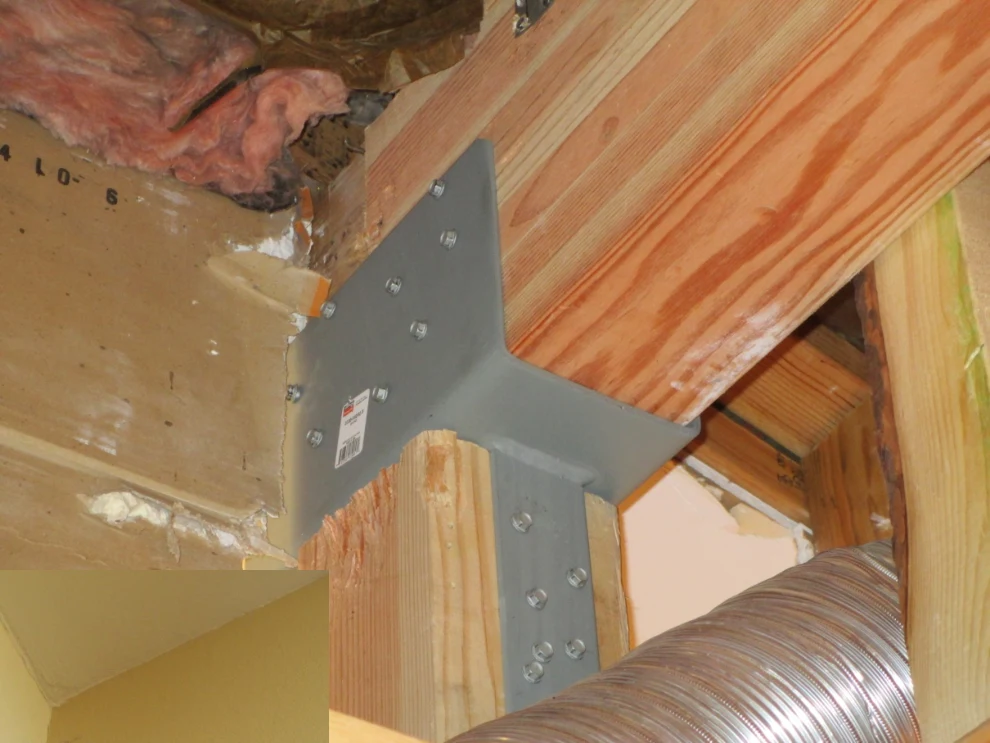
Once demolition exposed the framing, the project manager found that the central roof support differed from the construction anticipated in the plans. The team brought the structural engineer and framers into the investigation before continuing with the openings.
The engineer coordinated the revised support details with the City inspector. A glue-laminated beam, larger six-inch-square posts, and specified metal connections became part of the completed support system. Temporary walls held the roof while the existing members were removed and the new work was installed.
That discovery affected the schedule and required additional work. The project manager kept the homeowner informed as the team addressed the condition, coordinated inspections, and incorporated the supports into the new kitchen openings.
Cabinetry & finishes
Espresso maple, light quartz, and glass mosaic
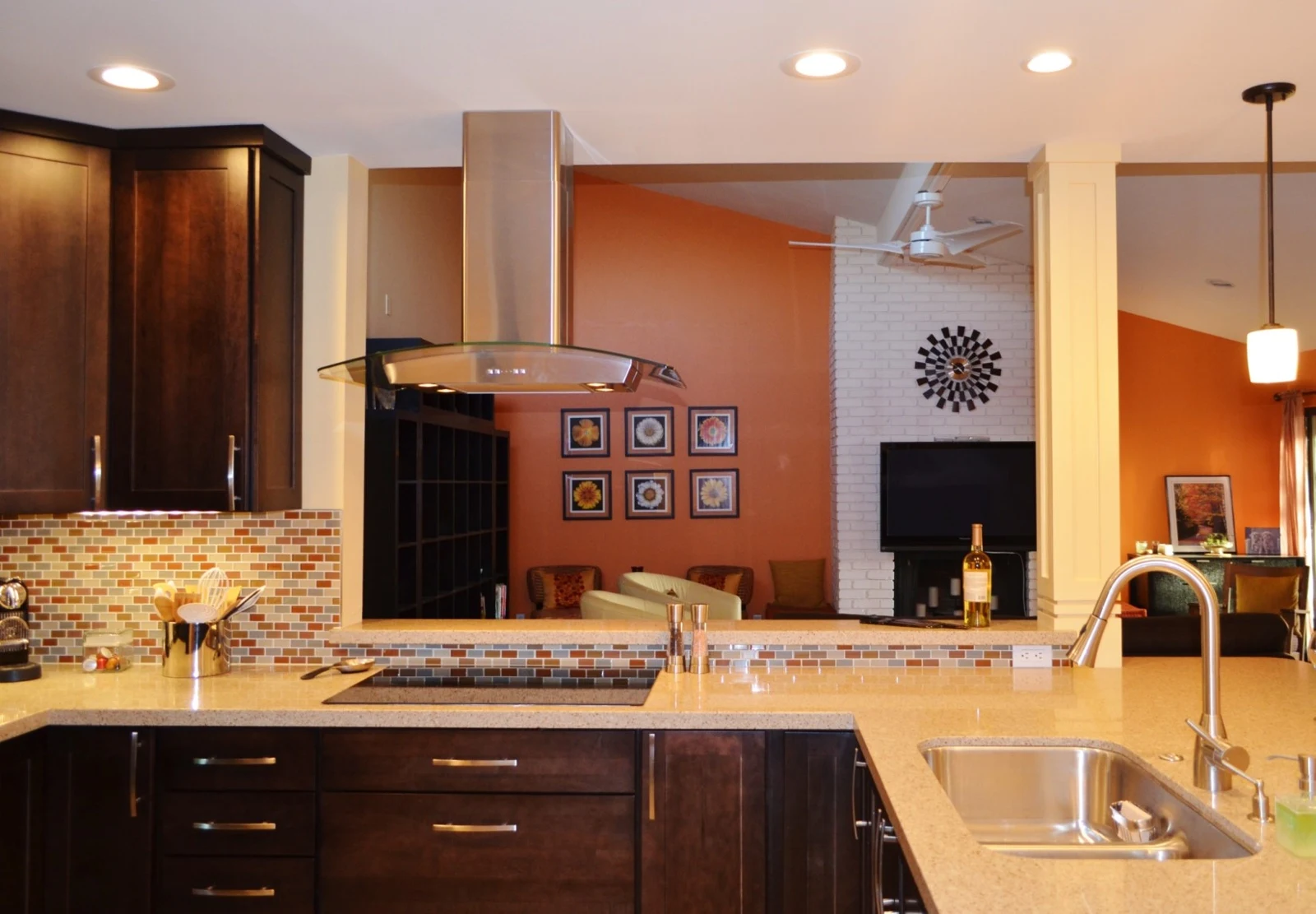
The homeowner wanted the kitchen to relate to the furniture and colors she already loved. Espresso-stained maple cabinetry provides the dark finish she requested. Light-toned quartz counters have a consistent pattern with a small touch of orange, connecting the work surfaces to the surrounding palette.
A multicolored glass mosaic backsplash adds detail at the counters. Above the new cooktop, a glass-and-stainless-steel peninsula hood allows views to continue through the opening. Most of the newer appliances were retained, while the cabinetry and finishes changed around them.
The wall cabinets rise to 39 inches, taking advantage of the revised ceiling area. The tile floor remains continuous through the kitchen and nearby rooms.
Ceiling & lighting
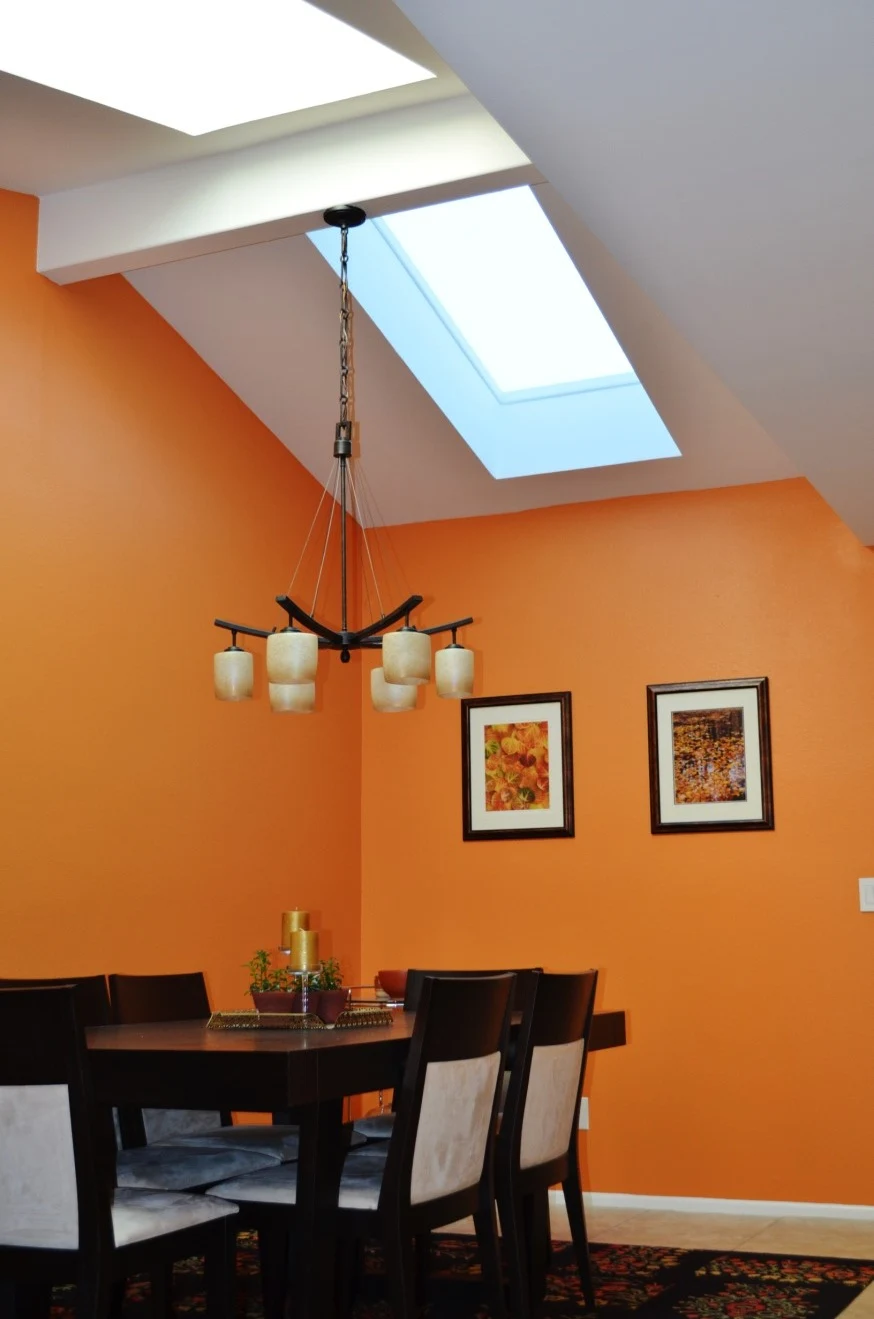
More headroom, with light for different parts of the day
Raising the ceiling required more than removing the soffits. The existing metal ductwork was taken out, and new flexible ductwork was routed over the exterior wall headers. Insulated roof enclosures and a new plenum formed part of the solution.
The lighting plan gives each area a role. Three pendants illuminate the peninsula and echo the dining fixture. Dimmable recessed lights serve the sink, with larger recessed fixtures at the kitchen corners and the walkway behind the seating.
Undercabinet plug strips keep outlets out of the glass backsplash and give small appliances convenient connections. In the dining room, replacement skylights add daylight beside the newly opened kitchen.
Remodeling an occupied home
Protecting the floors and separating the work area
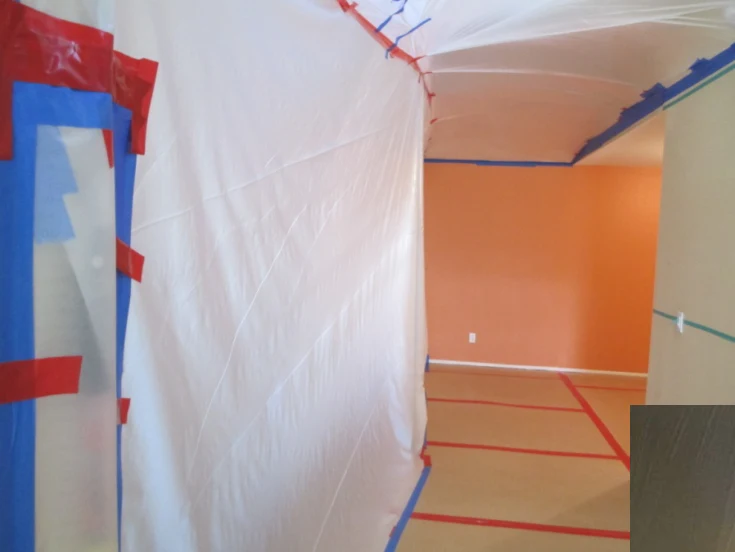
The homeowner worked from home and planned to stay through most of the renovation. Before demolition, the project manager installed plastic barriers with zipper access and two industrial air scrubbers. Floor protection covered the tile that would remain.
The temporary enclosure separated the work zone from occupied areas until the new wall textures were ready to be applied. Removed materials were sorted for recycling, reuse, or donation where possible. Some lumber used for temporary support was reused in the new openings.
Finishing the project also meant matching three existing wall textures and returning to the original paint manufacturer for color formulas when stored samples did not produce a satisfactory match.
The completed renovation
Room for guests, with the working kitchen still in place
The transformation comes from the relationship between spaces: a higher ceiling, open views above the counters, daylight beside the kitchen, and seating where guests can gather. The existing floors and useful appliance layout remain part of the result.
This project earned a 2016 NARI CotY award in the Residential Kitchen $60,001–$100,000 category. The historical award category is not a statement of current remodeling prices.
Planning an open-concept kitchen remodel in Phoenix?
Begin with what should stay as well as what should change. A kitchen may need better connections to adjoining rooms without needing every appliance moved. Ceiling construction, ductwork, structural loads, and lighting all help determine what the finished space can become.
Explore our kitchen remodeling services and open-concept remodeling guide. Learn how our design-build process coordinates the work, or use The Path to Remodeling Clarity™ to organize your early decisions.
Plan Your Kitchen Remodel with Homework Remodels
Tell us what feels closed off, how you cook and entertain, and which parts of your home you want to retain. We’ll begin with a conversation about your goals and the possibilities for your space.