
Willo Historic District · Phoenix, Arizona
A childhood home,
renewed for the years ahead
A 1935 historic home renovation brought a couple back from Scottsdale to the house where the husband grew up.
Behind its familiar brick walls, years of deferred maintenance called for careful reconstruction and a new approach to everyday comfort.
2026 NARI of Greater Phoenix
Remodeler of the Year — GOLD
Residential Historical Renovation/Restoration
$250,000 and Over
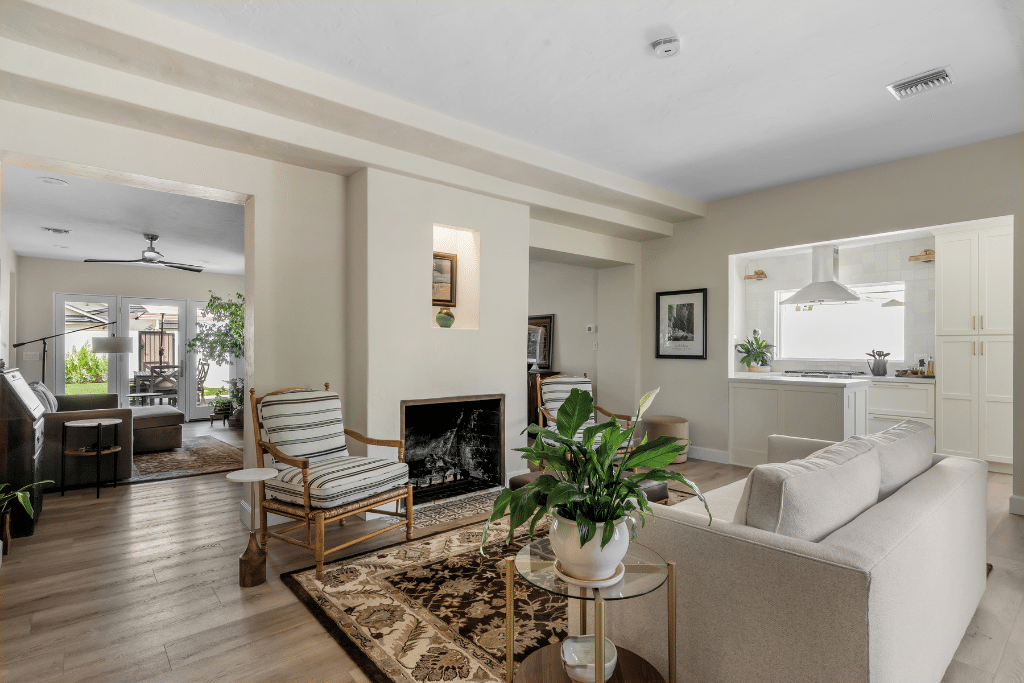
For these homeowners, the move to Willo was a homecoming.
The husband had grown up in this house. Now, he and his wife wanted to leave Scottsdale and make it their home together, close to longtime friends and nearby grandchildren. That family connection gave the renovation a purpose that reached well beyond updating finishes.
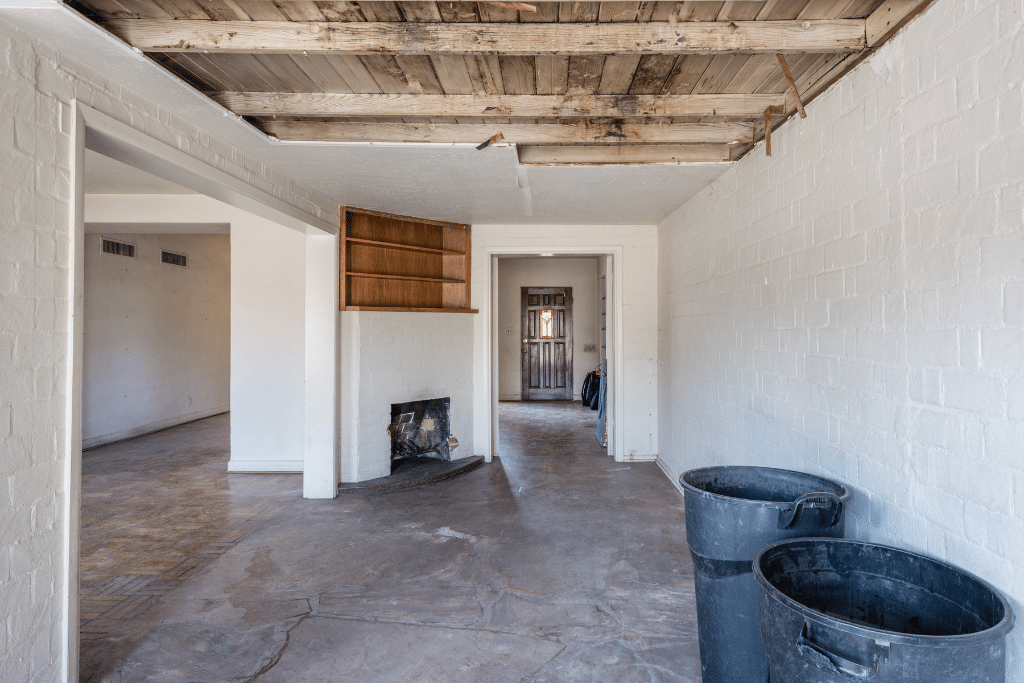
When we first met the homeowners, the house stood vacant after years as a rental. Roof leaks, aging utilities, and alterations made at different times had taken their toll. In the rear den, water damage had caused the ceiling to collapse.
Our task was to prepare the home for their next chapter while keeping the features that made it familiar: its brickwork, stained glass, and distinctive interior detailing. The work would reach from the foundations of a former porch to new ductwork in the attic.
The home they returned to
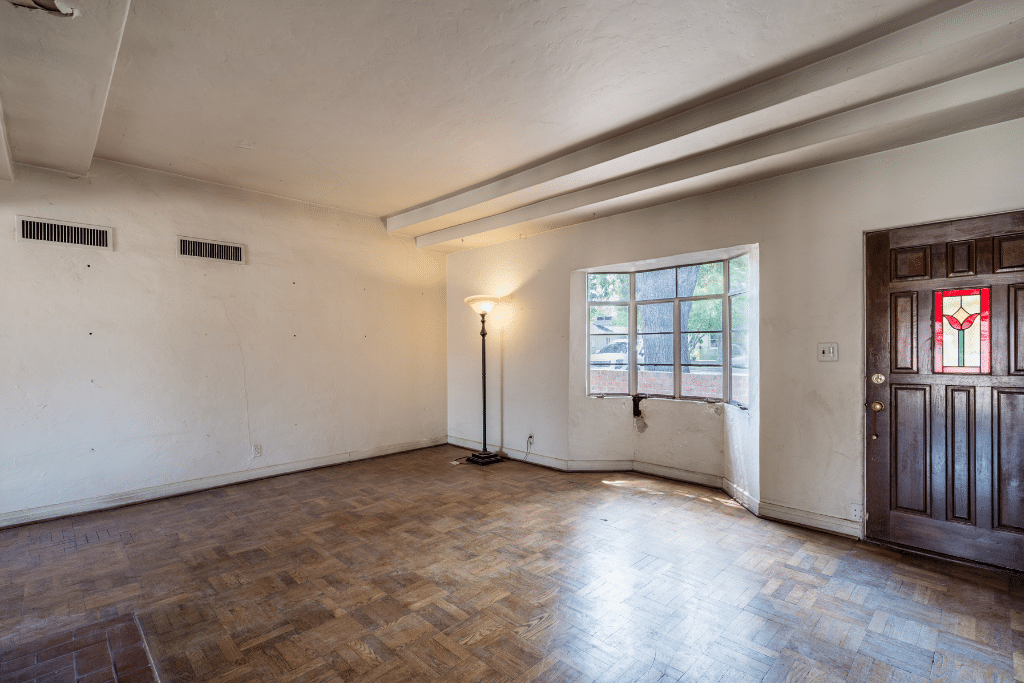
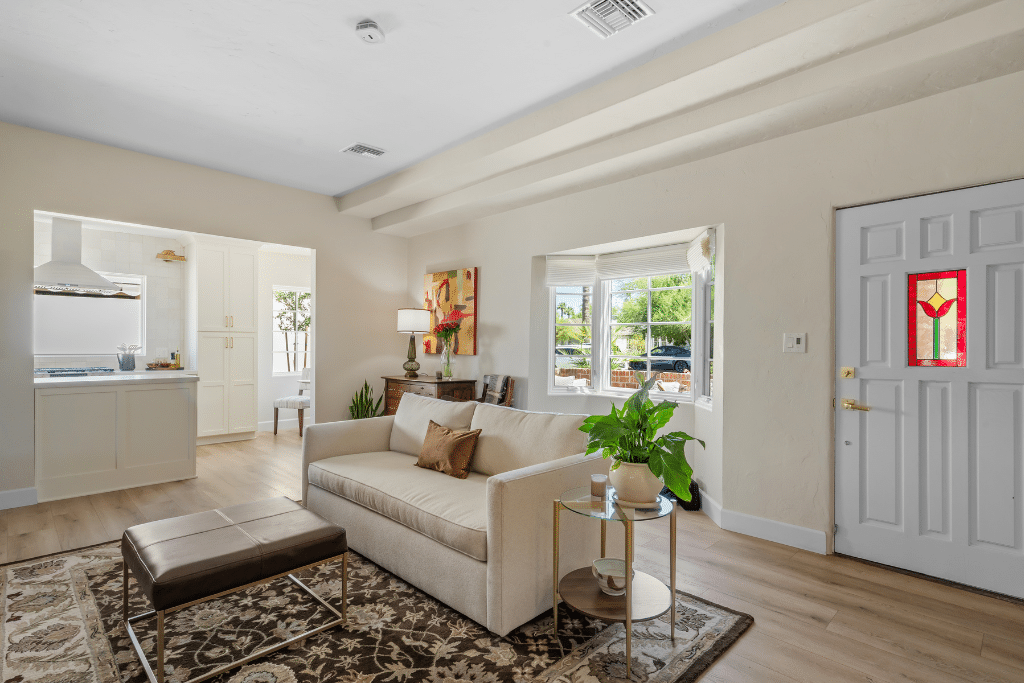
Character worth keeping.
Problems that needed attention.
The stepped ceiling detail and original front door still gave the living room its identity. Yet worn finishes and an enclosed kitchen made the interior feel disconnected. The renovation needed to improve how the rooms worked together while respecting their scale.
Reconstructing the den
A former porch becomes a proper part of the home
The den’s problems began with the way the space had originally been built. It had been a porch, with flagstone laid without a concrete slab underneath. Its roof sat lower than the adjoining rooms and sloped across the space. Years later, a severe leak brought down the ceiling.
We removed the flagstone and poured a new concrete floor and footings for the exterior walls. The work also included rebuilding two water-damaged exterior walls and removing the roof section. New roof framing allowed us to raise the ceiling to a height similar to the adjoining dining room and route air-conditioning ducts into the den.
The connection between the rooms deserved the same attention. We removed the trim around the dining room opening and plastered the double-brick opening to resemble the home’s other interior doorways. The finished room now relates to the surrounding architecture, with the structure and conditioned air it needed beneath and above the visible finishes.
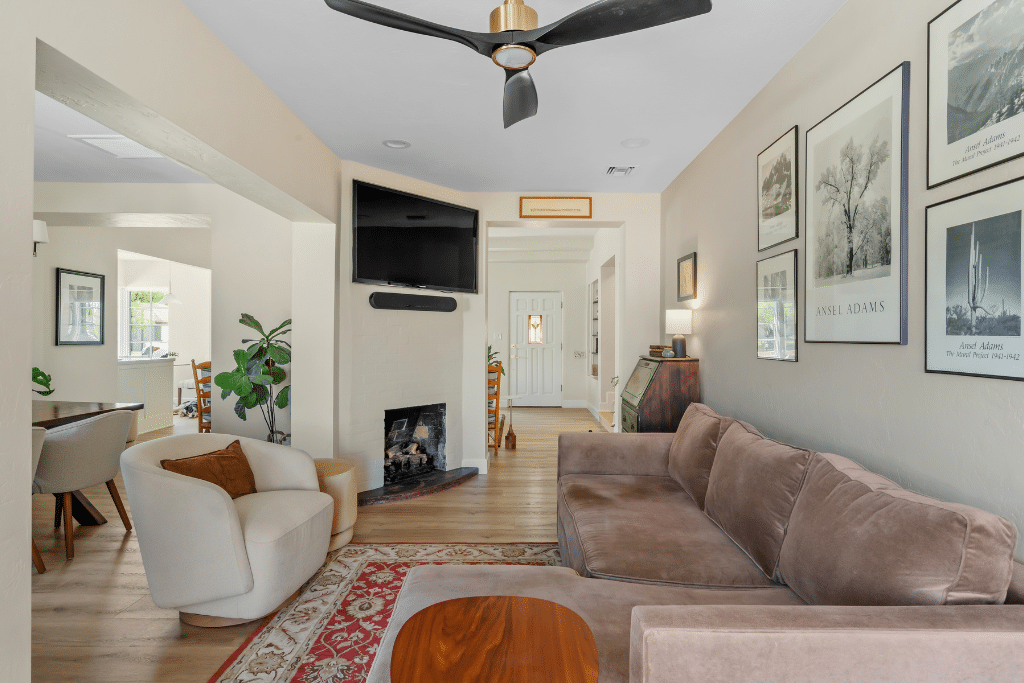
Kitchen and living spaces
A more useful kitchen, with room to stay connected
The galley kitchen needed better storage and a stronger connection to the living room. Opening the dividing wall and introducing a peninsula created additional work surface and a place to gather without abandoning the kitchen’s compact footprint.
Tall cabinetry takes advantage of the new ceiling height. Glass cabinet doors and open shelves soften the long cabinet run, while the garden window brings daylight to the cooking area. Crown molding and restrained finishes keep the new work in conversation with the older interior.
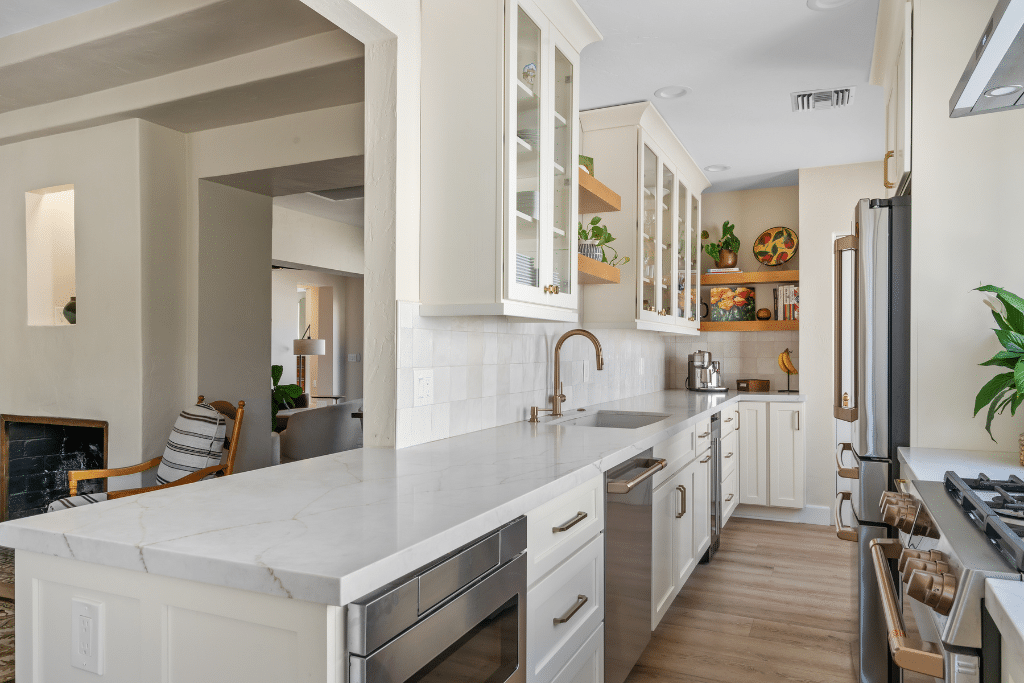
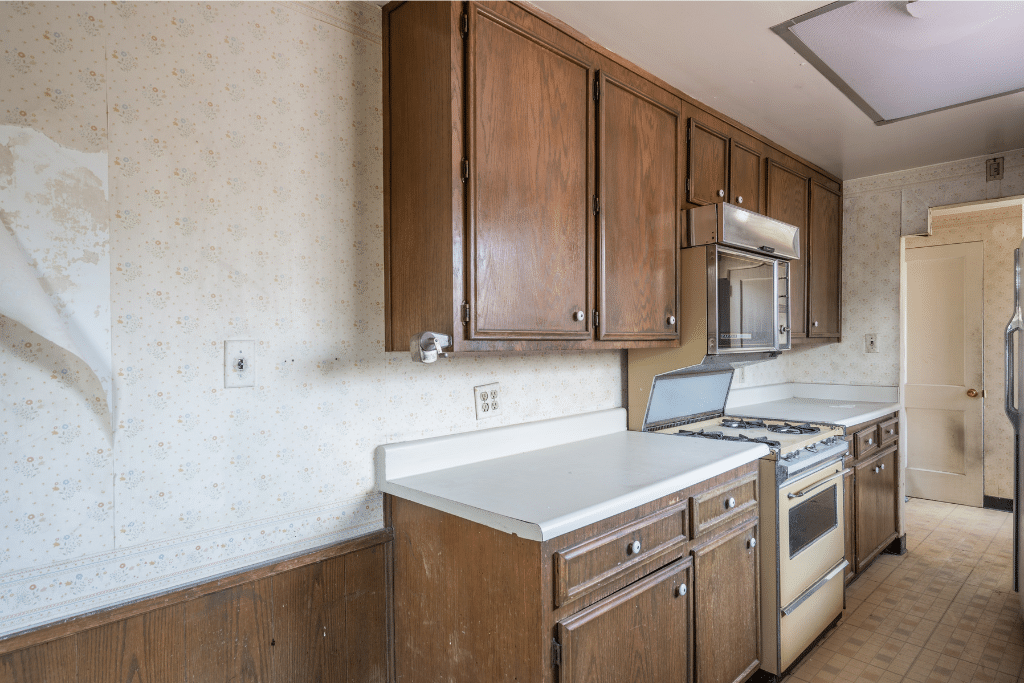
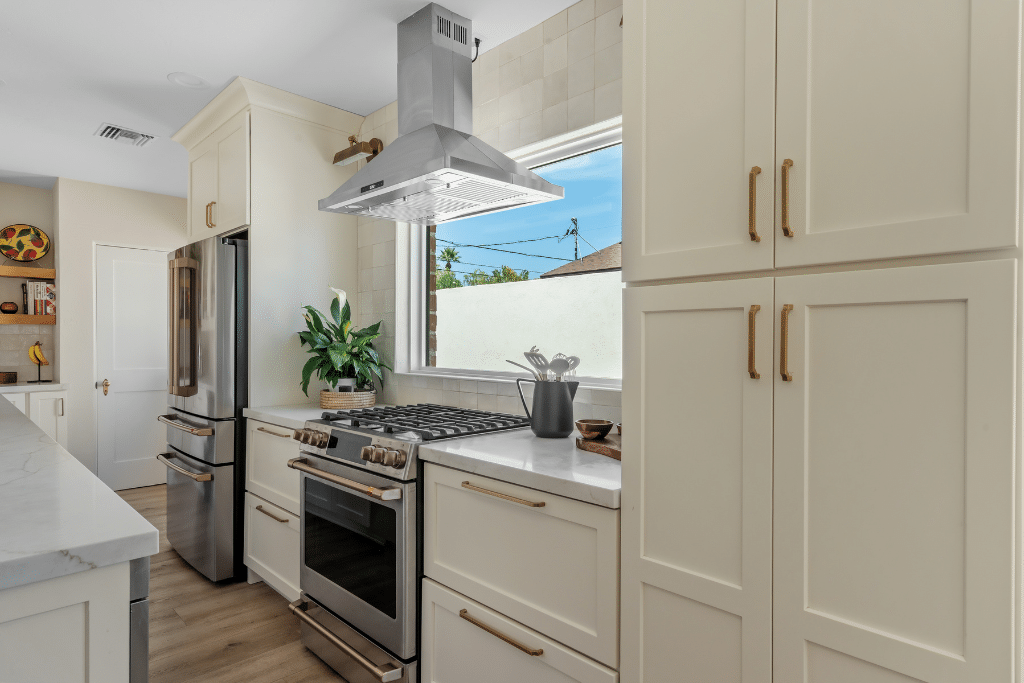
“I am surprised, I have never been able to store so much in a kitchen.”
Homeowner comment recorded in the project’s award entry
The floor difference hidden by the wall
Opening the kitchen to the living room revealed a construction detail that had been easy to miss: the kitchen floor was higher. We overlaid the lower living room floor with plywood before installing the new flooring, resolving the difference where the spaces now connected.
Elsewhere, the home required a different repair. Original oak flooring on the west side sat over a crawl space. On the east side, parquet covered concrete, except in the dining room, where a basement meant the floor was wood-framed. Structural damage in that dining room floor required repair before the finish work could proceed.
Why the underlying work mattered: Creating a new opening changed how the rooms met. Understanding the floors beneath them was part of making that connection work.
Comfort throughout the home
A new HVAC plan after a revealing discovery
Our original plan was to replace the existing air-conditioning unit in the basement. Once we removed it, we found that it relied on the home’s original under-floor ducting. Those ducts were neither airtight nor efficient enough for the new system.
Replacing equipment alone would have left that distribution problem in place. Instead, we moved to a roof-mounted unit and installed new ductwork in the attic. Adjustments to soffits and ceiling cavities allowed us to bring conditioned air to rooms that needed it while keeping the new runs integrated with the interior.
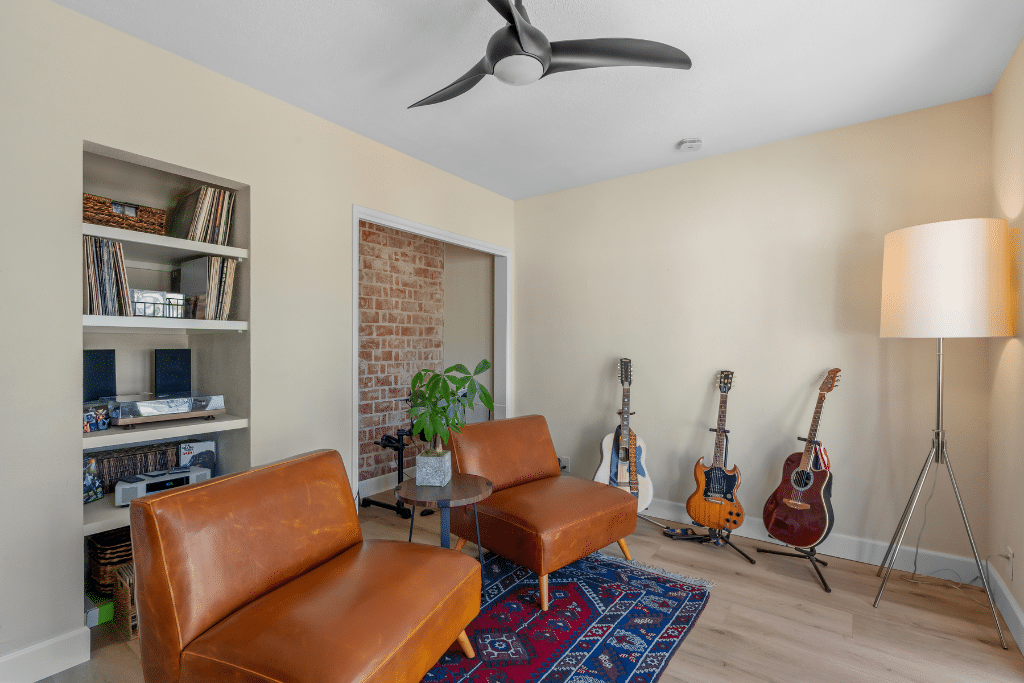
The music room made the improvement especially tangible. An earlier addition, it had depended on a window AC unit. We extended supply from the attic into that room, bringing it onto the home’s central system. The reconstructed den also received new supply ductwork through its new roof framing.
Electrical service and deteriorated plumbing required attention as well. The renovation included a new electrical panel and replacement drain and supply lines serving the kitchen, bathrooms, and indoor laundry.
Living here for the long term
An accessible primary suite with the home’s character intact
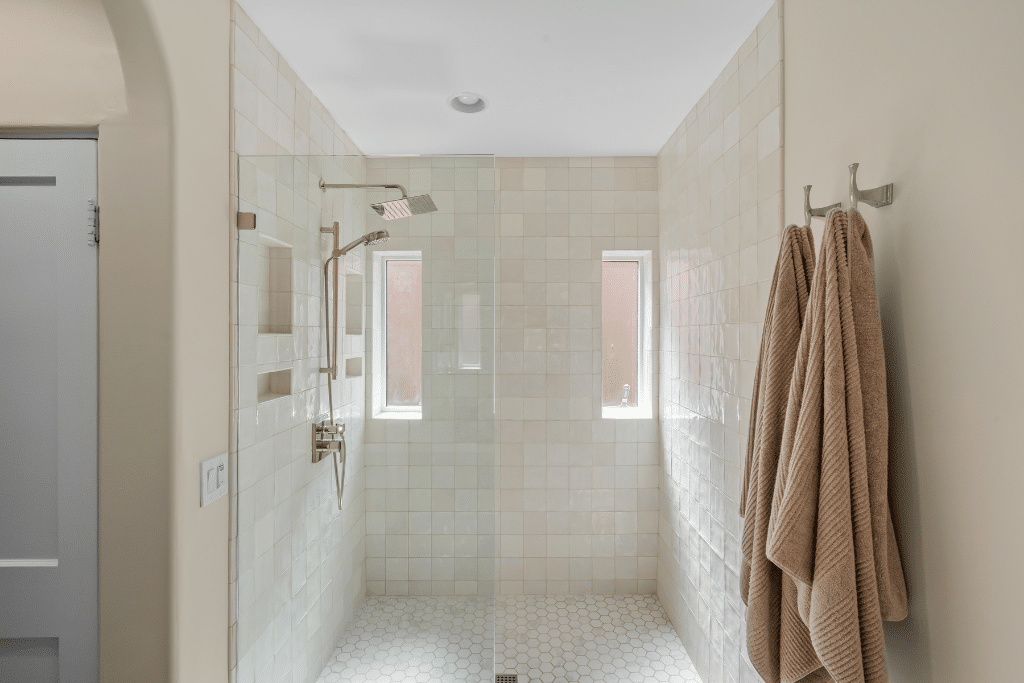
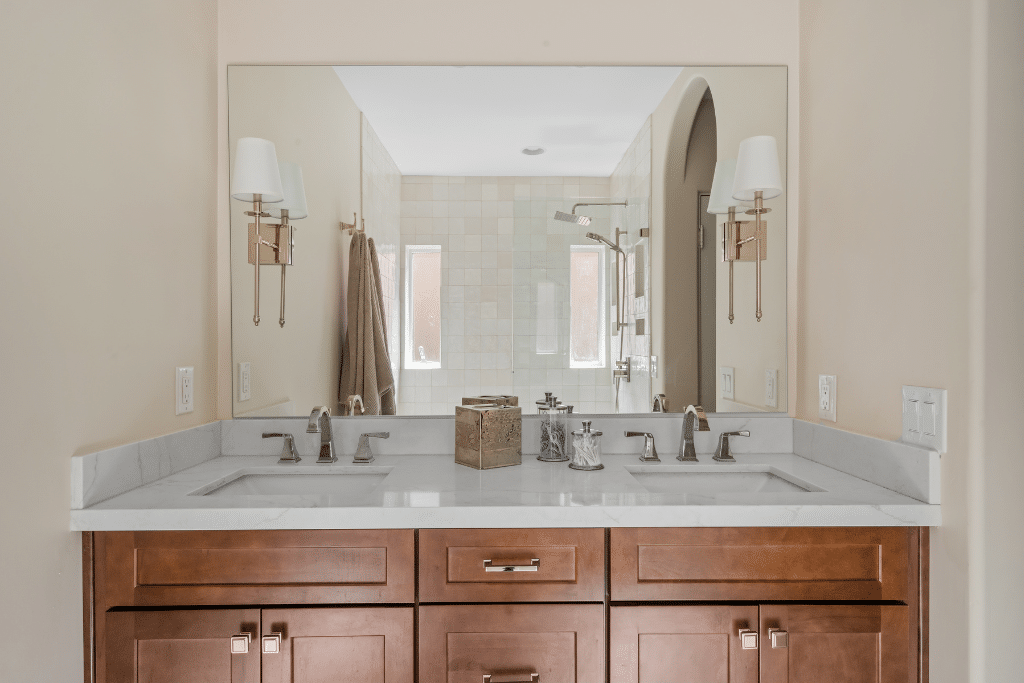
The homeowners wanted the primary suite to support their needs over time. We closed the bathroom’s hall entrance and reorganized access from the bedroom through the closet, using arched openings that suit the historic interior.
Relocating the shower created room for a curbless entry. We also enlarged the water closet and changed its access, installed a double vanity, and added task lighting. These layout decisions made accessibility part of the room’s design from the beginning.
Details that carry the history
The small things still belong
The original front door and stained glass remained. The milk door and letter slot survived the renovation, too. Restoring these features kept everyday reminders of the home’s past within the renewed spaces.
Outside, deteriorated bay-window framing required reconstruction to support the replacement windows. Brickwork received cleaning and repointing, with original brick reused where possible. New window grid patterns echo the historic appearance.
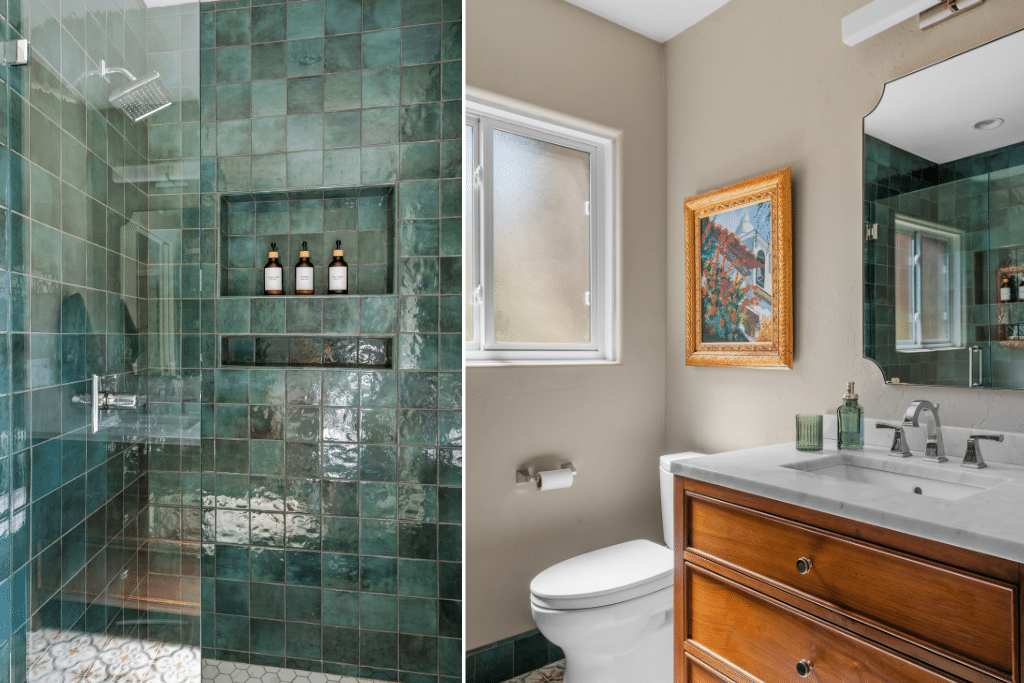
The guest bathroom carries that same sensitivity into new finishes. Green tile and a Spanish Colonial-inspired floor pattern introduce color without making the room feel unrelated to the house.
Making the rest of the property useful again
The project extended beyond the main living spaces. Indoor laundry improved daily convenience. French doors linked the music room to the backyard, and the detached garage regained its purpose as a two-car garage after earlier alterations had compromised its usefulness.
Rebuilt garage-door framing, new doors and hardware, and renewed stucco addressed deterioration while bringing the outbuilding back into practical use. Together, these changes prepared the property for the homeowners’ move home.
A homecoming, built to last
The familiar house, ready for a different life
The completed renovation lets the couple return to a home with a deep family connection and use it in a new way. The kitchen opens to the living room. The former porch functions as an integrated den. The music room receives central air, and the primary suite supports easier movement.
Much of the work that made those changes possible is concealed: new footings, repaired floor framing, corrected floor elevations, and attic ductwork. The visible result still belongs to this 1935 brick home.
Project recognition: 2026 NARI of Greater Phoenix Remodeler of the Year — GOLD, Residential Historical Renovation/Restoration $250,000 and Over.
Planning a renovation for your older home?
This project shows why an older home’s structure and systems deserve attention alongside the design. Explore our approach to coordinating that work, or begin with the planning questions in The Path to Remodeling Clarity™.
Award-Winning Home Remodeling Services
If your older home needs a more useful layout, structural repairs, or a coordinated renovation, tell us what you want to preserve and what you need to change. We’ll begin with a conversation about your home and your goals.