
Historic Phoenix Master Bathroom Remodel
Preserving Historic Character While Redefining Comfort and Accessibility
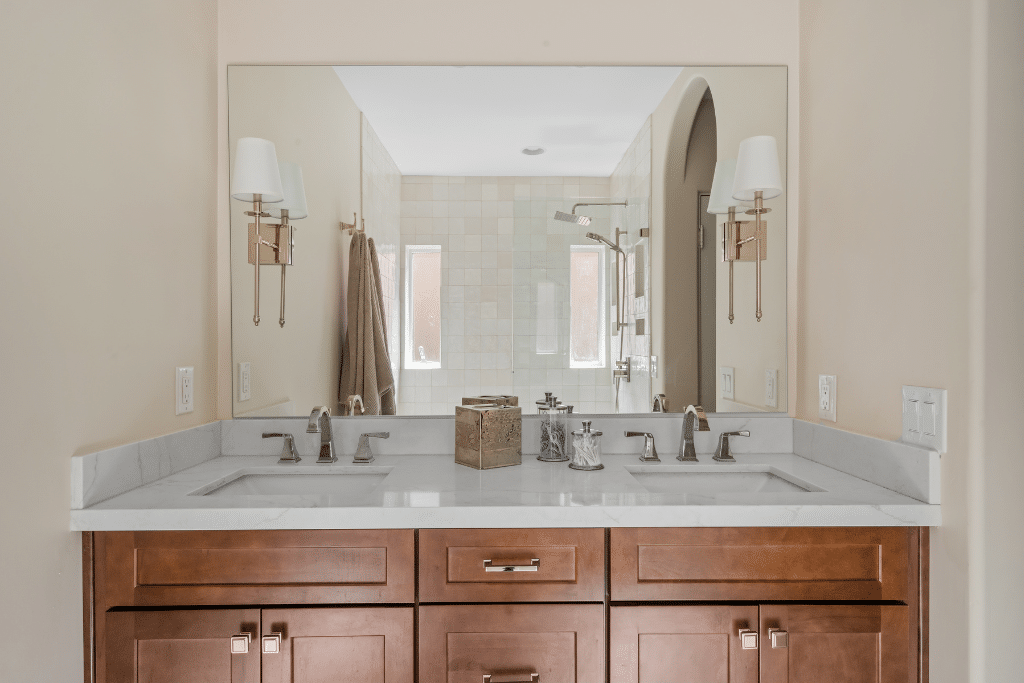
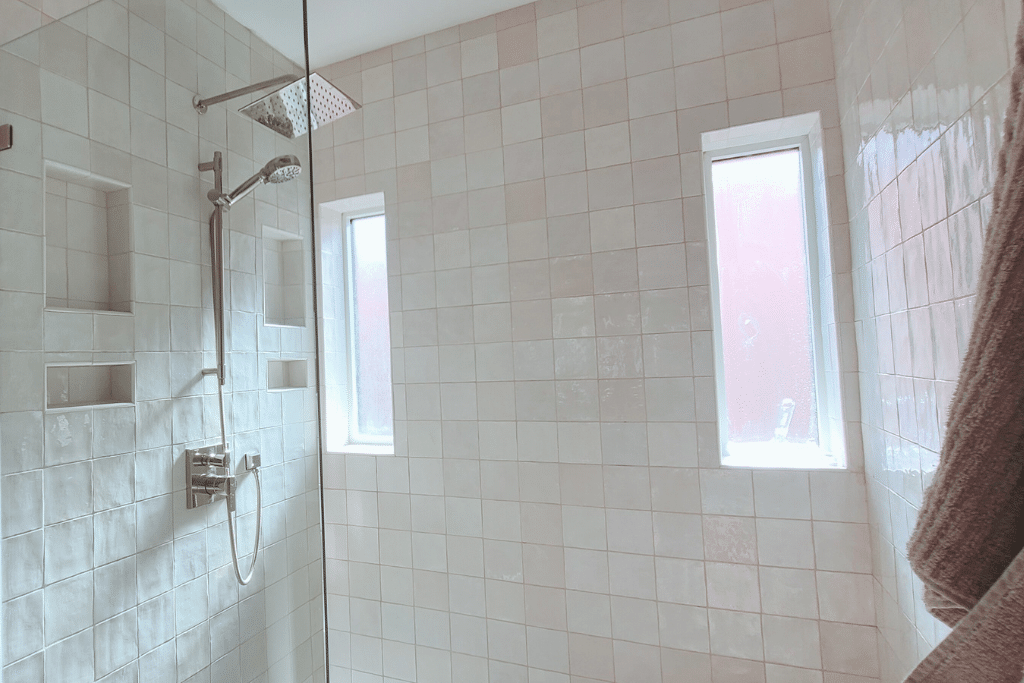
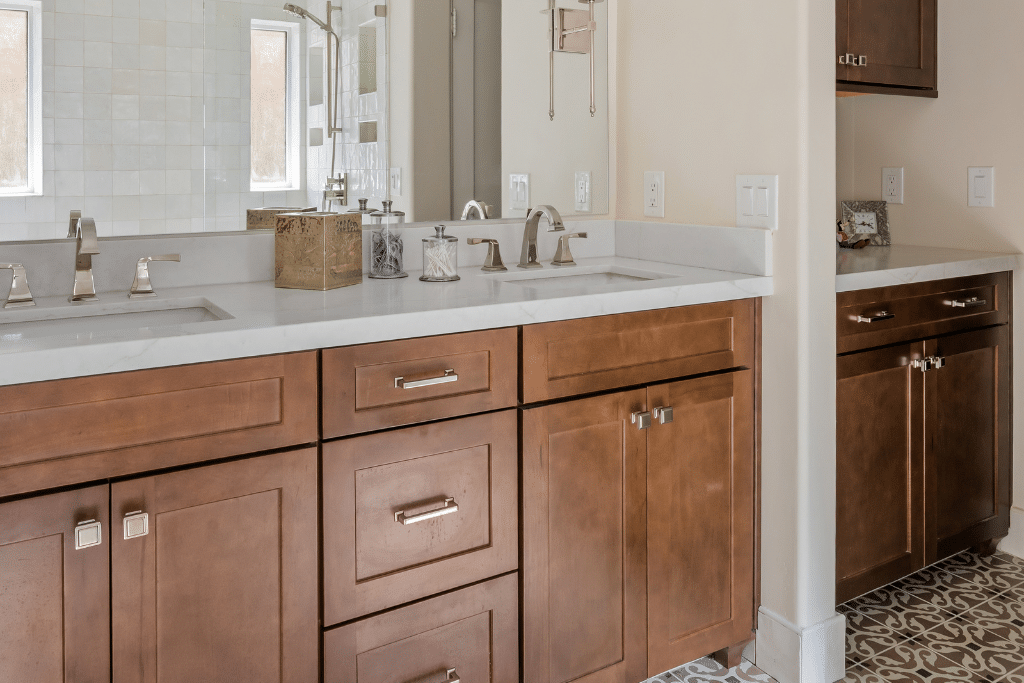
A Historic Bathroom Reimagined for Modern Living
The most successful historic home remodels preserve the character that makes a home special while carefully adapting it for the way people live today.
For these homeowners, the goal was never to erase the past. Instead, they wanted to transform an outdated and inefficient master bathroom into a luxurious, highly functional retreat that respected the home’s original Spanish-Colonial architecture while improving comfort, accessibility, and everyday usability.
The original bathroom presented several challenges common in older historic Phoenix homes. The layout felt cramped and disconnected, circulation between spaces was awkward, storage was limited, and aging systems no longer supported modern expectations. Existing plumbing, underground HVAC routing, outdated fixtures, and inefficient spatial organization prevented the room from functioning comfortably for long-term living.
At the same time, the homeowners wanted the finished space to feel authentic to the home’s architectural heritage—not like a modern bathroom inserted into a historic structure.
The solution required far more than cosmetic updates.
This project became a carefully coordinated design-build bathroom remodel focused on reimagining flow, accessibility, craftsmanship, and structural performance while preserving the timeless character of the original home.
Creating a Master Suite That Feels Open and Connected
One of the most transformative aspects of the remodel involved improving circulation throughout the master suite.
Rather than relying on traditional compartmentalized spaces, the redesigned layout introduced a series of arched openings connecting the vanity area, shower, water closet, and master closet. These transitions immediately softened the space architecturally while creating a much more natural movement pattern throughout the suite.
The arches became one of the defining visual elements of the remodel.
They reinforce the home’s Spanish-Colonial heritage while simultaneously improving openness and functionality. The result feels cohesive and intentional, allowing each area of the suite to remain connected without sacrificing privacy or organization.
In many historic homes, remodeling success depends on understanding how architecture influences experience. Here, the new openings dramatically improved both.
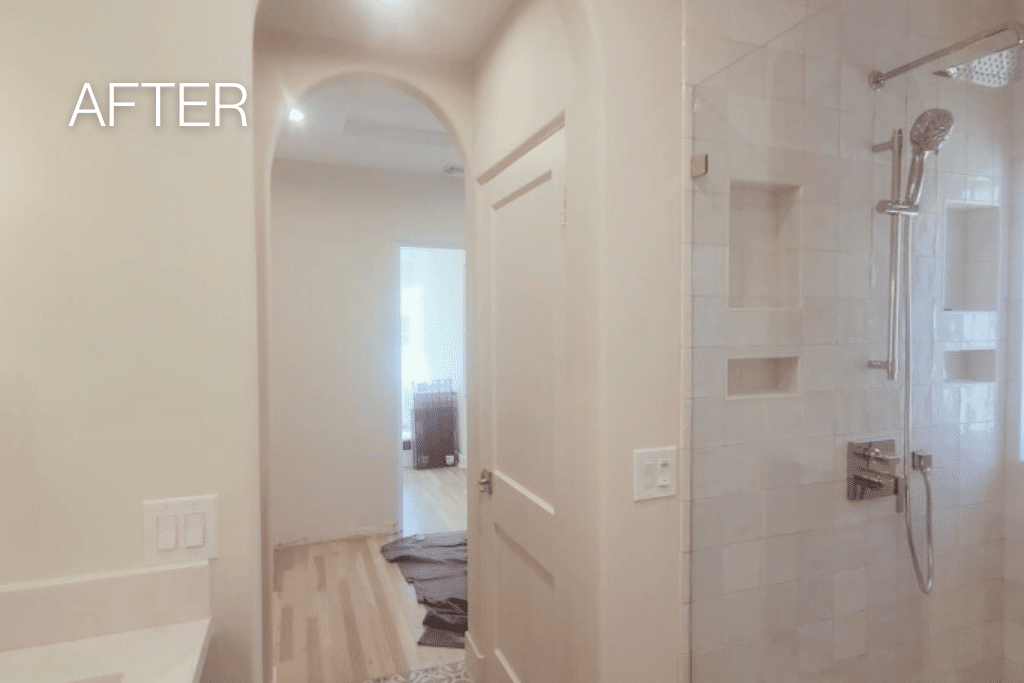
A Curbless Shower Designed Around Accessibility and Luxury
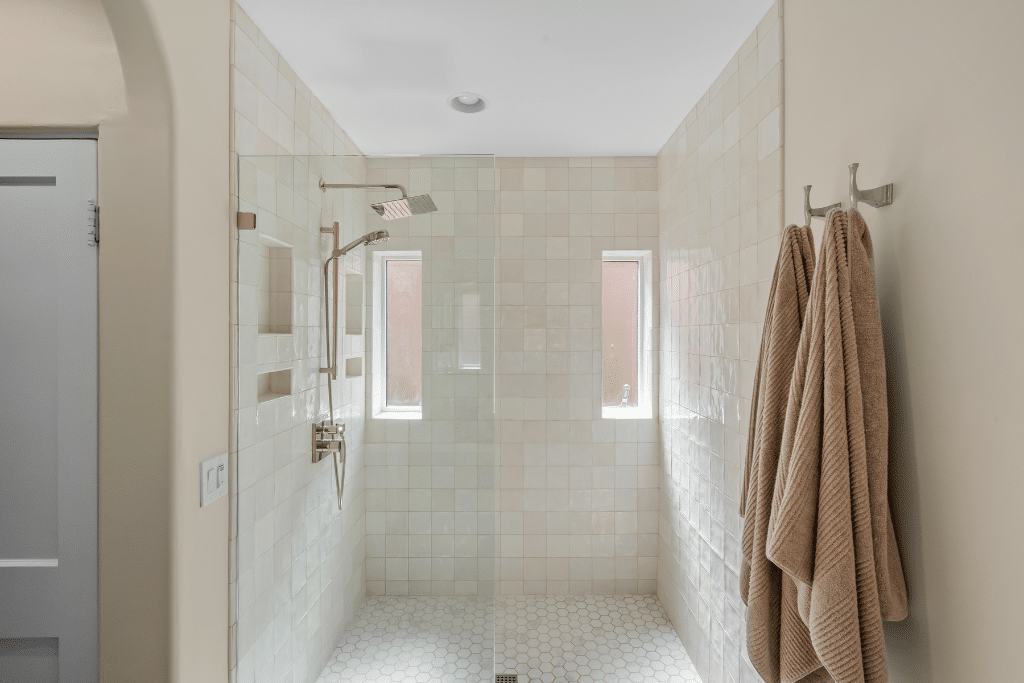
The centerpiece of the remodel is the expansive curbless shower.
Designed to support both present comfort and future accessibility, the shower combines barrier-free entry, refined craftsmanship, and subtle historic detailing into one integrated feature.
Natural light enters through newly added privacy windows, creating a bright and calming atmosphere while maintaining privacy. The shower walls are finished with handcrafted-inspired Zellige tile in soft ivory tones, introducing texture and warmth without overwhelming the room.
Dual recessed wall niches align symmetrically with the windows, reinforcing rhythm and balance throughout the design. The central drain allowed the floor slope to remain subtle and visually clean while still ensuring proper drainage performance.
The floor itself required extensive engineering.
Because the home was originally constructed in the 1930s on a crawl-space foundation, achieving a true zero-threshold shower demanded significant structural modification beneath the floor system. The shower framing was recessed approximately three inches below the surrounding bathroom floor through careful reframing, new ledger installation, and additional structural support.
Future accessibility was also thoughtfully integrated into the construction process. Reinforcement was added within the walls for future grab bars and a wall-mounted seat without disrupting the finished appearance of the shower today.
Projects like this demonstrate how accessible bathroom remodeling can be integrated beautifully into historic homes without compromising architectural integrity.
Reimagining the Vanity for Better Storage and Daily Function
The vanity area was completely redesigned to improve organization, lighting, and everyday usability.
An outdated leaking shower and inefficient layout were removed to create space for a new double-sink vanity with custom cabinetry, quartz countertops, and significantly improved storage capacity.
Rich wood cabinetry introduces warmth and depth, while polished nickel fixtures and mirror-mounted sconces provide balanced task lighting and refined detailing. The contrast between the darker cabinetry and the lighter shower finishes creates visual balance throughout the suite.
The redesigned vanity also benefits from improved circulation and openness. By eliminating unnecessary visual barriers and reorganizing adjacent spaces, the entire bathroom now feels larger, brighter, and more connected.
Custom alcove cabinetry across from the water closet further enhances functionality by introducing additional concealed storage and a built-in charging station that supports modern daily routines.
Thoughtful storage planning is often one of the biggest differences between a bathroom that simply looks attractive and one that truly functions well every day.
Preserving Historic Character Through Craftsmanship
One of the defining goals of the remodel was preserving the home’s historic personality.
Rather than replacing every original element, several existing architectural features were carefully restored and integrated into the new design.
The historic water closet door was preserved, modified, and reinstalled within the new layout. This required meticulous mortising, hinge relocation, refinishing work, and custom hardware adjustments to ensure the door appeared original to its new location.
These details may appear subtle, but they contribute significantly to the authenticity of the finished space.
Historic remodeling succeeds when new work feels compatible with the home’s original architecture rather than competing against it. Throughout the bathroom, careful material selections, soft arch transitions, patterned tile, warm cabinetry, and restrained lighting choices helped reinforce that philosophy.
The finished suite feels timeless rather than trendy.
Solving Hidden Structural and HVAC Challenges
As with many historic remodeling projects, some of the most important work occurred behind the walls.
The original home had been constructed before air conditioning became standard. When HVAC was added decades later, ductwork was routed beneath the floors in ways that created inefficiencies, inaccessible service conditions, and uneven comfort throughout the suite.
To support the new layout and improve long-term performance, the HVAC system was extensively rerouted into the attic space above the master suite. This adjustment improved airflow, serviceability, and overall system efficiency while freeing the floor system for the new bathroom configuration.
The exterior brick walls also required specialized preparation before new waterproofing and tile installation could occur. Foam insulation, concrete board, and advanced waterproofing systems were integrated to ensure long-term durability while protecting the historic structure.
The project demonstrates how successful historic remodeling often depends on balancing visible beauty with invisible infrastructure improvements.
A Bathroom Designed for Long-Term Living
Beyond aesthetics, this remodel was designed around long-term livability.
Wider openings, smooth flooring transitions, barrier-free shower access, improved lighting, and organized storage all contribute to a space that supports homeowners comfortably through different stages of life.
The bathroom now functions more safely, more efficiently, and more comfortably without feeling clinical or institutional.
That balance is often the hallmark of well-executed universal design.
Rather than making accessibility feel like an afterthought, the design integrates these features naturally into the architecture itself. The result is a bathroom that feels elegant first—and accessible by design.
Design-Build Remodeling Insight
Historic remodeling projects require coordination across every phase of construction.
Layout changes, structural reframing, waterproofing, HVAC relocation, accessibility planning, and finish selections all influence one another. When these decisions are coordinated through a design-build process, the project moves forward with greater clarity, continuity, and problem-solving efficiency.
This integrated approach becomes especially important in older homes where unforeseen conditions and structural limitations are common.
Projects like this illustrate how thoughtful planning and collaboration can preserve historic character while dramatically improving modern functionality.
The Result: A Timeless Historic Bathroom Designed for Modern Life
Today, the master suite feels entirely transformed.
Natural light fills the shower. The arched transitions create rhythm and openness. Storage is integrated naturally throughout the suite. Accessibility improvements support long-term comfort without compromising aesthetics.
Most importantly, the bathroom now feels aligned with the character of the home itself.
What was once outdated, inefficient, and disconnected has become a refined and highly functional retreat—carefully designed to honor the past while supporting the future.
What Makes a Historic Bathroom Remodel Successful?
Successful historic bathroom remodeling requires more than updated finishes.
It demands an understanding of architecture, proportion, craftsmanship, infrastructure, and long-term usability. The most effective projects preserve the original spirit of the home while carefully integrating modern comfort, performance, and accessibility.
When these elements are aligned thoughtfully, the result feels timeless rather than temporary.
Explore Related Remodeling Possibilities
Homeowners exploring similar projects often continue with:
- Historic home remodeling in Phoenix
- Bathroom remodeling for historic homes
- Universal design bathroom remodeling
- Curbless shower remodeling
- Whole-home remodeling for historic properties
Considering a Historic Bathroom Remodel in Phoenix?
Historic bathroom remodeling requires careful planning, thoughtful design, and respect for the original architecture of the home.
At Homework Remodels, we guide homeowners through every phase of the design-build process—from layout planning and accessibility integration to craftsmanship, engineering, and finish selection.
Whether you are updating a single bathroom or transforming an entire historic property, our team works to create spaces that feel timeless, functional, and deeply connected to the home’s character.
Project Specifications
Project Name: Historic Phoenix Master Bathroom Remodel
Project Location: Phoenix, Arizona
Project Type: Historic Bathroom Renovation
Remodeling Method: Design-Build Remodeling
Builder: Homework Remodels
Project Cost: $87,635
Key Features: Curbless shower, accessibility planning, Spanish-Colonial detailing, custom cabinetry, arched openings, HVAC rerouting, historic door restoration, dual vanity, custom alcove storage, waterproofed historic masonry walls