
Custom Stone Kitchen Hood Remodel in Mesa
Transforming a Single Feature into an Architectural Focal Point
2019 NARI Contractor of the Year (CotY) Winner
Residential Interior Element Remodel
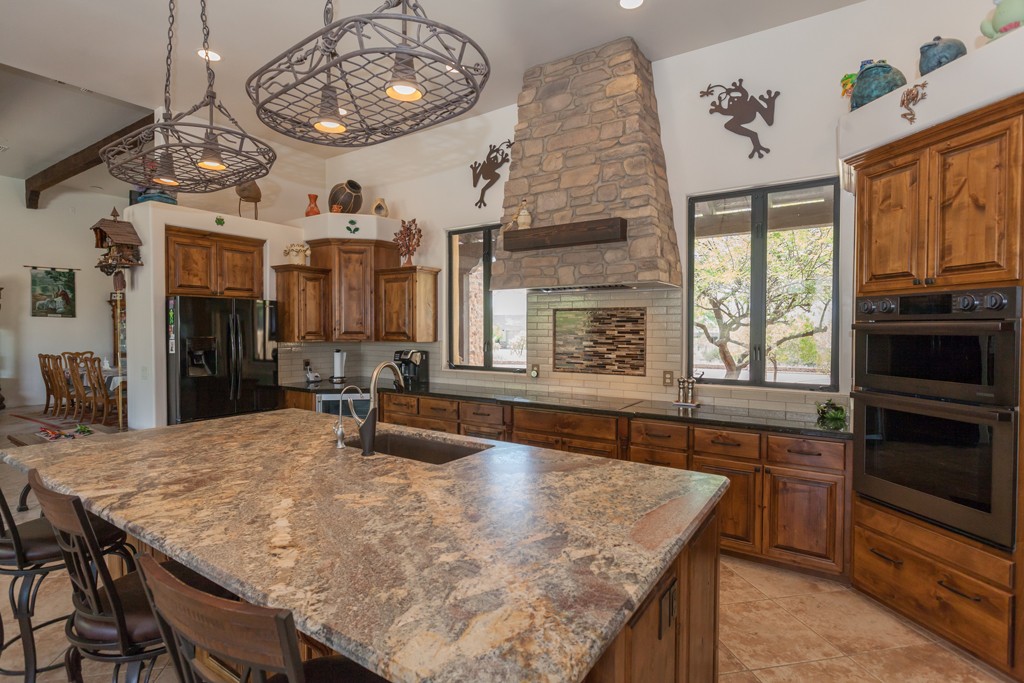
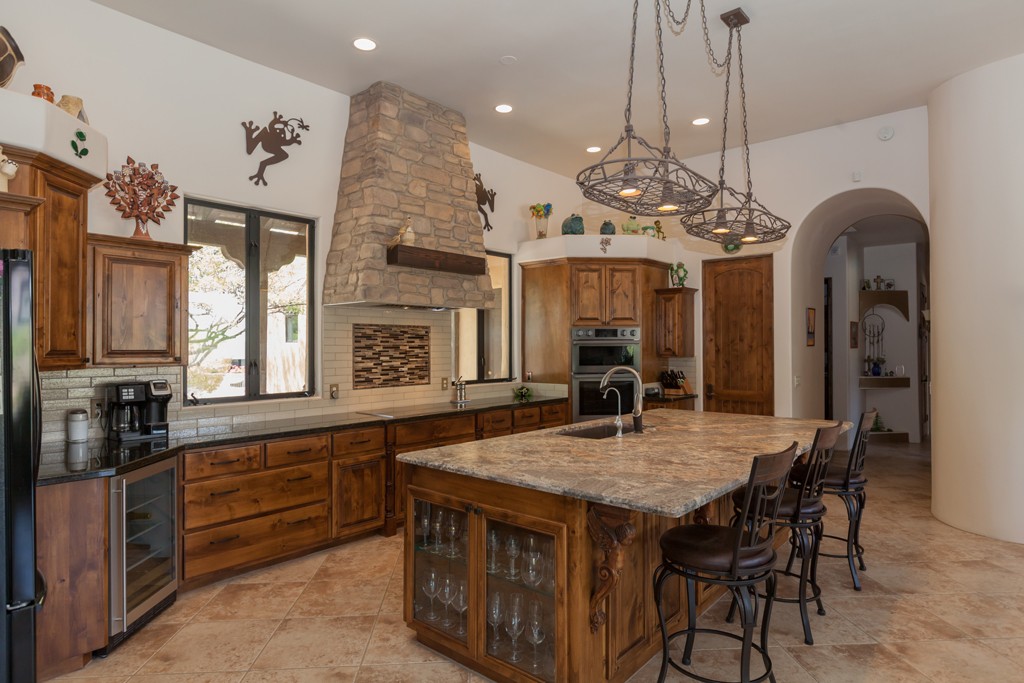
When One Detail Changes the Entire Room
Sometimes the most impactful remodel isn’t the whole space—it’s the one element that finally makes everything feel right.
In this Mesa-area home, the kitchen already carried a strong architectural presence. Natural wood cabinetry, textured materials, and a dramatic stone fireplace created a warm, rustic environment that defined the entire living space.
But one element didn’t belong.
The existing kitchen hood felt temporary, underpowered, and visually disconnected from the rest of the home. It functioned as an appliance—not as part of the architecture.
The homeowners saw the opportunity to change that.
Rather than replacing the hood with a standard upgrade, they envisioned a custom feature that would feel integrated into the home—something that would connect the kitchen to the surrounding living space and elevate the entire room.
Projects like this are often guided by a thoughtful design-build remodeling approach in Mesa, where architectural intent and construction strategy are developed together.
Drawing Inspiration from the Existing Architecture
The design did not begin with the kitchen.
It began with the fireplace.
Across the open-concept living space, a bold stone fireplace constructed from natural river rock served as the home’s visual anchor. Its texture, depth, and handcrafted character defined the architectural language of the space.
A pine mantel introduced warmth, softening the heavier stone while reinforcing the home’s rustic tone.
The new kitchen hood was designed to echo these elements.
By repeating the same stone textures and wood accents, the hood would feel connected to the fireplace rather than separate from it. This approach ensured the finished feature would feel intentional—like it had always been part of the home.
This type of continuity is often explored through kitchen remodeling in Mesa, where materials and structure are coordinated across spaces.
Improving Performance Alongside Design
While the visual transformation was important, performance was equally critical.
The homeowners had upgraded to an induction cooktop, which required significantly stronger ventilation than the existing system could provide. The original fan lacked the airflow capacity needed for an open-concept kitchen.
The new design incorporated a high-efficiency ventilation system capable of delivering the required performance while remaining visually unobtrusive.
The stainless-steel vent assembly was integrated into the structure of the hood in a way that allows it to function effectively without competing visually with the stone and wood elements.
The result is a feature that performs at a high level while maintaining a clean, architectural presence.
Building a Structure That Could Support the Design
During demolition, the team discovered that the original hood had been constructed with minimal structural support.
While this revealed a potential safety concern, it also created the opportunity to build a properly engineered solution.
Because the finished hood would weigh more than 300 pounds once completed, a reinforced internal structure was required. The new framework was anchored directly into the ceiling trusses and designed to distribute weight evenly.
Cross-bracing, reinforced blocking, and multiple anchor points created a stable system capable of supporting both the stone veneer and the integrated ventilation components.
The entire structure was wrapped in plywood sheathing to increase rigidity and provide a secure surface for stone installation.
This level of structural planning is often required in projects involving removing load-bearing walls in Mesa or adding architectural elements that demand structural integrity.
Crafting the Wood Mantel as a Signature Element
The wood mantel became one of the defining elements of the design.
A large pine beam was selected and carefully prepared to preserve its natural grain while achieving a refined finish. It was stained to match the fireplace mantel across the room, reinforcing visual continuity between the two features.
Rather than embedding the beam fully into the stone, the design allowed it to project outward—giving it presence and dimension.
A concealed support system was engineered to secure the beam while maintaining the illusion that it is floating within the structure.
This combination of craftsmanship and engineering creates a feature that feels both substantial and intentional.
Achieving a Seamless Stone Appearance
One of the most challenging aspects of the project was creating the appearance of a monolithic stone structure.
To achieve this, the team developed a custom installation process that ensured consistent alignment and clean transitions between stone pieces.
A temporary frame was used during installation to guide placement and maintain uniform grout lines. Once the stone veneer was complete, the frame was removed and repurposed to create a custom stainless-steel panel for the underside of the hood.
This panel conceals the ventilation components while preserving the clean, finished appearance of the structure.
The result is a hood that feels solid, cohesive, and architectural—rather than applied.
A Feature That Feels Like It Has Always Been There
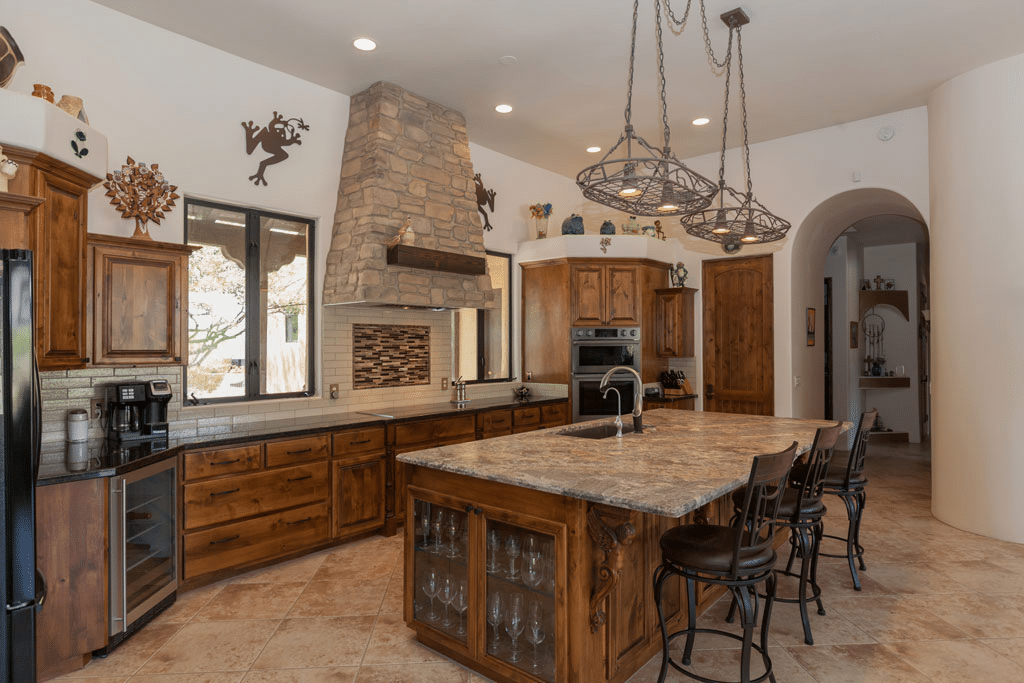
Today, the kitchen hood has become one of the most striking elements of the home.
The stone texture connects it visually to the fireplace. The wood mantel introduces warmth and craftsmanship. The ventilation system performs quietly and effectively in the background.
What was once a disconnected appliance is now a defining architectural feature.
The homeowners described it best—the hood looks like it has always belonged.
Design-Build Remodeling Insight
Architectural impact is not always about scale.
In many cases, a single well-designed element can redefine an entire space. When that element is grounded in the existing architecture, supported by proper engineering, and executed with craftsmanship, it becomes more than a feature—it becomes part of the home’s identity.
For a deeper understanding of how planning shapes remodeling outcomes, explore the Homeowner Core Guides.
The Result: A Kitchen Defined by a Single Element
This project demonstrates how even a focused remodel can have a transformative effect.
By aligning structure, materials, and design intent, the new hood does more than improve the kitchen—it anchors it. It connects the kitchen to the surrounding space, reinforces the home’s architectural language, and enhances both performance and experience.
What Makes a Custom Feature Remodel Successful?
A successful architectural feature remodel is defined by integration.
It requires careful attention to structure, material selection, and how the new element relates to the existing home. When done correctly, the feature feels inevitable—as though it was always meant to be there.
Explore Related Remodeling Possibilities
Homeowners exploring similar upgrades often continue with:
Considering a Custom Kitchen Feature or Remodel in Mesa?
The most memorable spaces are often defined by a single well-executed idea.
At Homework Remodels, we help homeowners translate those ideas into architectural features that feel integrated, intentional, and built to last through a thoughtful design-build process.
Project Specifications
Project Name: Custom Stone Kitchen Hood Remodel
Project Location: Mesa Area — Arizona
Project Type: Interior Architectural Feature
Remodeling Method: Design-Build Remodeling
Builder: Homework Remodels
Award: 2019 NARI Contractor of the Year (CotY) Winner
Key Features: Custom stone hood, reinforced structure, pine beam mantel, integrated ventilation system, stainless underside panel