
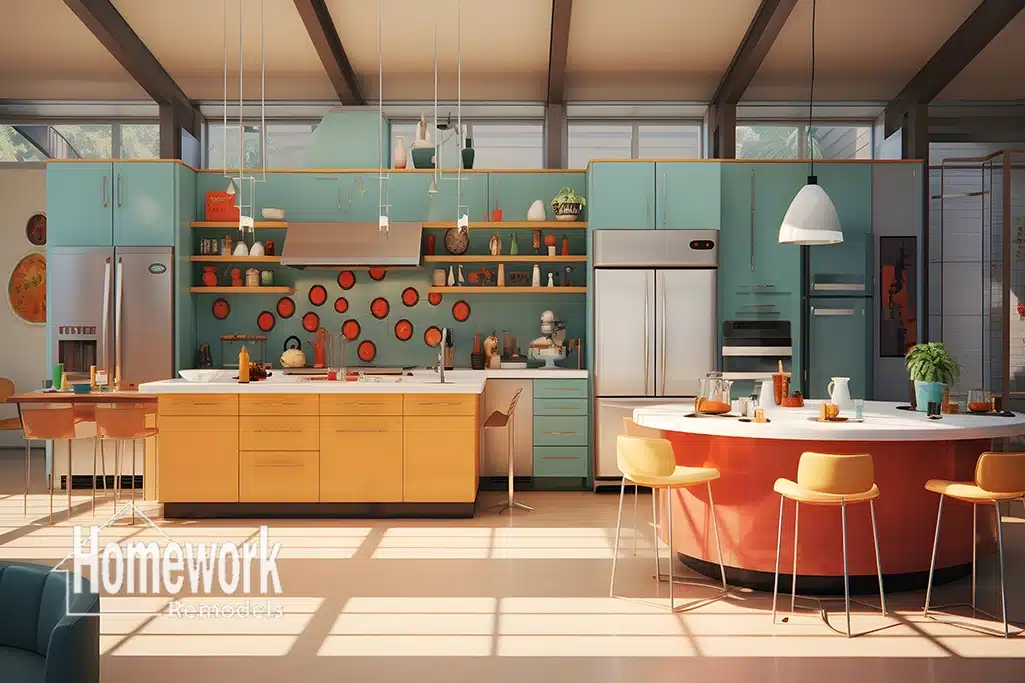
Mid-century modern homes have remained popular for decades because of their ability to feel timeless, functional, and effortlessly livable. Throughout Phoenix neighborhoods such as Arcadia Lite, Village Grove, Windsor Square, Marlen Grove, and other mid-century communities, homeowners continue to invest in renovations that respect the original architectural vision while improving everyday comfort. Nowhere is this balance more important than in the kitchen. As lifestyles evolve and technology advances, homeowners often want modern conveniences without sacrificing the simplicity that defines mid-century design.
The challenge is not whether a kitchen can be modernized. The challenge is how to introduce contemporary functionality while preserving the clean lines, uncluttered spaces, and visual harmony that make mid-century homes so distinctive. Successful remodeling projects demonstrate that modernization and preservation are not opposing goals. With thoughtful planning, homeowners can create kitchens that support today’s lifestyles while remaining true to the architectural principles that inspired them.
Many homeowners begin by reviewing the Mid-Century Modern Home Remodeling Guide and exploring the Homework Remodels Resources Center to better understand how modern improvements can be integrated without compromising authenticity.
Why Simplicity Matters in Mid-Century Design
Simplicity was never intended as a style trend during the mid-century era. It was a design philosophy rooted in functionality, efficiency, and thoughtful use of space. Architects focused on creating environments that felt open, comfortable, and connected to daily life rather than filled with unnecessary ornamentation.
In kitchens, this often meant flat-front cabinetry, integrated storage, practical workspaces, and strong visual relationships between materials and architecture. The emphasis was on how the space functioned rather than how much decoration it contained.
Today, homeowners are often tempted by highly detailed cabinetry, oversized fixtures, and rapidly changing design trends. While these elements may feel current in the moment, they can quickly conflict with the restrained architectural language of a mid-century home.
A thoughtful remodeling process guided by principles found in Design-Build Remodeling Explained and the Planning a Remodel guide helps homeowners evaluate which updates support long-term design integrity and which may detract from it.
Modern Functionality Without Visual Clutter
One of the greatest advantages of modern kitchen design is the ability to improve functionality without increasing visual complexity. Today’s storage solutions, appliances, and organizational systems can often be integrated seamlessly into the overall design.
Hidden storage, appliance garages, pull-out pantry systems, and integrated refrigeration allow homeowners to improve usability while maintaining clean sightlines. These solutions support contemporary lifestyles without introducing visual clutter.
Many mid-century homeowners also pursue open concept remodeling to improve connections between kitchens, dining spaces, and living areas. Open layouts align naturally with mid-century design because they reinforce the principles of openness and social interaction that originally influenced the movement.
In some cases, creating these connections may require removing load-bearing walls. When approached thoughtfully, structural modifications can improve functionality while preserving architectural continuity throughout the home.
Materials That Support Timeless Design
Material selection plays a significant role in maintaining simplicity. Mid-century kitchens often succeed because they rely on a limited palette of carefully chosen materials rather than an abundance of competing finishes.
Natural wood remains one of the most effective ways to introduce warmth and authenticity. Walnut, teak-inspired finishes, and white oak cabinetry frequently complement mid-century architecture. Stone surfaces with subtle movement provide durability while preserving visual restraint.
Color palettes tend to remain understated. Neutral backgrounds, warm earth tones, and selective accent colors often create a calm atmosphere that allows architectural features to remain the focus. Lighting fixtures frequently incorporate geometric forms and sculptural simplicity without becoming visually dominant.
Homeowners seeking design inspiration often explore Kitchen Remodeling Ideas and Whole-Home Remodeling Ideas to better understand how materials can work together cohesively throughout a renovation.
Planning for Long-Term Livability
Preserving simplicity is not only an aesthetic decision—it is also a practical one. Kitchens designed around clear organization, durable materials, and efficient workflows tend to perform better over time. They adapt more easily to changing lifestyles and require fewer major updates as trends evolve.
Modern homeowners often prioritize flexible gathering spaces, improved storage capacity, and better integration with outdoor living areas. These goals can be achieved without compromising architectural authenticity. In fact, many of the qualities that homeowners value today—openness, functionality, and connection—were central to mid-century design from the beginning.
Planning carefully during the early stages of remodeling can help ensure that every decision supports both immediate needs and long-term goals. Resources such as Pre-Construction Explained and The Remodeling System That Works provide valuable guidance for homeowners preparing for renovation projects.
Design Insight from a Design-Build Remodeler
The most successful mid-century kitchen remodels often feel understated because they prioritize architectural integrity over visual impact. Simplicity does not mean sacrificing performance or convenience. Instead, it means making thoughtful decisions that allow materials, proportions, and functionality to work together harmoniously. When modern features are integrated carefully, they enhance the home without drawing attention away from the architecture itself. This balance is what allows mid-century kitchens to remain relevant and appealing across generations.
As mid-century neighborhoods throughout Phoenix continue to attract homeowners who value timeless design, preserving simplicity remains one of the most important goals in kitchen remodeling. Modern kitchens can provide exceptional functionality while still honoring the architectural principles that made these homes enduring icons of residential design.
By focusing on restraint, thoughtful planning, and authentic materials, homeowners can create kitchens that feel both contemporary and true to the spirit of mid-century modern living.
Homework Remodels is a Phoenix-based design-build remodeling company specializing in mid-century modern home renovations, kitchen remodeling, whole-home transformations, and architectural preservation throughout Phoenix and surrounding communities. Our team helps homeowners modernize historic and mid-century homes while respecting the design principles that make them unique.