
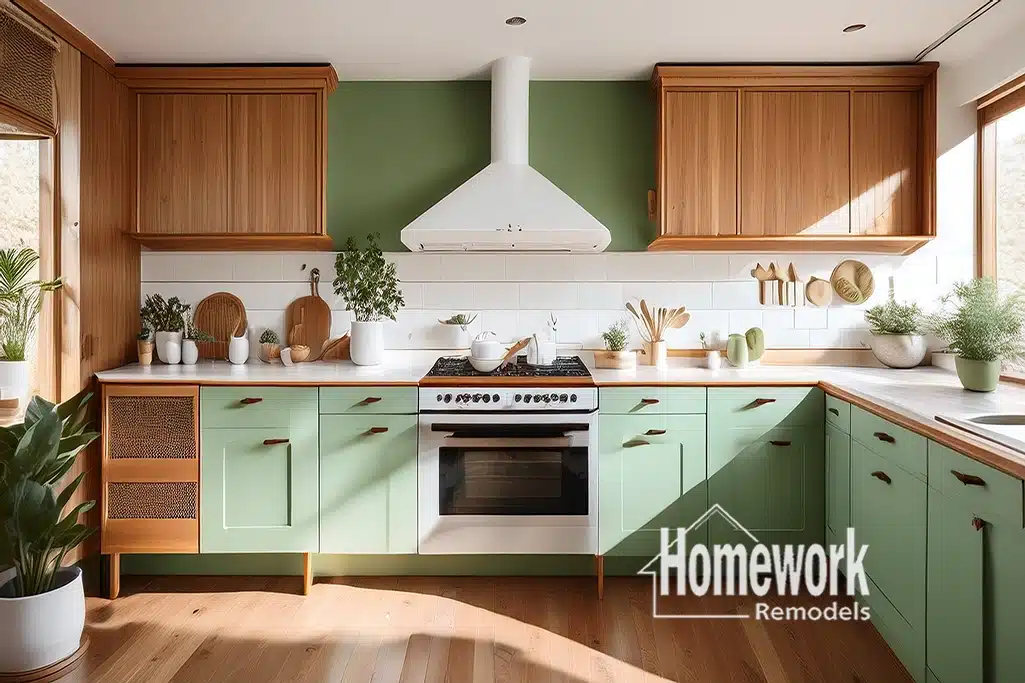
Mid-century modern homes continue to captivate homeowners across Phoenix and throughout the country because of their clean lines, practical layouts, and timeless architectural appeal. From neighborhoods like Arcadia Lite, Village Grove, and Windsor Square to classic mid-century communities throughout the Valley, these homes represent an era when architecture focused on simplicity, functionality, and a strong connection between people and their environment. One of the most fascinating aspects of mid-century architecture is the evolution of kitchen design. What began as highly efficient workspaces in the 1950s has gradually transformed into open, multifunctional gathering spaces that support contemporary lifestyles while still reflecting the core principles of mid-century design.
Understanding this evolution can help homeowners make informed remodeling decisions that improve functionality without sacrificing the architectural authenticity that makes mid-century homes so special. Whether planning a complete renovation or simply updating key features, preserving the original design intent remains one of the most important considerations during any remodeling project.
Many homeowners begin their research by exploring the Mid-Century Modern Home Remodeling Guide and the Homework Remodels Resources Center to better understand how thoughtful modernization can support both architectural preservation and modern living.
The Original Mid-Century Kitchen: Efficiency First
When many mid-century homes were built during the 1950s and early 1960s, kitchens were designed primarily as functional workspaces. The focus was on efficiency rather than entertaining. Compact layouts, carefully organized work triangles, built-in cabinetry, and practical storage solutions reflected the priorities of the era.
Unlike today’s kitchens, these spaces were often separated from formal living and dining areas. While they were highly efficient for meal preparation, they were not intended to serve as gathering spaces. However, even during this period, mid-century designers emphasized simplicity and clean lines. Flat-front cabinetry, integrated appliances, and minimal ornamentation helped establish a design language that continues to influence modern kitchens today.
Many of these original principles remain relevant during contemporary kitchen remodeling projects. The focus on functionality, efficient workflows, and visual simplicity still aligns closely with how many homeowners want their kitchens to perform.
Homeowners interested in understanding the broader design philosophy behind these homes often find value in the Design-Build Remodeling Explained guide and the Planning a Remodel guide.
The Shift Toward Open Living
As lifestyles changed throughout the 1970s, 1980s, and beyond, kitchens began to play a more central role in daily life. Families increasingly wanted spaces that supported interaction, entertaining, and casual dining. This shift led to the growing popularity of open floor plans that connected kitchens to living and dining areas.
Many mid-century homes were uniquely positioned to adapt to this trend because their architecture already emphasized openness, natural light, and strong visual connections between spaces. As a result, open concept remodeling became a common strategy for updating older homes while preserving their architectural character.
In some projects, achieving this openness requires structural modifications. Homeowners often explore removing load-bearing walls to create larger, more connected spaces while maintaining the home’s original proportions and design integrity.
The challenge is ensuring that openness enhances the architecture rather than overwhelming it. Successful remodels preserve the simplicity and balance that define mid-century design while improving functionality for modern living.
Modern Mid-Century Kitchens: Balancing Past and Present
Today’s homeowners often want kitchens that combine contemporary convenience with timeless design. The most successful mid-century kitchen remodels achieve this balance by respecting original architectural principles while incorporating modern amenities.
Common updates include larger islands, improved storage solutions, integrated appliances, and expanded workspace areas. However, these features are typically designed with restraint. Clean-lined cabinetry, natural wood finishes, simple hardware, and uncluttered surfaces help maintain the visual simplicity associated with mid-century modern architecture.
Material selection also plays an important role. Many homeowners choose finishes that emphasize texture and authenticity rather than excessive decoration. Warm woods, subtle stone surfaces, and carefully selected lighting fixtures often complement the home’s original design language.
Homeowners seeking inspiration frequently review Kitchen Remodeling Ideas and Whole-Home Remodeling Ideas to better understand how contemporary improvements can coexist with historic architectural character.
Design Insight from a Design-Build Remodeler
The evolution of mid-century kitchen design demonstrates how good architecture adapts over time without losing its core identity. While kitchens today serve very different functions than they did seventy years ago, the principles that defined mid-century design—simplicity, functionality, natural light, and strong spatial relationships—remain just as relevant. Successful remodeling projects focus on preserving these principles while introducing improvements that support modern lifestyles. The result is a kitchen that feels both contemporary and authentic.
Modern homeowners increasingly recognize that preserving architectural character often creates more enduring value than following short-term design trends. Mid-century kitchens that respect original proportions, materials, and design intent tend to age more gracefully and maintain stronger connections to the overall architecture of the home.
Whether the goal is improving functionality, creating better gathering spaces, or modernizing aging infrastructure, thoughtful remodeling allows homeowners to enjoy contemporary conveniences while preserving the timeless qualities that continue to make mid-century homes so desirable.
As mid-century neighborhoods throughout Phoenix continue to attract new generations of homeowners, the evolution of kitchen design remains an important example of how architecture can adapt successfully without sacrificing its identity.
Homework Remodels is a Phoenix-based design-build remodeling company specializing in mid-century modern home renovations, kitchen remodeling, whole-home transformations, and architectural preservation throughout Phoenix and surrounding communities. Our team helps homeowners modernize historic and mid-century homes while respecting the design principles that make them unique.