
Casitas / ADUs / Guest Houses in Roosevelt Historic District: Planning Flexible Living Spaces While Preserving Historic Character
The Roosevelt Historic District sits at the heart of downtown Phoenix, just steps from the Roosevelt Row arts district, historic neighborhoods, and cultural landmarks that define the city’s creative core. Known for its early 20th-century homes, tree-lined streets, and eclectic mix of architectural styles including Craftsman bungalows and Spanish Colonial Revival houses, the neighborhood blends historic character with vibrant urban energy. Many homes in the Roosevelt Historic District were built in the 1910s through the 1930s, often on lots that allow for thoughtful expansion. As homeowners seek ways to adapt these historic properties for modern living, casitas, ADUs, and guest houses offer flexible solutions that can add living space while preserving the architectural integrity of the home.
For many Roosevelt homeowners, the desire to add a guest house or ADU begins with practical family needs. Some households want a private living space for aging parents who prefer independence while remaining close to loved ones. Others may want accommodations for adult children returning home temporarily or relatives visiting Phoenix for extended stays.
Unlike traditional room additions, casitas and ADUs are often designed as independent living spaces. These structures typically include a private entrance, bedroom area, bathroom, and sometimes a compact kitchen or kitchenette. This independence allows the space to evolve over time as household needs change.
For example, a detached guest house might initially function as a retreat for visiting family members. Later, the same structure could become a home office, creative studio, or residence for a live-in caregiver. These possibilities often become clearer when homeowners begin evaluating the broader potential of their property through projects such as home remodeling in Phoenix, where thoughtful planning helps guide long-term decisions.
Although the terms are frequently used interchangeably, casitas, ADUs, and guest houses can serve slightly different purposes depending on how they are designed.
A casita is typically a smaller detached living suite designed primarily for guests. These spaces usually include a bedroom and bathroom with a small sitting area. In historic Phoenix neighborhoods, casitas often complement courtyard-style homes and traditional outdoor living spaces.
An Accessory Dwelling Unit (ADU) generally includes more complete living amenities. ADUs typically include a kitchen, living area, bathroom, and sleeping space, allowing them to function as a fully independent residence. These units are especially useful for multigenerational households or long-term living arrangements.
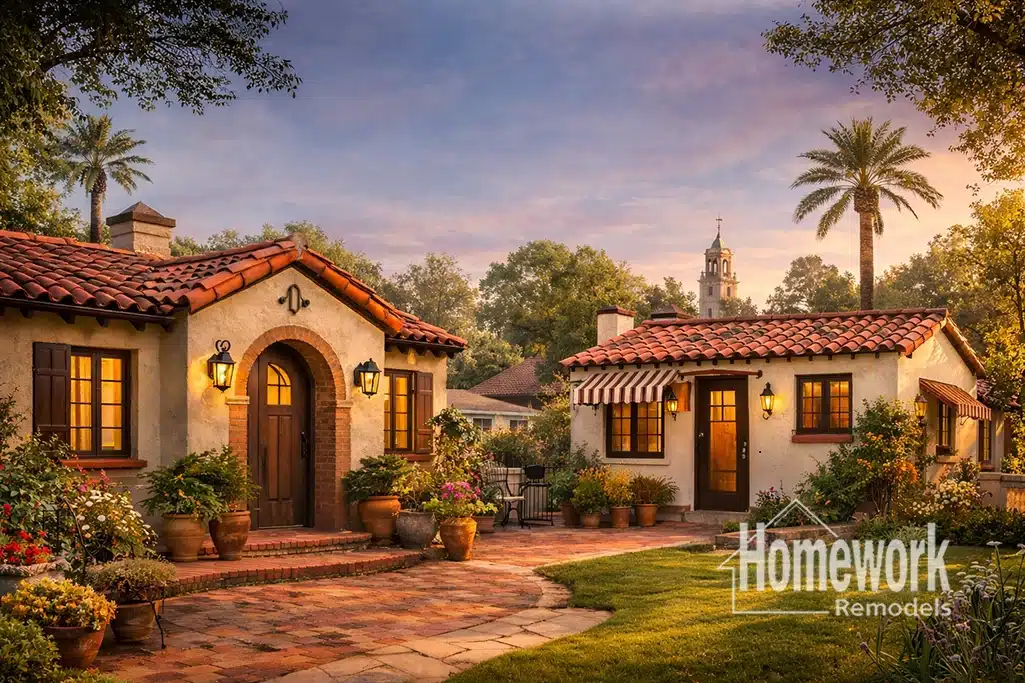
A guest house may fall somewhere between these two models depending on the homeowner’s goals. In historic neighborhoods like the Roosevelt Historic District, guest houses are often designed to reflect the architectural style of the main residence so the addition feels consistent with the property’s historic character.
Homeowners considering these projects often benefit from understanding the broader planning process behind successful remodeling. Educational resources such as the Core Remodeling Guides provide a helpful framework for understanding how preparation, design decisions, and project sequencing contribute to smoother remodeling outcomes.
Planning Flexible Living Spaces in the Roosevelt Historic District
Adding a casita or ADU within a historic district requires thoughtful planning. While many Roosevelt homes include lots that can accommodate detached structures, homeowners must also consider architectural compatibility and historic preservation considerations.
When planning a guest house project, homeowners often evaluate how the main residence could evolve at the same time. Improving interior flow, expanding gathering spaces, and updating kitchens or bathrooms can help ensure both the primary home and the new living space function well together.
For example, homeowners may combine guest house additions with improvements such as kitchen remodeling in Phoenix to create gathering spaces that better support entertaining and family life.
Other households may incorporate improvements such as bathroom remodeling in Phoenix so both the main home and guest accommodations provide comfort and accessibility.
When these projects are planned together, the property evolves as a cohesive environment rather than a series of disconnected renovations.
Historic Roosevelt homes often feature distinctive architectural details such as exposed rafters, decorative trim, wood windows, and period-inspired rooflines. When adding a casita or guest house, maintaining architectural harmony with the main residence becomes one of the most important design priorities.
A well-designed guest house should feel like a natural extension of the property. Exterior materials, rooflines, and window proportions should complement the historic architecture while still allowing the new structure to function efficiently.
Outdoor living spaces also help connect the main home and guest house. Courtyards, patios, and landscaped pathways can create a comfortable transition between the structures while preserving privacy for both homeowners and guests.
Design Insight from a Phoenix Design-Build Remodeler
Successful ADU and guest house projects in historic neighborhoods begin with thoughtful planning. Rather than focusing only on immediate needs, homeowners benefit from considering how the space may be used years into the future.
Design-build remodeling allows architectural design, budgeting, and construction planning to evolve together. This coordinated approach helps ensure the new living space integrates smoothly with the property while respecting the historic character of the home.
Flexible living spaces provide benefits that extend far beyond additional square footage. In historic Phoenix neighborhoods like the Roosevelt Historic District, casitas and guest houses can significantly increase a home’s adaptability.
For multigenerational households, these structures allow loved ones to maintain independence while remaining nearby. For homeowners who frequently host visitors, guest houses provide comfortable accommodations that allow guests to enjoy their stay without disrupting everyday routines.
These spaces can also evolve as needs change. A guest house that begins as a home office or studio may later become a residence for family members, caregivers, or long-term guests.
When thoughtfully designed, casitas and ADUs enhance both the functionality and long-term value of the property while preserving the architectural character that defines historic Phoenix neighborhoods.
Casitas, ADUs, and guest houses allow Roosevelt homeowners to expand their homes in ways that respect the past while supporting modern living.
Homework Remodels is a Phoenix-based design-build remodeling company serving the Roosevelt Historic District, Willo, Encanto-Palmcroft, and surrounding historic neighborhoods across the Valley. Our team specializes in thoughtful renovations, home additions, and architectural transformations that respect the character of established Phoenix communities.