
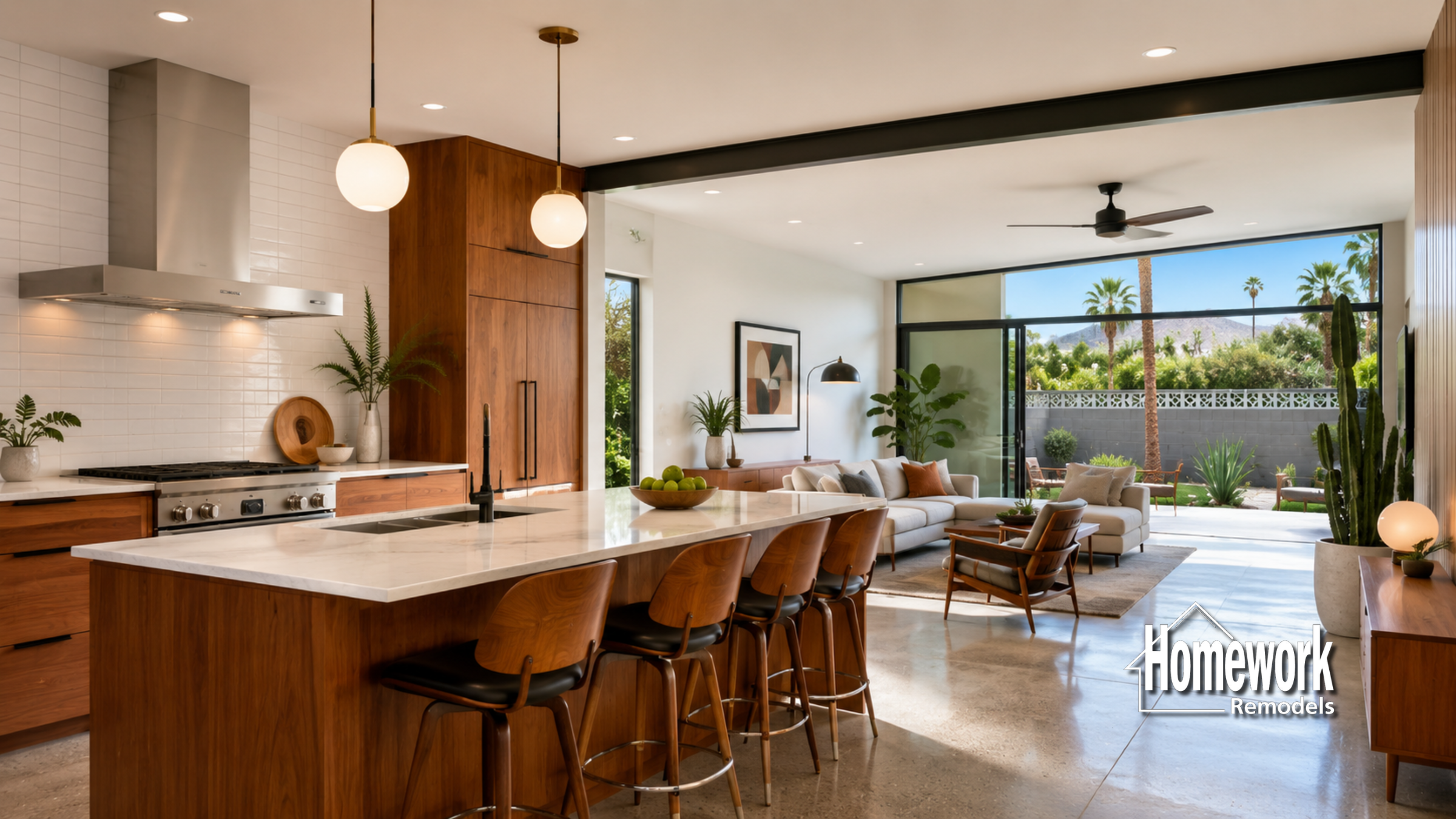
How to Keep Design Cohesive from Room to Room
One of the most common challenges homeowners face during remodeling is creating a home that feels unified rather than a collection of separate rooms. While each space may serve a different function, the most successful interiors maintain a consistent design language that creates visual flow and architectural harmony throughout the home.
Whether renovating a mid-century ranch near Arizona State University, updating a family home in Broadmor, or modernizing a residence near Tempe Town Lake, cohesive design helps every room feel connected while still allowing individual spaces to have their own personality.
The goal is not to make every room identical. Instead, it is to establish common elements that create continuity and support a more intentional overall design.
Why Cohesive Design Matters
Homes that lack visual consistency can sometimes feel disjointed, especially after multiple renovations completed over time.
A cohesive design strategy helps:
- improve visual flow
- strengthen architectural character
- create a sense of balance
- simplify design decisions
- enhance perceived home value
- support long-term satisfaction
- improve overall functionality
Many homeowners begin planning larger renovations through the Homework Remodels Resources Page, where they can explore remodeling strategies that support both aesthetics and practicality.
When design decisions are coordinated across multiple spaces, the home often feels larger and more thoughtfully designed.
Start With a Consistent Color Palette
One of the easiest ways to create continuity throughout a home is by establishing a coordinated color palette.
This does not mean every room must use the exact same colors. Instead, homeowners often select a core palette that can be adapted throughout the house.
Common approaches include:
- consistent neutral foundations
- repeating accent colors
- complementary tones
- coordinated trim colors
- unified ceiling finishes
A comprehensive Design-Build Remodeling process helps homeowners evaluate how color choices interact with architecture, lighting, and material selections throughout the home.
Consistent color strategies create visual flow while still allowing room-specific variation.
Repeat Materials Strategically
Materials play a major role in establishing cohesion across multiple spaces.
Creating Continuity Through Finishes
Successful whole-home designs often repeat materials such as:
- flooring
- cabinetry finishes
- hardware selections
- stone surfaces
- wood tones
- metal accents
Many Tempe homeowners pursuing larger layout transformations through Removing Load-Bearing Walls discover that material consistency becomes increasingly important as sightlines expand across connected living areas.
The Open Concept Remodeling Guide explains how design continuity helps support both visual flow and functional living.
For larger renovations, Whole Home Remodeling allows homeowners to coordinate materials throughout the home from the beginning of the design process.
Repetition helps create familiarity without becoming repetitive.
Service Page Power Links Section
Why Whole-Home Planning Produces Better Results
Many design inconsistencies occur when individual rooms are renovated separately without a larger vision guiding the process.
Through Whole Home Remodeling, homeowners can establish a unified design strategy that coordinates architecture, finishes, lighting, and furnishings throughout the home. This approach often leads to stronger visual consistency and more satisfying long-term outcomes.
Likewise, many projects involve Kitchen Remodeling because kitchens frequently serve as central hubs that influence design decisions in adjacent living and dining areas. Coordinating these spaces helps strengthen the overall flow of the home.
Maintain Architectural Consistency
Architectural details often have a greater influence on cohesion than decorative elements.
Important architectural features include:
- trim profiles
- door styles
- ceiling treatments
- built-in cabinetry
- millwork details
- window treatments
The article on Custom Trim and Millwork Ideas for a Polished Look explores how architectural detailing can help unify multiple rooms while adding character and craftsmanship.
Consistent architectural language often serves as the foundation for cohesive design.
Design Insight from a Design-Build Remodeler
The most successful homes feel cohesive because every design decision supports a larger vision. In Tempe homes, consistency often comes from repeating materials, architectural details, and color palettes while allowing individual spaces to express unique functions and personalities. Cohesion is less about matching everything and more about creating thoughtful relationships between rooms.
Furniture and Décor Should Support the Overall Design
Furniture, artwork, and accessories play an important role in reinforcing visual continuity.
Homeowners often create cohesion by repeating:
- wood tones
- fabric textures
- metal finishes
- color accents
- artwork styles
- decorative materials
The article on Designing With Local Artwork and Textiles explains how personal design elements can strengthen both individuality and overall design harmony.
For additional inspiration, homeowners often explore the Whole Home Remodeling Ideas page to see how cohesive design strategies contribute to complete remodeling transformations.
Accessories should complement the architecture rather than compete with it.
Consider How Rooms Connect Visually
One of the most important questions homeowners can ask is:
“What rooms can be seen at the same time?”
In open-concept homes, adjacent spaces often share:
- sightlines
- lighting conditions
- flooring
- architectural features
The article on Furniture Layout Tips for Open-Concept Rooms explores how thoughtful planning supports both visual organization and cohesive design.
Considering sightlines helps ensure that connected spaces feel harmonious rather than disconnected.
Closing Thoughts
Creating a cohesive design from room to room involves much more than selecting attractive finishes. Through thoughtful planning, consistent materials, architectural continuity, and coordinated design decisions, homeowners can create interiors that feel unified while still reflecting their personal style.
Whether updating a mid-century ranch near ASU or modernizing a contemporary family residence, homeowners who prioritize cohesion often achieve homes that feel more comfortable, sophisticated, and visually balanced.
By approaching remodeling with a whole-home perspective, Tempe homeowners can create spaces that flow naturally, function beautifully, and remain timeless for years to come.
Homework Remodels is a Phoenix-based design-build remodeling company serving Tempe, Arcadia, Paradise Valley, Biltmore, and surrounding communities throughout the Valley. Our team specializes in thoughtful renovations, home additions, structural remodeling, and personalized design solutions that respect the character of established Arizona neighborhoods.