
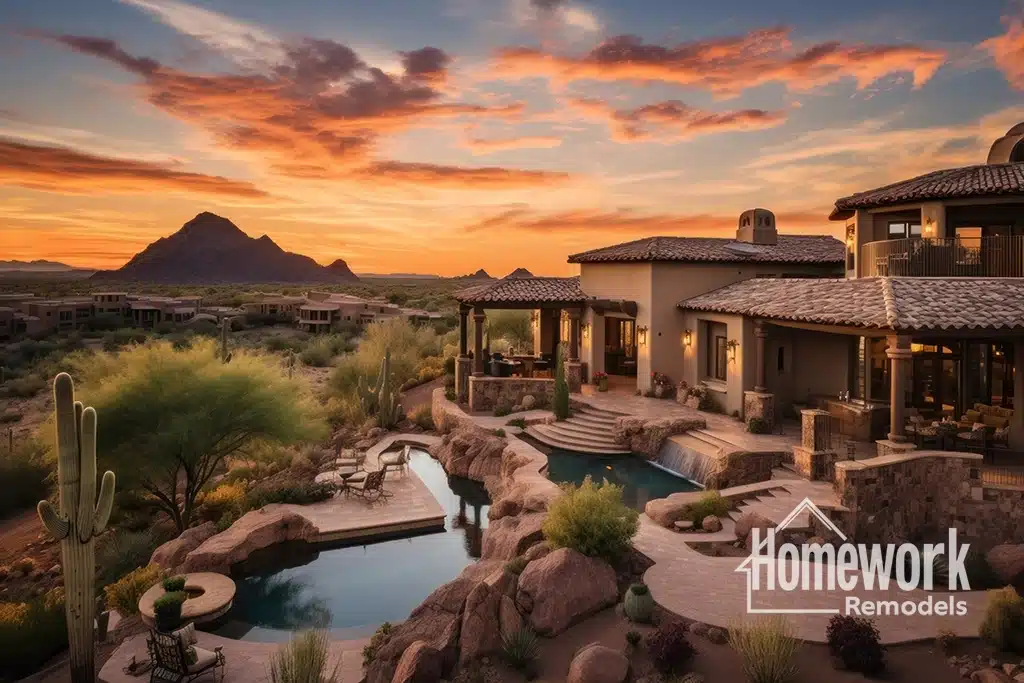
A successful remodel does not end at the exterior wall. In Scottsdale, where outdoor living is integral to daily life, landscaping plays a decisive role in whether a renovation feels complete or unfinished. When landscaping and architecture are designed independently, they often compete. When they are coordinated, they reinforce one another—visually, functionally, and emotionally.
Landscaping that complements remodeling projects is less about decorative planting and more about spatial alignment. It supports how people move, gather, and experience the home over time.
Why Landscaping Should Follow the Remodel—Not Precede It
Homeowners sometimes approach landscaping as a parallel project. This often leads to mismatched levels, awkward pathways, or plants that obscure new architectural features.
Remodel-driven landscaping should:
- Respond to new openings and sightlines
- Reinforce updated circulation patterns
- Support indoor–outdoor transitions
When landscaping follows architecture, the property reads as intentional rather than layered.
Start With How the Remodel Changed the Home
Before discussing plants or materials, it’s important to understand what the remodel introduced.
Key changes to evaluate include:
- New doors or windows
- Altered room relationships
- Expanded patios or courtyards
Landscaping should amplify these changes, not ignore them.
Align Pathways With Daily Movement
Paths are the backbone of landscape design.
Effective pathways:
- Reflect actual movement patterns
- Connect new entries and outdoor spaces
- Reduce wear on planted areas
In Scottsdale homes, thoughtful path placement improves usability while protecting desert plantings.
Framing Views—Not Blocking Them
Remodels often introduce new views outward. Landscaping should frame these views rather than obstruct them.
Strategies include:
- Low plantings near windows
- Taller plantings used selectively for screening
- Clear visual corridors aligned with interior spaces
This approach preserves openness while maintaining privacy.
Outdoor Rooms That Match Interior Intent
Landscaping can define outdoor “rooms” that echo interior functions.
Examples include:
- Dining patios aligned with kitchen doors
- Lounge areas connected to living spaces
- Quiet garden zones near bedrooms
When outdoor rooms mirror interior use, the home feels larger and more cohesive.
Materials That Bridge Indoors and Outdoors
Hardscape materials play a major role in visual continuity.
Repeating materials—such as stone, concrete tones, or wood accents—helps blur the boundary between inside and out. Exact matching is not required; compatibility is.
Material continuity supports seamless transitions.
Shade as a Design Element
In Scottsdale’s climate, shade is foundational.
Landscaping-based shade solutions include:
- Strategically placed trees
- Trellises integrated with planting
- Layered canopy strategies
Shade should be planned alongside architectural shade—not treated as an afterthought.
Plant Selection That Supports Architecture
Plants should reinforce the home’s style rather than distract from it.
Considerations include:
- Scale relative to the building
- Texture and form
- Maintenance requirements
Overly ornate plantings can overwhelm clean architectural lines, while sparse planting may feel unfinished.
Water Use and Sustainability
Landscaping that complements remodeling should also respect environmental realities.
Water-wise strategies include:
- Native or adaptive plant palettes
- Efficient irrigation zones
- Grouping plants by water needs
Sustainable landscapes age better and require less intervention.
Lighting That Extends Usability
Landscape lighting supports both safety and atmosphere.
Well-designed lighting:
- Highlights pathways and transitions
- Accentuates architectural features
- Extends outdoor use into evening hours
Lighting should be subtle and layered—never overpowering.
Transitions Between Hardscape and Softscape
The interface between patios, paths, and planting matters.
Clean transitions:
- Prevent erosion
- Improve maintenance
- Clarify circulation
Thoughtful edging and grading protect both plantings and structures.
Landscaping After Structural Changes
Structural remodels—such as opening layouts or altering exterior walls—often require landscape adjustments.
After evaluating options like removing load-bearing walls safely, landscaping may need to address:
- New sightlines
- Modified drainage
- Changed outdoor relationships
Ignoring these shifts leads to disjointed results.
Courtyards as Integrators
Courtyards often serve as mediators between old and new spaces.
They provide:
- Privacy
- Light modulation
- Visual continuity
Well-designed courtyards help remodeled homes feel grounded and intentional.
Avoiding Over-Landscaping
More planting does not equal better design.
Overcrowded landscapes:
- Obscure architecture
- Increase maintenance
- Reduce usability
Restraint allows architecture and landscape to complement rather than compete.
Maintenance Should Match Lifestyle
Landscapes should support how homeowners actually live.
Low-maintenance designs encourage consistent use. High-maintenance landscapes often fall into disrepair, undermining even the best remodel.
Design for sustainability of effort—not just appearance.
Integrating Landscaping Into the Remodeling Process
Landscaping performs best when planned alongside architecture.
A coordinated whole-home remodeling approach in Scottsdale allows grading, drainage, materials, and circulation to be addressed holistically.
This coordination reduces rework and improves long-term performance.
Landscape Design That Ages Gracefully
Trends come and go. Landscapes that age well rely on:
- Simple geometry
- Durable materials
- Adaptable plantings
Timeless landscapes continue to complement the home even as tastes evolve.
When Landscape and Architecture Speak the Same Language
The most successful properties feel cohesive from curb to courtyard.
When landscaping reinforces architectural intent, outdoor spaces feel like natural extensions of the home—not decorative afterthoughts.
That alignment defines lasting design quality.
Let’s Align Your Landscape With Your Remodel
If you’re planning a remodel and want landscaping that supports how your home functions—inside and out—early coordination matters. You can schedule a free consultation with our design-build team to discuss landscape and architectural strategies tailored to your Scottsdale home.