
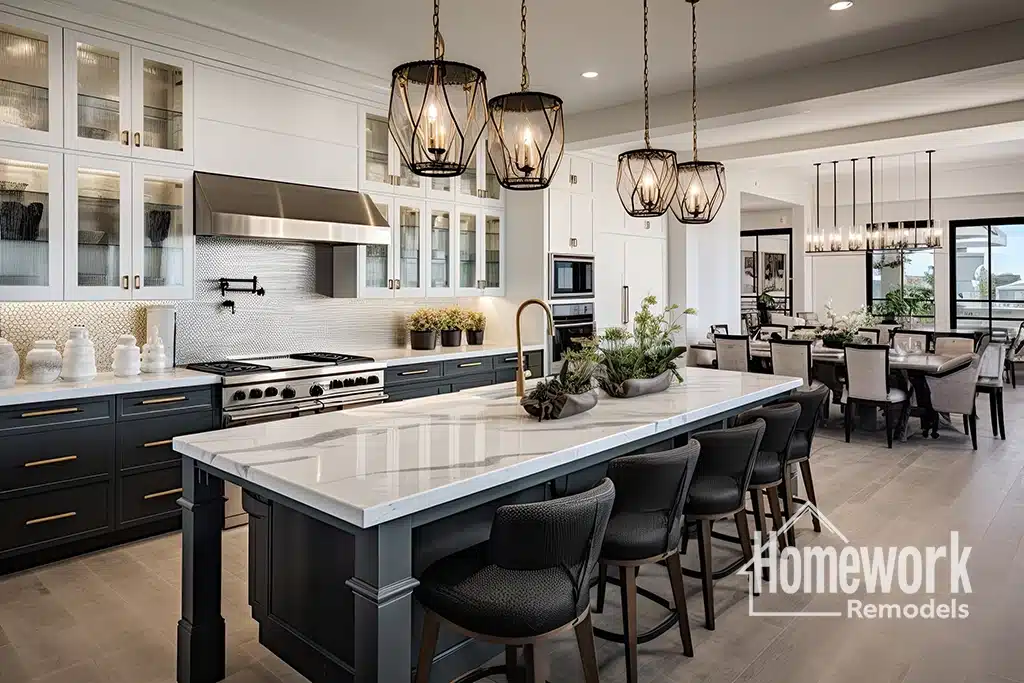
Mixing Metals in Kitchens and Baths: The New Standard
Once considered a design risk, mixing metals has become a defining feature of contemporary kitchens and bathrooms. The shift didn’t happen because tastes became bolder—it happened because homeowners became more discerning. Rather than committing to a single finish everywhere, they’re choosing combinations that add depth, flexibility, and longevity.
In practice, mixing metals is less about contrast and more about hierarchy. When done thoughtfully, it creates rooms that feel layered and intentional rather than busy or trend-driven.
Why the “One-Metal Rule” Faded
The old rule—choose one metal finish and apply it everywhere—promised simplicity. It also locked homes into a specific look that could date quickly.
As kitchens and baths became more integrated with adjacent living spaces, homeowners wanted finishes that could adapt as styles evolved. Mixing metals introduced flexibility without sacrificing cohesion.
This change reflects a broader shift toward homes that feel curated rather than installed.
The Real Goal: Cohesion, Not Matching
Successful mixed-metal spaces don’t aim for perfect matching. They aim for visual balance.
Cohesion comes from repetition and proportion, not uniformity. A primary metal establishes the room’s foundation. Secondary metals provide accent and variation. Tertiary metals, if used at all, are subtle and limited.
This hierarchy prevents visual noise while allowing character.
Choosing a Primary Metal
Every successful mix starts with a dominant finish. In kitchens and baths, this is often determined by scale and frequency.
Primary metals commonly appear in:
- Cabinet hardware
- Plumbing fixtures
- Large appliances
Choosing a primary metal first provides an anchor. Other finishes then respond to it rather than compete.
Secondary Metals Add Dimension
Secondary metals introduce contrast without overwhelming the space. They often appear in:
- Light fixtures
- Accent hardware
- Furniture bases
These finishes should complement the primary metal in tone or texture. Warm metals pair well together. Cool metals do the same. Mixing warm and cool can work—but requires restraint.
Texture Matters as Much as Color
Finish texture plays a significant role in successful mixes. Brushed, satin, and matte finishes blend more easily than high-gloss options.
For example, brushed brass and matte black can coexist comfortably because neither demands attention. Polished chrome alongside polished gold, by contrast, often feels competitive.
Texture softens contrast and improves longevity.
Kitchens: Where Metals Must Work Hard
Kitchens place heavy demands on finishes. They are high-traffic, high-touch spaces where durability matters as much as appearance.
In kitchens, mixing metals often follows functional logic:
- Cabinet hardware establishes consistency
- Faucets provide a focal point
- Lighting introduces contrast
This approach allows for visual interest without disrupting workflow.
Many homeowners discover this balance during whole-home remodeling in Scottsdale, where kitchen decisions influence adjacent living areas.
Baths: Subtlety Over Statement
Bathrooms tend to reward restraint. Because spaces are smaller, metals read more intensely.
Successful bath mixes typically involve:
- One primary metal for fixtures
- A secondary metal for mirrors or lighting
Avoiding a third metal often preserves calm. In primary baths especially, simplicity enhances the spa-like experience homeowners seek.
Coordinating Metals Across Open Layouts
As open-concept layouts become more common, metal choices in kitchens and baths are no longer isolated decisions. Finishes must coordinate with nearby spaces.
Consistency doesn’t require duplication. Repeating a metal finish in small doses—such as a light fixture or furniture detail—creates continuity without rigidity.
Evaluating layout changes, including options for removing load-bearing walls safely, alongside finish selections ensures metals support the overall spatial plan.
Avoiding the Most Common Mistake
The most frequent mistake in mixing metals is equal weighting. When finishes appear in similar quantities, the eye struggles to prioritize.
Clear hierarchy resolves this. One finish leads. Others follow.
When hierarchy is unclear, spaces feel unsettled—even if the individual finishes are attractive.
Warm vs. Cool: Finding the Right Balance
Warm metals (brass, bronze) add richness and pair well with natural materials. Cool metals (chrome, nickel) feel crisp and understated.
Mixing warm and cool can work when one dominates and the other accents. This balance allows rooms to feel current without drifting toward trendiness.
Longevity Over Novelty
Highly distinctive finishes may feel exciting initially but can limit future flexibility. Neutral metals—brushed nickel, soft brass, matte black—adapt more easily over time.
Homeowners increasingly favor metals that support long-term satisfaction rather than immediate impact.
How Lighting Influences Metal Choices
Lighting affects how metals read. Warm lighting enhances brass and bronze. Cooler lighting flatters chrome and nickel.
Considering lighting early prevents mismatches that feel unintentional. Metals and lighting should be selected as a pair, not independently.
Process Prevents Overmixing
Coordinating finishes across a home requires discipline. A thoughtful design-build remodeling process helps limit choices, establish hierarchy, and test combinations before they’re installed.
This process reduces regret and ensures consistency.
A Standard That Supports Flexibility
Mixing metals has become the standard because it supports change. Hardware can be updated. Lighting can evolve. The foundation remains sound.
Homes designed with this flexibility feel adaptable rather than fixed in time.
Balance Is the Measure of Success
The goal of mixing metals is not to showcase variety—it’s to create balance. When metals are chosen with intention, kitchens and baths feel layered, cohesive, and enduring.
That is why the mixed-metal approach has moved from trend to standard.
Let’s Create a Finish Strategy That Ages Well
If you’re planning a kitchen or bathroom remodel and want a finish strategy that balances character with longevity, early planning can help clarify which combinations will serve you best. You can schedule a free consultation with our design-build team to explore options tailored to your home.