
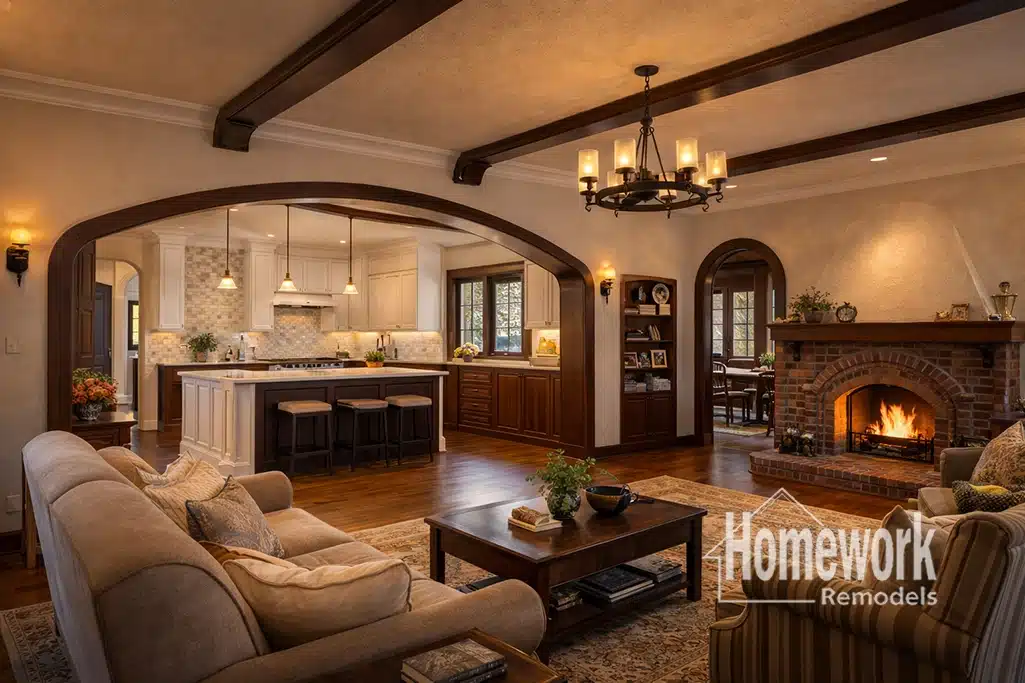
Removing Load-Bearing Walls in Willo Historic District: Opening Floor Plans Safely While Preserving Historic Character
The Willo Historic District is one of Phoenix’s most beloved historic neighborhoods. Located just north of downtown Phoenix and west of Central Avenue, Willo is known for its beautifully preserved homes, mature tree-lined streets, and architectural diversity. Spanish Colonial Revival, Tudor, Craftsman bungalows, and early Ranch-style homes built between the 1920s and 1940s create a neighborhood full of character and history.
Homeowners in Willo often appreciate the charm and craftsmanship of these historic homes while also wanting interiors that function comfortably for modern living. One of the most common remodeling goals is creating a more open floor plan so kitchens, dining areas, and living spaces connect naturally.
Removing a load-bearing wall can help achieve this transformation. When structural walls are safely replaced with engineered beams and supports, the home can gain a more open layout while preserving the historic details that make Willo homes so special. Many homeowners begin exploring these possibilities by reviewing the opportunities for home remodeling in the Willo Historic District to see how structural updates can fit within a broader renovation plan.
Why Open Floor Plans Appeal to Willo Homeowners
Historic homes were designed during a time when rooms served very specific purposes. Kitchens were typically smaller and separated from dining rooms, while living rooms were often defined by walls, archways, or doorways.
Today’s homeowners often prefer spaces that feel more open and connected. Opening a wall between the kitchen and living area can dramatically improve how the home functions for everyday life and entertaining.
Structural changes are often part of larger open concept remodeling projects in Willo, where multiple rooms are thoughtfully redesigned to maintain architectural balance while improving the flow of the home.
Understanding Load-Bearing Walls in Historic Homes
A load-bearing wall carries structural loads from the roof, ceiling framing, or upper portions of the home. In older homes, these walls often play a critical role in maintaining structural stability.
Before removing any structural wall, professionals must evaluate how loads travel through the home’s framing system. Ceiling joists, roof framing, and structural supports must all be analyzed before structural changes can safely take place.
Homeowners interested in learning more about how these structural projects are completed locally can explore the page dedicated to load-bearing wall removal in Willo homes.
Structural Considerations in Historic Districts
Because Willo is a designated historic district, remodeling projects may involve coordination with the City of Phoenix Historic Preservation Office. These guidelines are intended to protect the historic character of the neighborhood.
Interior remodeling is often possible, but structural work must be planned carefully so that exterior architectural features remain consistent with the home’s original design.
Homeowners exploring historic renovation projects may also find helpful insights in resources related to historic home remodeling in Phoenix.
How Load-Bearing Wall Removal Is Completed
When a load-bearing wall is removed, the structural load it carried must be transferred to a beam system. Depending on the span and structural requirements, the beam may be engineered wood or steel.
Support posts at each end of the beam transfer the load safely to the home’s foundation. In many projects, the beam can be integrated into the ceiling structure so the finished opening appears natural and unobtrusive.
This approach allows homeowners to enjoy an open layout without compromising the structural stability of the home.
Improving Kitchens in Historic Willo Homes
Many Willo homes feature kitchens that were originally designed as compact workspaces separated from the rest of the house. Removing a structural wall can dramatically improve the relationship between the kitchen and the surrounding living areas.
Once the wall is removed, the kitchen can become a central gathering space that connects naturally with the dining room or living room.
Many homeowners combine structural improvements with kitchen remodeling in Willo so cabinetry, layout, and appliances can be designed around the new open floor plan.
Expanding the Possibilities of Historic Homes
Opening the floor plan often inspires homeowners to update additional areas of the home. Flooring, lighting, and interior finishes may be redesigned to create a cohesive look.
In some cases, structural remodeling becomes part of a larger renovation that improves the entire home while preserving its historic character. Homeowners considering this type of transformation often explore whole-home remodeling in Willo to create a balanced and thoughtful renovation plan.
Why Structural Planning Is Essential
Removing a load-bearing wall requires careful planning and engineering. Because these walls support the structure of the home, replacing them with a properly designed beam system is essential.
Homeowners who want to understand more about the structural side of remodeling can review the guide on structural remodeling and load-bearing wall removal. Understanding these concepts helps homeowners make confident decisions before construction begins.
Thoughtful Remodeling for Willo Historic Homes
Willo’s historic homes represent an important part of Phoenix’s architectural heritage. Thoughtful remodeling allows these homes to evolve while maintaining the craftsmanship and character that define the neighborhood.
Removing a load-bearing wall can dramatically improve how a historic home functions while preserving the architectural details that make Willo unique.
Homeowners interested in learning more about the remodeling experience can explore client remodeling testimonials. When you are ready to discuss possibilities for your own home, you can also schedule a consultation to explore whether structural remodeling could transform your Willo Historic District home.