Mid-Century Modern Homes in Tempe
Tempe is more than a university city. It is one of the Valley’s most underrated collections of mid-century modern architecture. Throughout neighborhoods such as Broadmor, Cavalier Hills, Hudson Manor, Rural-Geneva, Tempe Gardens, and areas surrounding Daley Park, homeowners continue rediscovering ranch homes and modernist properties filled with architectural character, structural simplicity, and remarkable long-term remodeling potential.
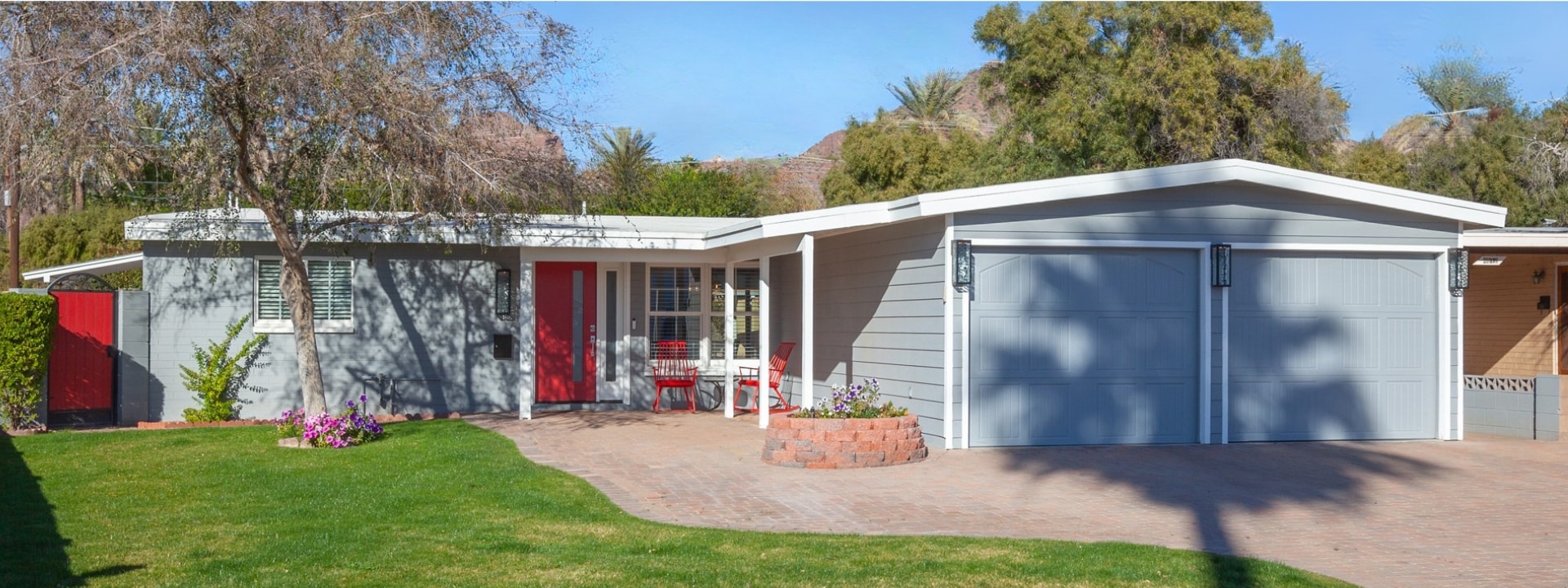
These homes were built during a period when Arizona architecture embraced openness, natural light, climate responsiveness, and connection to outdoor living. Long horizontal rooflines, exposed beams, clerestory windows, breezeblock accents, masonry block construction, and practical floorplans helped create homes that still feel remarkably current decades later. Unlike many newer homes built around visual excess or disconnected interior spaces, Tempe’s mid-century neighborhoods often emphasize livability, simplicity, and architectural calmness.
At the same time, many original homes now require thoughtful modernization to support the way families live today. Kitchens were often separated from gathering spaces. Bathrooms were compact and highly utilitarian. HVAC systems, electrical infrastructure, insulation, and glazing systems frequently struggle with modern comfort expectations in the Arizona climate. Families today often want stronger indoor-outdoor living, larger entertaining areas, improved functionality, flexible workspaces, updated systems, and more connected layouts while still preserving the architectural integrity that made the home appealing in the first place.
That balance is where preservation-sensitive mid-century modernization becomes essential.
At Homework Remodels, we specialize in remodeling architecturally significant homes throughout Tempe with a design-build process focused on protecting original character while carefully adapting homes for modern living. Many homeowners beginning the planning process first explore our broader Mid-Century Modern Home Remodeling hub to better understand how architectural modernization differs from conventional remodeling.
Why Tempe’s Mid-Century Neighborhoods Remain So Desirable
Tempe experienced major residential growth during the 1950s through the early 1970s, the same decades when modernist residential architecture flourished throughout the American Southwest. Builders throughout Tempe embraced practical ranch-style modernism centered around efficient layouts, openness, natural daylight, and climate-responsive design.
Unlike more formal architectural communities focused on dramatic custom modernism, many Tempe neighborhoods evolved around approachable family-oriented living. Homes were designed to feel functional, comfortable, and adaptable rather than visually excessive. Large lots, broad patios, attached carports, masonry block construction, and simple roof geometry helped create neighborhoods that still feel highly livable today.
Many Tempe mid-century homes also benefit from mature landscaping, walkable streets, proximity to Arizona State University, and strong community identity. These neighborhoods continue attracting homeowners who value architectural authenticity and long-term remodeling potential over oversized speculative construction.
What makes Tempe especially unique is the balance between practicality and character. Many homes contain remarkably strong structural foundations and flexible layouts that adapt naturally to thoughtful modernization. Rather than requiring complete reinvention, these homes often respond best to careful architectural refinement that improves circulation, functionality, comfort, and indoor-outdoor flow while preserving the calm simplicity that defines mid-century design.
Homeowners researching the broader philosophy behind preservation-sensitive modernization often continue exploring our Mid-Century Modern Home Remodeling Guide to better understand long-term planning strategies for architecturally significant homes.
Defining Features of Tempe Mid-Century Architecture
Many homes built throughout Tempe between the 1950s and 1970s reflect the modernist design principles that shaped much of Arizona’s postwar residential growth. These homes emphasized openness, practical livability, and environmental responsiveness rather than ornamentation or formal architectural hierarchy.
Tempe mid-century homes frequently include:
- low-pitched or gently sloped rooflines
- exposed wood beams and vaulted ceilings
- clerestory or expansive windows
- breezeblock accents and masonry detailing
- open patios and indoor-outdoor transitions
- efficient floorplans with strong structural simplicity
The architectural strength of these homes often comes from proportion and restraint rather than decorative complexity. Long rooflines, careful daylight placement, and strong visual continuity between spaces help create homes that feel calm and balanced even decades later.
Unfortunately, poorly planned remodeling projects can quickly erase those qualities. Oversized additions, decorative clutter, excessive material variation, or poorly integrated structural modifications may technically modernize the home while simultaneously weakening the architectural clarity that originally made it appealing.
Thoughtful modernization instead focuses on preserving the architectural DNA of the home while carefully improving functionality and comfort. That often means maintaining beam continuity, preserving long sightlines, strengthening indoor-outdoor relationships, and integrating modern systems in ways that feel visually quiet rather than disruptive.
Many homeowners evaluating larger transformations continue researching our approach to mid-century modern design-build remodeling to better understand how integrated planning protects architectural integrity during major remodeling projects.
Remodeling Mid-Century Neighborhoods Throughout Tempe
Tempe contains an unusually diverse collection of mid-century neighborhoods, each with its own architectural identity and remodeling opportunities.
Broadmor remains one of Tempe’s most recognized mid-century communities. Many homes throughout Broadmor feature exposed beams, clerestory windows, masonry block construction, and low horizontal rooflines that respond beautifully to preservation-sensitive modernization. Remodeling projects in this area frequently focus on improving kitchen integration, expanding indoor-outdoor living, modernizing bathrooms, and opening compartmentalized layouts while preserving the original simplicity of the homes.
Rural-Geneva and the Daley Park area contain eclectic mid-century homes on larger lots with strong neighborhood character and mature landscaping. Homeowners in these areas often prioritize functional upgrades, improved circulation, natural lighting, and flexible gathering spaces while carefully preserving original materials and architectural detailing.
Cavalier Hills contains modestly scaled homes rich in architectural personality. Many remodeling projects in this neighborhood focus on improving openness, increasing natural light, integrating kitchens more effectively with living spaces, and improving energy performance while preserving the relaxed character of the homes.
Hudson Manor continues attracting homeowners interested in structurally solid mid-century homes with opportunities for garage conversions, guest accommodations, bathroom modernization, and whole-home reconfiguration. Vaulted ceilings, masonry detailing, and flexible layouts often create strong foundations for thoughtful modernization projects.
Tempe Gardens offers larger lots and ranch-style homes well suited for additions, open-concept transformations, and whole-home remodeling while still preserving the visual simplicity associated with classic Arizona mid-century design.
Many homeowners researching neighborhood-specific modernization opportunities continue exploring our broader resource on Tempe mid-century modern remodeling to better understand how architectural preservation and modern functionality can work together successfully.
Open-Concept Remodeling in Tempe Mid-Century Homes
Many original Tempe mid-century homes were designed around more compartmentalized living patterns than modern families typically prefer today. Kitchens were often separated from gathering areas, dining spaces were more formalized, and circulation between rooms could feel visually closed off compared to contemporary expectations.
Opening these homes successfully requires much more than simply removing walls. Structural relationships, ceiling continuity, roof loads, natural light distribution, and visual balance all influence how the architecture feels once spaces are reconfigured.
The strongest open-concept remodeling projects preserve the calm visual rhythm of the original home while improving functionality and circulation. In many Tempe ranch homes, carefully coordinated engineering solutions allow walls to be removed while preserving roof structure, beam continuity, and long sightlines that define the architecture.
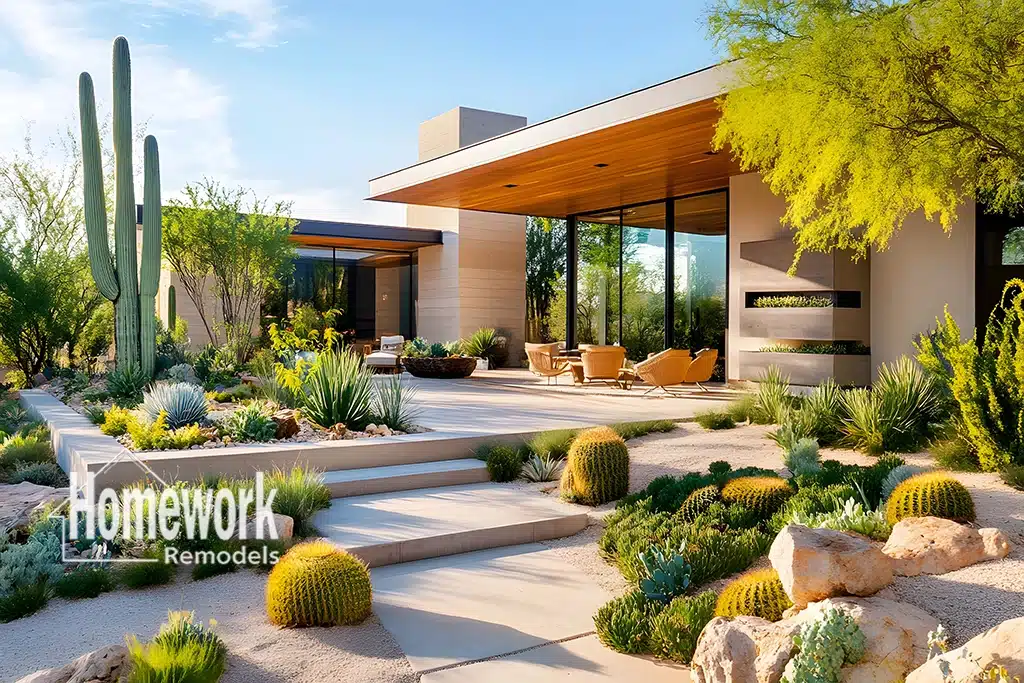
Many homeowners also prioritize improving connection between interior and exterior spaces through expanded sliders, covered patios, and stronger indoor-outdoor entertaining relationships. Because Tempe homes often sit on generous lots with mature landscaping, thoughtful indoor-outdoor integration can dramatically improve how the home functions for daily life.
Homeowners evaluating these structural transformations frequently continue exploring our guidance on creating open-concept living spaces to better understand how careful planning can improve flow while preserving architectural integrity.
Kitchen Remodeling for Tempe Mid-Century Homes
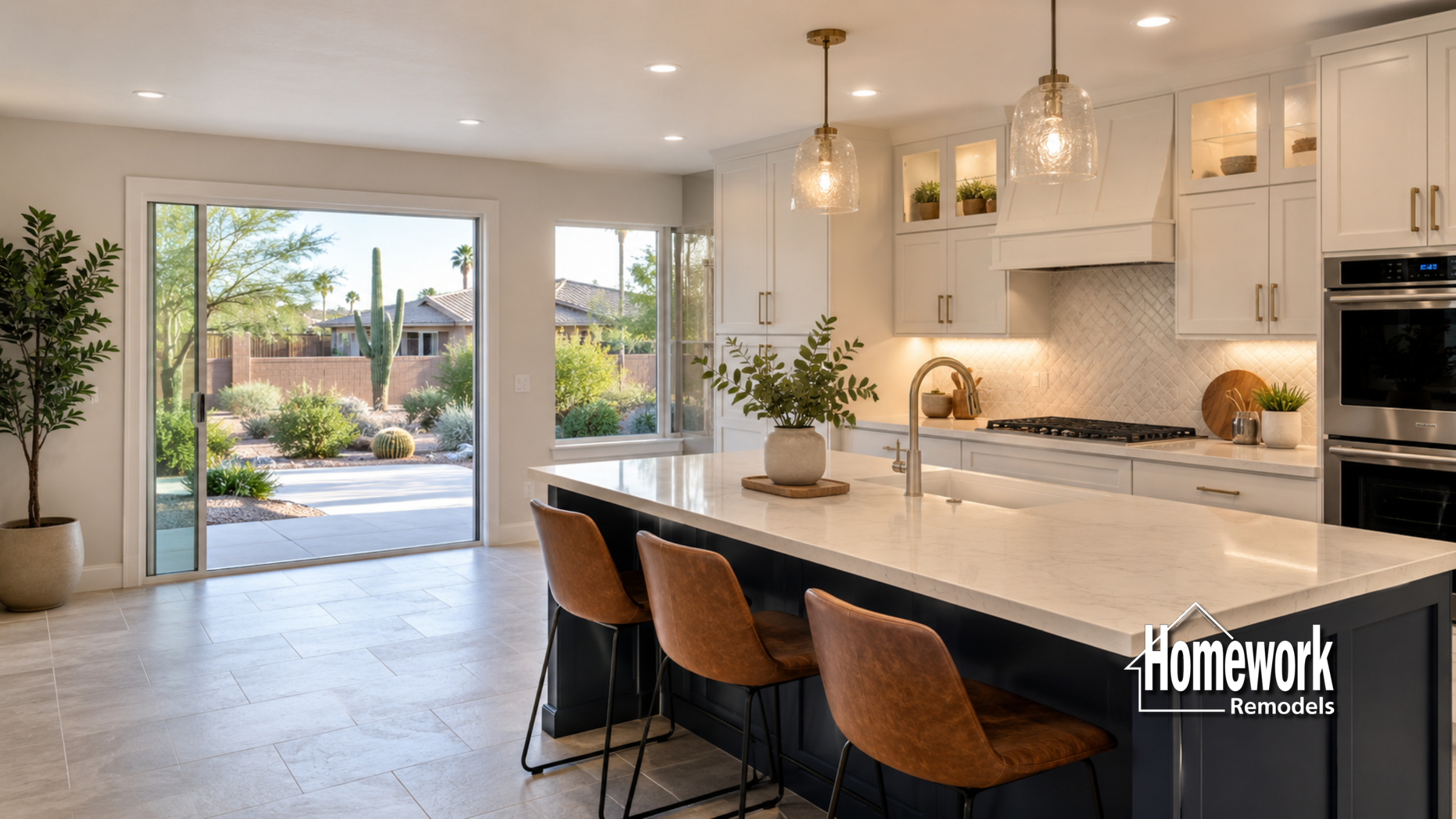
Many original mid-century kitchens throughout Tempe were designed around smaller appliances, compact preparation areas, and more separated family living patterns than most homeowners expect today. Remodeling projects frequently focus on improving workflow, increasing storage, integrating islands, strengthening natural light, and connecting kitchens more effectively to gathering spaces.
The strongest kitchen remodels preserve architectural restraint rather than competing visually with the surrounding home. Slab-front cabinetry, warm walnut tones, terrazzo-inspired surfaces, integrated appliances, understated lighting, and clean horizontal lines often create more authentic results than heavily decorative contemporary kitchens.
Many homeowners also prioritize preserving original architectural features such as tongue-and-groove ceilings, exposed beams, masonry accents, or clerestory windows while modernizing the surrounding kitchen environment.
Structural wall removal frequently becomes part of kitchen remodeling projects in Tempe because opening kitchens to dining and living spaces dramatically improves functionality and circulation. These modifications require careful coordination to preserve rooflines, ceiling continuity, and the overall visual balance of the home.
Homeowners researching preservation-sensitive kitchen modernization often continue exploring our broader approach to improving kitchen flow and functionality while planning long-term remodeling goals.
Bathroom Remodeling with Mid-Century Simplicity
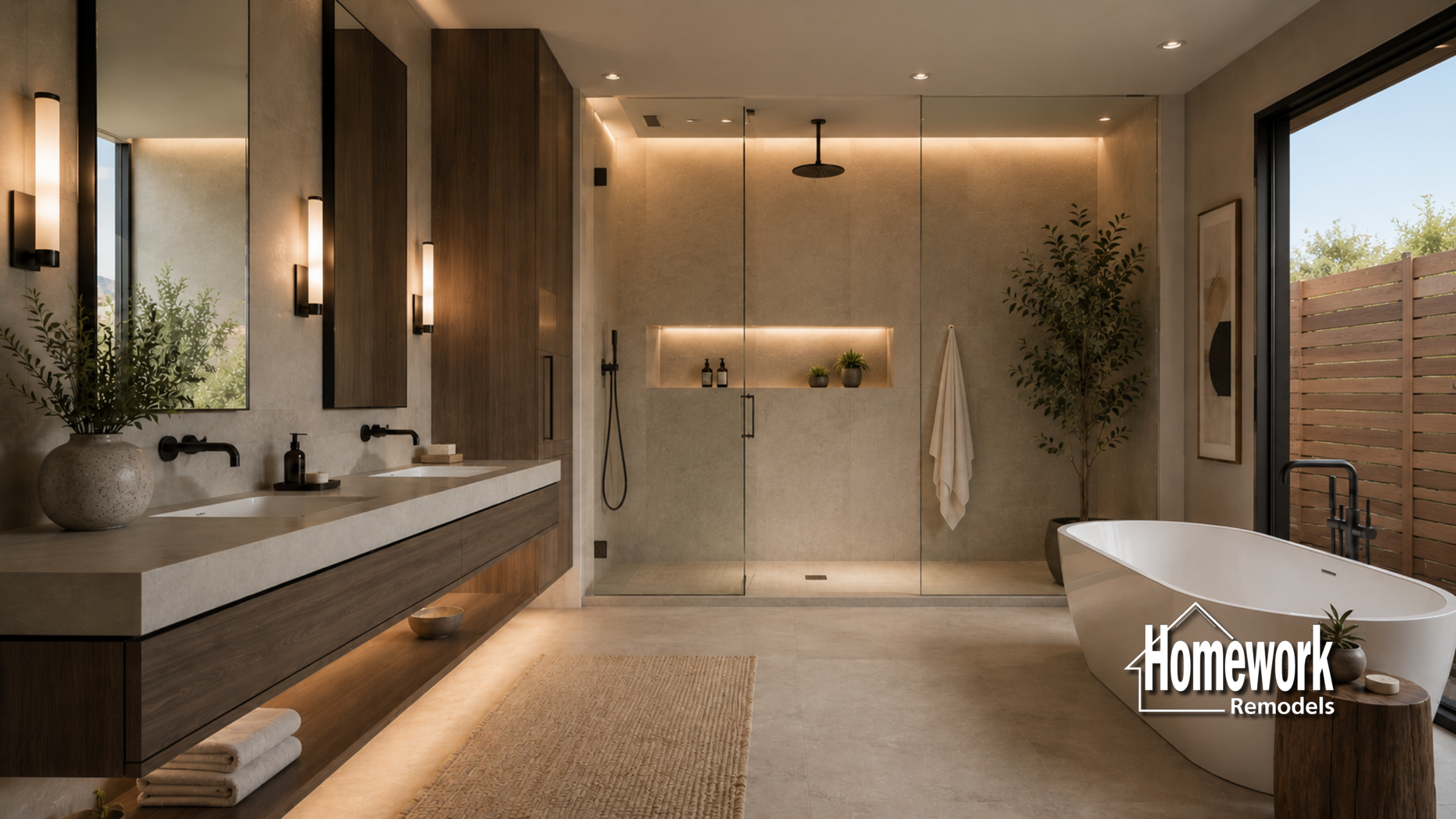
Bathrooms in many original Tempe mid-century homes were compact and highly practical by the standards of their era. Today’s homeowners frequently want larger showers, expanded storage, improved lighting, dual vanities, and stronger comfort while still preserving the simplicity associated with authentic mid-century architecture.
Successful bathroom modernization projects often focus on calmness and visual restraint rather than decorative excess. Floating vanities, frameless glass, curbless showers, indirect lighting, large-format tile, and warm natural materials frequently feel more architecturally integrated than trend-heavy fixtures or highly ornamental finishes.
Many homeowners also prioritize improving ventilation, natural light, and spatial openness so bathrooms feel calmer and more connected to the overall architectural language of the home.
The strongest bathroom remodels often succeed because they feel understated rather than over-designed. Material continuity, simplified transitions, and restrained detailing help preserve the calm atmosphere associated with thoughtful mid-century modernization.
Homeowners planning larger whole-home transformations frequently continue exploring our approach to architecturally integrated bathroom remodeling to better understand how bathroom upgrades connect to broader modernization strategies.
Casitas, Guest Suites, and Flexible Living in Tempe
Tempe’s larger lots and central location make many mid-century properties ideal for detached guest houses, attached casitas, multigenerational living spaces, home offices, and flexible additions designed around changing family needs.
Many homeowners today want spaces that accommodate visiting family, aging parents, long-term guests, remote work, or rental flexibility while still preserving the architectural simplicity of the original home.
Designing these additions successfully requires careful attention to roof geometry, glazing proportions, material continuity, and structural relationships so new spaces feel naturally connected to the original architecture rather than visibly attached afterward.
Successful additions often emphasize low horizontal forms, restrained detailing, integrated courtyard relationships, and visual openness that supports the overall balance of the property.
Homeowners exploring flexible living arrangements frequently continue researching our resources on casita and guest house additions to better understand how additional living space can be integrated thoughtfully into Tempe’s mid-century neighborhoods.
The Design-Build Advantage for Mid-Century Remodeling
Mid-century homes may appear visually simple, but remodeling them successfully often requires substantial coordination behind the scenes. Structural engineering, HVAC redesign, insulation improvements, electrical modernization, glazing upgrades, roof coordination, slab modifications, lighting integration, permitting, and architectural detailing all affect one another during construction.
Fragmented remodeling processes frequently create problems because architectural decisions become disconnected from structural realities, budgeting considerations, or long-term planning goals. That disconnect can compromise both the architectural integrity of the home and the overall remodeling experience.
Our design-build process was developed specifically to improve coordination throughout architecturally sensitive remodeling projects. Design development, engineering, budgeting, selections, permitting, and construction sequencing evolve together from the earliest planning stages through final construction.
This integrated approach becomes especially important when projects involve open-concept conversions, structural wall removal, architecturally sensitive additions, whole-home modernization, or preservation-focused remodeling. Many homeowners planning larger transformations continue exploring our Core Guides for remodeling planning to better understand budgeting, preconstruction, and long-term modernization strategy.
Featured Mid-Century Remodeling Project in Tempe
One recent remodeling project near Daley Park demonstrates how thoughtful modernization can dramatically improve functionality while preserving architectural identity. The original kitchen was enclosed, dated, and disconnected from the surrounding living spaces, yet the home contained remarkable architectural potential beneath its aging finishes.
Our team removed a load-bearing wall to open the kitchen into the primary gathering spaces while preserving structural integrity and ceiling continuity. A walnut slab-front cabinetry system, integrated appliances, improved lighting, and white quartz surfaces modernized the kitchen while maintaining the simplicity associated with authentic mid-century design.
Most importantly, the original tongue-and-groove ceiling was preserved, helping maintain the architectural continuity that connected the remodeled space to the original home. The result was a kitchen that felt dramatically more functional and open without losing the character that made the property special originally.
Homeowners often continue exploring our featured remodeling portfolio to see additional examples of preservation-sensitive modernization throughout Tempe and the surrounding East Valley.
What Mid-Century Modernization Really Means
Mid-century modernization is not about creating museum-quality time capsules or freezing homes in the past. It is about understanding which architectural qualities define the home and then modernizing the property in ways that preserve those qualities while improving everyday livability.
At Homework Remodels, we believe thoughtful modernization should strengthen the original architecture rather than flattening or overpowering it. The strongest projects preserve simplicity, openness, material restraint, structural clarity, and connection to the surrounding environment while quietly integrating modern systems and functionality behind the scenes.
As more homeowners throughout Tempe rediscover the value of preservation-sensitive remodeling, these neighborhoods continue evolving in ways that honor their architectural roots while supporting modern lifestyles.
Ready to Modernize Your Mid-Century Home in Tempe?
The best mid-century remodeling projects preserve the architectural qualities that made the home timeless while improving how it supports modern living. Whether you are planning a kitchen remodel, whole-home modernization, structural reconfiguration, guest house addition, or indoor-outdoor transformation, Homework Remodels can help you approach the process with architectural sensitivity, careful planning, and long-term vision.
Many homeowners begin by scheduling a conversation through our Free Remodeling Consultation page to discuss their home, modernization priorities, architectural goals, and long-term plans for the property.
Homework Remodels proudly serves homeowners throughout Tempe with thoughtful design-build remodeling focused on preservation-sensitive mid-century modernization.
AWARD WINNING HOME AND COMMERCIAL RENOVATION SERVICES
Got a project in mind? Let’s talk! We’re excited to help you make it happen.