
Mid-Century Modern Remodeling
What this page covers
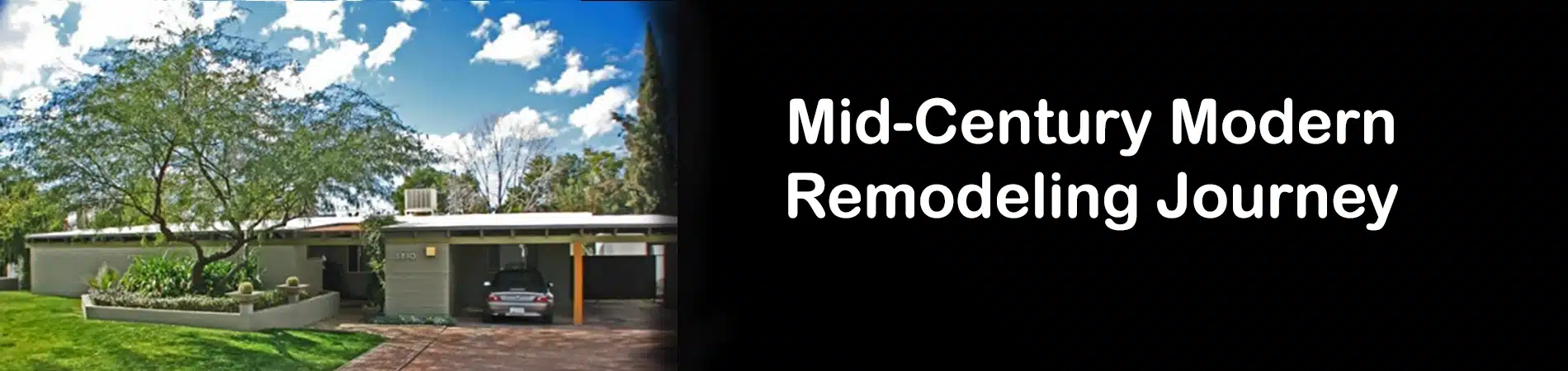
This guide explores the unique opportunities and challenges involved in remodeling Mid-Century Modern homes. You’ll learn how to modernize kitchens, bathrooms, floor plans, and building systems while preserving the architectural character, proportions, materials, and design philosophy that make these homes special.
Who this is for
Homeowners who own or appreciate Mid-Century Modern homes and want to improve functionality, efficiency, comfort, and livability while respecting the architectural heritage and design intent of the original home.
Key Takeaways
- Successful modernization respects the original design philosophy of the home.
- Open-concept improvements often align naturally with Mid-Century Modern principles.
- Material selection plays a critical role in maintaining architectural authenticity.
- Energy efficiency and modern systems can be integrated without compromising character.
- The goal is thoughtful modernization rather than complete reinvention.
Why Mid-Century Modern Homes Continue to Captivate Us
Few architectural styles have maintained their appeal as successfully as Mid-Century Modern design. Decades after these homes were originally built, they continue attracting homeowners who appreciate their clean lines, thoughtful layouts, strong connection to nature, and distinctive architectural character. In communities throughout Phoenix, Scottsdale, Tempe, and beyond, Mid-Century Modern homes remain highly sought after not simply because they are historic, but because they continue offering something many homeowners are still searching for today.
Many people struggle to explain exactly what attracts them to these homes. They may initially point to exposed beams, expansive glass, clerestory windows, post-and-beam construction, or the work of architects such as Ralph Haver, Al Beadle, Bennie Gonzales, and others who helped shape Arizona’s architectural landscape. These features certainly contribute to the appeal, yet they rarely explain the entire experience. The connection homeowners feel is often emotional rather than analytical. Something about the home feels different, even when they cannot immediately identify why.
Part of this reaction comes from the remarkable honesty of Mid-Century Modern architecture. These homes were designed during a period when architects were asking fundamental questions about how people should live. Rather than relying heavily on ornamentation or historical references, they focused on light, space, proportion, function, and the relationship between people and their environment. The architecture itself became the primary expression of beauty. Homeowners often sense this authenticity the moment they enter a well-preserved Mid-Century home because the design feels purposeful rather than decorative.
Natural light frequently plays a central role in this experience. Clerestory windows draw sunlight deep into the interior. Large expanses of glass connect living spaces to the landscape beyond. Open sightlines allow rooms to feel larger than their actual dimensions. Throughout the day, changing patterns of light create a sense of movement and connection that many homeowners find both calming and inspiring. The house feels alive because the environment itself becomes part of the design.
Many homeowners also describe a feeling of openness that extends beyond square footage. Mid-Century homes often feel spacious not because they are enormous, but because they were carefully designed around visual continuity and human experience. Rooms connect naturally to one another. Indoor and outdoor spaces feel related. Circulation patterns encourage movement without confusion. The result is a home that feels comfortable, efficient, and welcoming without relying on excessive size to achieve those qualities.
This sense of openness reflects something deeper than architecture alone. Mid-Century designers believed that homes should support daily living rather than dominate it. Their goal was not to create monuments. Their goal was to create environments that felt natural and intuitive for the people living within them. Decades later, homeowners continue responding to this philosophy because the underlying human needs it addresses have not changed. People still value connection, comfort, natural light, flexibility, and a strong relationship to the world around them.
Interestingly, many Mid-Century homes feel surprisingly contemporary despite being more than half a century old. Homeowners searching for open living spaces, stronger indoor-outdoor connections, brighter interiors, and flexible floor plans often discover that Mid-Century architects were exploring these ideas generations before they became common remodeling goals. The homes feel modern not because they have remained frozen in time, but because many of the principles behind their design remain relevant today.
This relevance helps explain why Mid-Century neighborhoods continue attracting architects, designers, preservation advocates, and homeowners alike. Communities filled with thoughtfully designed Mid-Century homes offer something increasingly rare: a strong architectural identity. The homes feel connected to one another through shared principles while still retaining individual character. Residents are often drawn not only to the houses themselves but also to the larger sense of place created by the neighborhood as a whole.
Over time, many homeowners discover that their appreciation for Mid-Century architecture deepens rather than fades. What begins as admiration for distinctive features gradually evolves into an appreciation for the philosophy behind those features. They begin noticing how sunlight shapes the experience of a room. They become aware of how architecture influences daily routines. They recognize the care with which designers considered scale, proportion, landscape, and human behavior. The home becomes more meaningful because it continues revealing layers of thought and intention long after the initial excitement of ownership has passed.
This deeper understanding often changes the way homeowners think about remodeling. They begin realizing that the goal is not simply to update an older house. The goal is to understand what makes the home special before deciding how it should evolve. The architecture already contains valuable ideas about light, connection, simplicity, and daily living. Successful remodeling begins by recognizing those qualities and ensuring that future improvements strengthen rather than diminish them.
Ultimately, Mid-Century Modern homes continue to captivate homeowners because they offer more than just a distinctive appearance. They embody a thoughtful vision of how architecture can support life. They connect people to light, nature, space, and one another in ways that remain remarkably relevant today. Long after design trends have come and gone, these homes continue reminding us that great architecture is not defined by complexity or novelty. It is defined by its ability to enrich everyday living. That enduring quality is what makes Mid-Century Modern homes feel timeless, and it is the foundation upon which every successful Mid-Century Modernization project is built.
Homeowners who are considering updating a Mid-Century home often benefit from understanding the architectural principles that make these properties unique. Our Mid-Century Modern Home Remodeling Guide explores preservation, modernization, architectural identity, and the strategies that help homeowners improve functionality without compromising character. Homeowners seeking inspiration may also enjoy reviewing our collection of Mid-Century Modern remodeling resources.
A Different Vision of How People Should Live
One of the reasons Mid-Century Modern homes continue feeling relevant decades after they were built is that they emerged from a fundamentally different way of thinking about residential design. The architects of the era were not simply creating a new style. They were exploring a new philosophy of living. Their goal was to design homes that reflected changing lifestyles, modern technology, evolving family patterns, and a growing desire for simplicity, openness, and connection.
This represented a significant shift from many earlier architectural traditions. Previous generations often organized homes around formality, separation, and clearly defined boundaries between rooms. Dining rooms served specific purposes. Living rooms served different purposes. Kitchens frequently operated as separate workspaces disconnected from the social life of the home. Mid-Century designers began questioning whether these divisions truly reflected the way people wanted to live.
Their response was to create homes that felt more open, flexible, and connected. Rather than emphasizing separation, they emphasized relationships. Rooms flowed naturally into one another. Living spaces supported conversation and interaction. Large expanses of glass connected interiors to the surrounding landscape. Architecture became less focused on creating boundaries and more focused on creating experiences.
This philosophy extended beyond floorplans. Mid-Century architects viewed nature as an essential part of daily life rather than something to be admired from a distance. Windows were positioned to frame views. Courtyards became extensions of interior living spaces. Patios functioned as outdoor rooms. Natural light became a design material in its own right. The home was not intended to stand apart from its environment. It was intended to exist in partnership with it.
For homeowners, this often creates a living experience that feels remarkably different from conventional residential design. Daily routines become connected to changing patterns of sunlight. Interior spaces feel visually larger because they extend toward the landscape beyond. Seasonal changes become more noticeable. The boundaries between inside and outside begin softening. People do not simply occupy the home. They participate in an environment designed to connect them to the world around them.
Mid-Century architects also believed that simplicity could create greater comfort. This idea is often misunderstood. Simplicity did not mean sacrificing quality or reducing functionality. Instead, it meant eliminating unnecessary complexity so that the most important aspects of the home could take center stage. Proportion, light, materials, craftsmanship, and spatial relationships became more important than ornamentation. The architecture sought clarity rather than decoration.
Many homeowners continue responding to this philosophy because modern life often feels increasingly complex. People navigate crowded schedules, constant information, and endless distractions. A well-designed Mid-Century home offers something different. The architecture encourages calm. Spaces feel intentional. Natural light creates rhythm throughout the day. The home becomes a place where simplicity supports well-being rather than limiting it.
Another remarkable aspect of Mid-Century design is its focus on human scale. These homes were rarely designed to impress through sheer size. Instead, they sought to create environments that felt comfortable, functional, and deeply connected to everyday living. Architects paid careful attention to how people moved through spaces, how rooms related to one another, and how architecture influenced daily experience. The result was a home that often feels larger emotionally than it does physically.
This emphasis on human experience helps explain why Mid-Century homes frequently feel contemporary despite their age. Many of the priorities homeowners pursue today mirror the priorities Mid-Century designers were already exploring decades ago. Open living areas, flexible spaces, indoor-outdoor connections, abundant natural light, and thoughtful simplicity remain among the most requested remodeling goals in modern residential design. What many homeowners consider contemporary living was, in many ways, anticipated by Mid-Century architects generations earlier.
As homeowners spend more time in these homes, they often begin to recognize that the architecture is quietly influencing their daily lives. Family members gather more naturally. Outdoor spaces receive more use. Natural light changes the atmosphere of rooms throughout the day. Sightlines create a stronger sense of connection between spaces. These experiences are not accidental. They are the result of a design philosophy that placed human life at the center of the architectural process.
Understanding this philosophy becomes especially important when remodeling a Mid-Century home. Homeowners who focus exclusively on individual features may miss the larger vision that gives those features meaning. Clerestory windows matter because of how they shape light. Open floorplans matter because of how they influence relationships. Indoor-outdoor connections matter because of their impact on daily experience. The architecture functions as a system, with each element supporting a broader idea of how people interact with their homes.
Ultimately, Mid-Century Modern homes continue inspiring homeowners because they embody a different vision of how people should live. They were designed around connection rather than separation, simplicity rather than excess, and experience rather than appearance. Their enduring appeal is not simply a matter of style. It is a reflection of the fact that the human needs they were designed to support remain as relevant today as they were when the homes were first built. Understanding that philosophy provides the foundation for every successful Mid-Century Modernization project, as it helps homeowners preserve not only the architecture itself but also the ideas that give it lasting value.
Many of the concepts explored by Mid-Century architects—open living, indoor-outdoor connection, natural light, and flexibility—continue influencing remodeling projects today. Homeowners interested in these principles may also enjoy exploring our Open Concept Remodeling Guide and Removing Load-Bearing Walls Guide.
Why Mid-Century Homes Still Feel Modern
One of the most remarkable qualities of Mid-Century Modern architecture is its ability to feel contemporary despite its age. Homeowners often walk into a well-preserved Mid-Century home and are surprised to learn that the property was built decades earlier. The architecture feels fresh, relevant, and aligned with many of the same priorities that influence residential design today. While other styles are often associated with specific periods of history, Mid-Century homes frequently seem to exist outside of time.
This enduring relevance is not accidental. The architects and designers who shaped the Mid-Century movement were focused less on creating a fashionable style and more on solving enduring problems related to how people live. They explored questions that continue influencing residential design today. How can homes feel more open? How can natural light improve daily life? How can architecture strengthen connections between people and their environment? How can spaces remain flexible as needs change over time? These questions remain just as important today as they were generations ago.
One reason Mid-Century homes continue feeling modern is their emphasis on openness. Long before open-concept living became a common remodeling goal, Mid-Century architects were experimenting with ways to reduce unnecessary barriers between spaces. Rather than treating rooms as isolated compartments, they sought to create visual continuity and natural flow throughout the home. Living areas connected more easily to dining spaces. Kitchens developed stronger relationships with gathering areas. Sightlines extended across multiple rooms. The resulting spaces often feel remarkably consistent with contemporary expectations for how families want to live today.
Natural light represents another area where Mid-Century design anticipated modern priorities. Today’s homeowners frequently seek brighter interiors and stronger connections to the outdoors. Mid-Century architects were pursuing these same objectives decades earlier through clerestory windows, expansive glass walls, carefully positioned openings, and thoughtful orientation to the site. These strategies helped transform sunlight from a practical necessity into an integral part of the living experience. The resulting interiors often feel vibrant, welcoming, and connected to the changing rhythms of the day.
The relationship between indoor and outdoor living further reinforces this sense of modernity. Contemporary homeowners consistently express a desire for stronger connections between their homes and the surrounding environment. Outdoor kitchens, covered patios, courtyards, and entertaining spaces have become increasingly popular because people value environments that extend beyond interior walls. Mid-Century architecture embraced this philosophy from the beginning. Large expanses of glass, integrated outdoor living spaces, and carefully framed views created homes that felt connected to their sites in ways many newer homes still struggle to achieve.
Flexibility also contributes to the enduring appeal of Mid-Century design. The architects of the era understood that families evolve over time. Rather than creating highly rigid environments, they often designed homes that could adapt to changing lifestyles. Spaces served multiple purposes. Rooms related to one another in ways that encouraged flexibility. The architecture supported daily life without dictating exactly how every activity should occur. This adaptability remains valuable because modern families continue to seek homes that can evolve with their needs.
Another reason Mid-Century homes feel contemporary is their commitment to simplicity. Simplicity is often confused with minimalism, but the two are not the same. Mid-Century architects were not pursuing emptiness. They were pursuing clarity. Every design decision was intended to serve a purpose. Materials were selected honestly. Structural systems were often expressed rather than concealed. Architectural features existed because they contributed to the overall experience of the home. This clarity creates environments that feel timeless because they are not dependent upon trends or excessive decoration.
Homeowners frequently discover that this simplicity contributes to a greater sense of calm. Spaces feel organized without feeling sterile. Architectural details provide visual interest without overwhelming the environment. Natural materials add warmth and texture without relying on ornamentation. The home feels intentional because every element contributes to a larger design philosophy rather than competing for attention. This balance between simplicity and richness remains one of the defining strengths of Mid-Century architecture.
Interestingly, many remodeling trends promoted today involve rediscovering principles that Mid-Century designers were already exploring. Open living, stronger indoor-outdoor connections, flexible floor plans, abundant daylight, and thoughtful simplicity continue to appear at the top of homeowners’ wish lists. This does not mean Mid-Century architects predicted the future. It means they were responding to enduring human needs that remain relevant regardless of changing fashions or technologies.
Understanding this helps explain why Mid-Century Modernization differs from ordinary remodeling. The goal is not simply updating an older home. The goal is strengthening qualities that remain valuable today while addressing areas where modern expectations have evolved. Homeowners are not attempting to make the home contemporary. In many respects, the home already is. The challenge is to help it function more effectively in contemporary life without compromising the principles that gave it lasting relevance in the first place.
Ultimately, Mid-Century homes continue feeling modern because they were designed around ideas rather than trends. Light, openness, flexibility, connection, simplicity, and human-centered design remain important because human beings continue valuing those qualities regardless of the era in which they live. The architecture endures because it addresses needs that transcend fashion. Decades after these homes were built, they continue demonstrating that great design is not defined by age. It is defined by its ability to improve everyday life. That enduring relevance is one of the primary reasons Mid-Century Modern homes continue captivating homeowners and why thoughtful modernization remains so important to their future.
Many homeowners are surprised to discover how closely Mid-Century design principles align with today’s remodeling goals. Open living environments, connected gathering spaces, and strong visual relationships between rooms remain among the most requested features in modern remodeling projects. Homeowners seeking examples may enjoy exploring our collection of Open Concept Remodeling Ideas.
When Architecture Meets Everyday Life
One reason homeowners fall in love with Mid-Century Modern homes is that the architecture often feels remarkably intentional. Natural light fills interior spaces. Sightlines create a sense of openness. Indoor and outdoor environments feel connected. The home possesses a clarity and simplicity that can be difficult to find in newer construction. These qualities create an experience that feels both refreshing and timeless.
Yet after the excitement of moving into a Mid-Century home has settled, homeowners often discover that daily life introduces practical realities the original designers could never have anticipated. Families today use their homes differently than families did sixty or seventy years ago. Technology has changed. Work patterns have changed. Entertaining habits have changed. Storage expectations have changed. The architecture remains inspiring, but the demands placed upon the home have evolved considerably.
This does not mean the original design was flawed. In fact, many of the challenges homeowners encounter arise precisely because Mid-Century architects were designing thoughtfully for the lifestyles of their time. Kitchens often reflected a different relationship between cooking and entertaining. Storage needs were significantly smaller. Home offices were largely unnecessary. Bathrooms were designed around different expectations of comfort and convenience. Families owned fewer possessions, relied on fewer electronic devices, and interacted with their homes in fundamentally different ways than many households do today.
As a result, homeowners frequently discover that the very qualities they admire most about the architecture can occasionally create limitations in everyday life. Open sightlines may highlight a kitchen that no longer functions efficiently. Beautiful expanses of glass may coexist with aging mechanical systems. Compact bathrooms may feel inconsistent with contemporary expectations. Storage may become increasingly difficult as modern households accumulate belongings and equipment that did not exist when the home was originally designed.
These realities often create tension for Mid-Century homeowners. They appreciate the architecture and want to protect it, yet they also want the home to support the way they actually live. The challenge is rarely deciding whether improvements are necessary. The challenge is determining how those improvements can occur without diminishing the qualities that make the home special in the first place.
Many homeowners initially assume they must choose between preserving architectural character and improving functionality. Over time, however, they often discover that these goals are not inherently opposed. In many cases, thoughtful improvements can strengthen the original design by helping the home function more effectively in contemporary life. The key is understanding which aspects of the architecture represent enduring principles and which aspects simply reflect the practical limitations of the era in which the home was built.
For example, the Mid-Century commitment to openness remains highly relevant today. The desire for connection between gathering spaces continues to influence modern remodeling projects. Yet the specific way a kitchen functioned in 1960 may not support contemporary entertaining patterns. Improving circulation, increasing storage, and strengthening relationships between spaces can enhance daily living while remaining entirely consistent with the home’s original design philosophy. The objective is not to replace the architecture but to help it continue fulfilling its purpose.
The same principle applies throughout the home. Bathrooms can become more comfortable and accessible while maintaining architectural integrity. Mechanical systems can be upgraded without compromising design character. Storage solutions can be introduced thoughtfully. Indoor-outdoor connections can be strengthened. Additions can create flexibility for changing lifestyles. The architecture remains recognizable because the improvements are guided by the same principles that shaped the original design.
This approach requires homeowners to think differently about remodeling. Rather than asking how dramatically the home should change, they begin asking how the home can function more effectively while remaining true to itself. The conversation shifts from replacement to refinement. Every decision becomes an opportunity to strengthen the relationship between the architecture and the people living within it.
Interestingly, many of the most successful Mid-Century remodels feel almost invisible when viewed from this perspective. Visitors often struggle to identify exactly what changed. The home still feels authentic. It still feels unmistakably Mid-Century. Yet daily life functions more smoothly. Spaces support contemporary routines more effectively. Comfort improves. Flexibility increases. The architecture remains the star of the experience while the improvements quietly support modern living behind the scenes.
This outcome reflects one of the central lessons of Mid-Century Modernization. Great architecture is not preserved by resisting change. It is preserved by thoughtfully guiding change. Homes remain relevant because they adapt to the people who live in them. The strongest Mid-Century remodels respect the original vision while acknowledging that every generation brings new needs, new expectations, and new opportunities for improvement.
Ultimately, when architecture meets everyday life, homeowners are asked to balance appreciation for the past with responsibility for the present. The goal is not to recreate life as it existed decades ago. The goal is to help the home continue supporting meaningful living today. When approached thoughtfully, remodeling allows Mid-Century architecture to remain both authentic and useful, preserving the qualities that made these homes extraordinary while ensuring they continue serving modern families with comfort, functionality, and purpose.
The Art of Mid-Century Modernization
One of the most common misconceptions about Mid-Century remodeling is the belief that homeowners must choose between preservation and modernization. Some people assume that protecting Mid-Century architecture requires freezing the home in time, preserving every detail exactly as it existed decades ago. Others assume that improving functionality requires replacing original features and reshaping the home to align with contemporary trends. Both approaches miss the deeper opportunity that Mid-Century homes present.
The most successful Mid-Century remodeling projects rarely pursue either extreme. Instead, they embrace a philosophy that can best be described as Mid-Century Modernization. This approach recognizes that homes are meant to evolve while remaining faithful to the principles that gave them value in the first place. The objective is not to recreate the past, nor is it to erase it. The objective is to help the home continue expressing its original design philosophy while serving the needs of contemporary life.
This distinction is important because Mid-Century architecture was never intended to be static. The architects who designed these homes were innovators. They embraced new materials, new technologies, and new ideas about how people should live. They challenged conventional thinking and searched for better ways to connect architecture with everyday experience. If those designers were working today, they would almost certainly continue exploring new solutions rather than insisting that their work remain permanently unchanged.
Understanding this spirit of innovation changes the way homeowners approach remodeling. Instead of asking how closely they can replicate the past, they begin asking how the original design philosophy can guide future improvements. The focus shifts from preserving individual features to preserving design intent. What mattered most was never a specific cabinet style, appliance, or material selection. What mattered was the larger vision behind those choices.
This perspective often provides clarity by helping homeowners distinguish between architectural principles and architectural artifacts. Principles such as openness, simplicity, connection to nature, human scale, and thoughtful functionality remain as valuable today as they were when the home was built. Certain materials, finishes, systems, and layouts, however, may no longer serve modern life as effectively. Modernization allows homeowners to strengthen the principles while thoughtfully updating the elements that have become less functional over time.
Consider the role of the kitchen within many Mid-Century homes. The original design may have reflected entertaining patterns and family routines that were common decades ago. Today’s homeowners often cook, gather, and use their homes differently. Expanding storage, improving workflow, enhancing sightlines, or strengthening connections between spaces can support contemporary living while remaining completely consistent with the Mid-Century commitment to openness and interaction. The architecture evolves without abandoning its identity.
The same philosophy applies throughout the home. Bathrooms can become more comfortable and accessible. Mechanical systems can improve efficiency and reliability. Indoor-outdoor relationships can be strengthened. Natural light can be enhanced. Additions can create flexibility for changing lifestyles. None of these improvements diminish the architecture when they are guided by the principles that made the home meaningful in the first place. In many cases, they actually help the architecture perform more effectively than it has in decades.
This is why Mid-Century Modernization differs from ordinary remodeling. Traditional remodeling often focuses on replacing what is old with what is new. Mid-Century Modernization focuses on understanding what deserves preservation, what requires improvement, and how both objectives can work together. The process begins with respect for the architecture rather than assumptions about what should change.
Many homeowners find this approach surprisingly liberating. Instead of feeling trapped between preservation and modernization, they gain a framework for making decisions. The question is no longer whether a proposed change is original. The question becomes whether it supports the home’s design philosophy. Does it strengthen openness? Does it improve functionality? Does it preserve simplicity? Does it enhance the relationship between people, architecture, and the environment? These questions often lead to far better outcomes than rigid adherence to either preservation or reinvention.
The most successful Mid-Century remodels often feel inevitable once complete. Visitors may struggle to identify exactly what changed because the home still feels authentic. The architecture remains recognizable. The character remains intact. Yet daily life functions more naturally. Spaces feel brighter, more comfortable, and more responsive to contemporary needs. The improvements seem to belong because they were guided by the same principles that shaped the original design.
Over time, homeowners often realize that Mid-Century Modernization is not primarily about architecture at all. It is about preserving ideas. The qualities that attracted them to the home—light, openness, simplicity, connection, flexibility, and human-centered design—continue shaping their experience long after construction is complete. Remodeling becomes a way to extend those ideas into the future rather than leave them trapped in the past.
Ultimately, the art of Mid-Century Modernization lies in understanding that great architecture is not preserved through imitation. It is preserved through thoughtful evolution. Mid-Century homes remain relevant because they were built upon enduring principles rather than temporary trends. When homeowners modernize these homes with care, they are not abandoning the original vision. They are continuing it. The result is a home that remains unmistakably Mid-Century while fully supporting the lives of the people who inhabit it today and the generations who may one day follow.
Thoughtful modernization requires careful planning before construction begins. Homeowners considering significant changes may also benefit from reviewing Design-Build Remodeling Explained and Pre-Construction Explained to better understand how successful remodeling projects are developed.
Becoming a Steward of Design
At some point during Mid-Century homeownership, many people experience a shift in perspective similar to the one often encountered by owners of historic homes. The house gradually becomes more than a property. It becomes more than an investment. It becomes more than a collection of architectural features. Homeowners begin recognizing that they are temporarily caring for something that embodies a larger vision. They are not simply maintaining a structure. They are preserving and advancing a design philosophy that has remained relevant for generations.
This realization often occurs gradually. It may begin with an appreciation of how natural light moves through the home at different times of day. It may emerge through a growing awareness of how indoor and outdoor spaces interact. It may develop while studying the work of architects whose ideas continue shaping contemporary design. Whatever the starting point, many homeowners eventually recognize that the home’s greatest value lies not in any individual feature but in the principles those features were designed to support.
This distinction is important because Mid-Century architecture is frequently misunderstood as a style rather than a philosophy. People often focus on visible elements such as clerestory windows, exposed beams, post-and-beam construction, breeze blocks, or expansive glass walls. These features are certainly important, but they are expressions of deeper ideas. The architects who designed Mid-Century homes were not primarily trying to create recognizable visual signatures. They were attempting to create environments that supported a better way of living.
As homeowners begin understanding this, their relationship with remodeling often changes. Decisions become less focused on whether something looks original and more on whether it supports the architecture’s original intent. A proposed change may be entirely new yet remain faithful to the philosophy of the home. Likewise, an original feature may lose value if it no longer contributes meaningfully to the living experience the architecture was intended to create.
This mindset transforms remodeling from an exercise in preservation into one of stewardship. Preservation often focuses on protecting physical elements. Stewardship focuses on protecting the ideas those elements represent. Homeowners become caretakers of principles such as openness, simplicity, connection to nature, flexibility, and human-centered design. Their responsibility extends beyond maintaining materials. It includes maintaining meaning.
Many homeowners find this perspective both liberating and empowering. It removes the pressure to treat the home as a museum while also discouraging changes that disregard its architectural identity. The goal is not perfection. The goal is thoughtful continuity. Every remodeling decision becomes an opportunity to ask whether the home is becoming a stronger expression of the principles that made it valuable in the first place.
This approach often produces more successful outcomes because it provides a framework for navigating change. Modern families require modern solutions. Technologies evolve. Lifestyles change. Expectations shift. The question is not whether adaptation should occur. The question is how adaptation can strengthen the architecture rather than compete with it. Stewardship encourages homeowners to pursue improvements that enhance the living experience while preserving the integrity of the design philosophy.
The most admired Mid-Century homes often reflect decades of stewardship. They survived not because every owner preserved every detail unchanged. They survived because successive owners understood what mattered most. Systems were updated. Spaces evolved. New needs were accommodated. Yet the essential ideas remained intact. The homes continued expressing the values that made them meaningful despite the passage of time.
This continuity becomes particularly important in neighborhoods known for Mid-Century architecture. Communities influenced by Ralph Haver, Al Beadle, Bennie Gonzales, and other visionary designers derive much of their identity from a shared architectural language. Every thoughtfully modernized home contributes to the preservation of that larger legacy. Homeowners are not merely caring for individual properties. They are helping to sustain a broader design culture that continues to enrich the character of the neighborhood as a whole.
Over time, many Mid-Century homeowners discover that stewardship creates a deeper connection to their homes. They become more aware of how architecture influences daily experience. They notice how light shapes mood, how proportions affect comfort, and how connections between indoor and outdoor spaces influence the rhythm of life. The home becomes a teacher as much as a possession. Living within it encourages greater appreciation for thoughtful design and the enduring principles that support human well-being.
Ultimately, becoming a steward of design means recognizing that Mid-Century architecture represents more than a moment in history. It represents a set of ideas that continue offering value today. Homeowners inherit the privilege of carrying those ideas forward while adapting them to contemporary life. Their role is not simply to preserve the past or embrace the future. Their role is to build a bridge between the two. Through thoughtful modernization, careful decision-making, and respect for design intent, they help ensure that the qualities that made Mid-Century architecture extraordinary continue to inspire and support future generations. In that sense, stewardship is not merely about protecting architecture. It is about protecting a vision of how thoughtful design can improve everyday life.
Preparing Mid-Century Homes for the Next Generation
One of the most remarkable achievements of Mid-Century Modern architecture is that it continues serving families decades after its creation. Homes originally designed in the 1950s and 1960s remain desirable, functional, and deeply admired despite dramatic changes in technology, lifestyle, and society. Few residential design movements have demonstrated such lasting influence. The fact that these homes remain relevant today speaks not only to the quality of their architecture but also to the enduring value of the ideas upon which they were built.
This longevity creates an interesting responsibility for today’s homeowners. Every generation that occupies a Mid-Century home benefits from the vision, creativity, and stewardship of those who came before. Architects developed innovative ideas. Builders transformed those ideas into physical structures. Previous homeowners maintained, improved, and adapted the properties through changing decades. The homes survived because each generation contributed something meaningful to their continued success.
Current homeowners now find themselves occupying the next chapter of that story.
This perspective often changes the way remodeling decisions are evaluated. Improvements are no longer viewed solely as solutions for immediate needs. They also become opportunities to strengthen the home’s ability to serve future families. Homeowners begin to consider how their decisions will age over time, affect the property’s architectural integrity, and contribute to the home’s long-term relevance. Remodeling becomes an investment not only in today’s lifestyle but also in tomorrow’s possibilities.
Mid-Century homes are uniquely suited to this kind of long-term thinking because the original architecture was already focused on enduring principles rather than temporary trends. Natural light remains valuable regardless of the decade. Human-centered design continues improving daily life. Strong indoor-outdoor relationships remain desirable. Flexible living spaces continue supporting changing family needs. These qualities are unlikely to become obsolete because they address fundamental human preferences that transcend fashion and technology.
The challenge for homeowners is ensuring that modernization strengthens these principles rather than obscures them. Future generations may use their homes differently than we do today. Technologies will evolve. Family structures will continue changing. New expectations will emerge. Yet the underlying ideas that define Mid-Century architecture can continue providing value if they remain central to the evolution of the home. Preparing these properties for the future means protecting the philosophy as much as the physical structure itself.
Many homeowners discover that this perspective creates a deeper sense of purpose. Remodeling is no longer simply about achieving a finished project. It becomes an opportunity to help the architecture continue thriving in a changing world. Improved systems increase reliability and efficiency. Thoughtful additions create flexibility. Better storage supports contemporary living. Updated kitchens and bathrooms enhance functionality. At the same time, the qualities that make the home uniquely Mid-Century remain visible and meaningful. The result is a property that feels both timeless and current.
This balance is particularly important because Mid-Century homes were never intended to become museums. The architects who designed them were innovators. They embraced progress, experimentation, and new ways of thinking about residential life. Freezing these homes in a single moment of history would contradict much of the spirit that inspired their creation. Preparing them for the future requires the same willingness to innovate that characterized the original movement itself.
Successful Mid-Century Modernization therefore becomes an act of continuity rather than preservation alone. Homeowners honor the past by carrying forward the ideas that made the architecture successful. They honor the future by ensuring the home remains adaptable, functional, and relevant for generations yet to come. Every thoughtful improvement contributes to that continuity by helping the home continue to fulfill its original purpose: improving everyday life through thoughtful design.
Neighborhoods also benefit from this long-term perspective. Communities known for Mid-Century architecture derive much of their identity from the collective stewardship of individual homeowners. Every well-executed modernization strengthens the area’s architectural character. Every thoughtful renovation helps preserve the broader design legacy that makes these neighborhoods distinctive. Future residents inherit not only individual homes but also the cumulative efforts of generations who chose to care for them responsibly.
Over time, homeowners often realize they are part of something larger than a remodeling project. They are helping to extend the life of an architectural movement that continues to influence how people think about residential design. The decisions they make today will shape how future families experience these homes tomorrow. The quality of that experience depends on how effectively the architecture continues to express its core values of openness, simplicity, connection, flexibility, and human-centered living.
Ultimately, preparing Mid-Century homes for the next generation is about more than preserving architecture. It is about preserving possibility. These homes remain relevant because they embody ideas that continue enriching daily life. Through thoughtful modernization, careful stewardship, and respect for design intent, homeowners help ensure that those ideas remain available to future generations. The architecture survives not because it resists change, but because it evolves intelligently while remaining true to itself. In that way, every successful Mid-Century Modernization project becomes a bridge between past innovation and future opportunity, allowing the vision that inspired these homes decades ago to continue shaping the lives of the people who will inhabit them for many years to come.
Preparing Mid-Century homes for future generations often involves balancing preservation, modernization, energy performance, accessibility, and changing family needs. The strongest projects recognize that architectural identity and functional improvement can work together, creating homes that remain both authentic and highly livable.
Related Guides
- Mid-Century Modern Home Remodeling Guide
- Open Concept Remodeling Guide
- Removing Load-Bearing Walls Guide
- Design-Build Remodeling Explained
- Remodeling Older Homes Without Losing Character
Featured Mid-Century Modern Projects
- Phoenix Mid-Century Modern Kitchen
- Simple Sophistication Bathroom Remodel
- Mid-Century Modern Addition
- HGTV Featured Mid-Century Modern Open Kitchen Remodel
Continue the Journey
While Mid-Century Modernization focuses on preserving architectural identity while improving functionality, many homeowners eventually begin considering how their homes can support changing needs over time. The next journey explores Aging in Place and Universal Design, helping homeowners create environments that remain comfortable, safe, and functional throughout every stage of life.
Explore the Aging in Place & Universal Design Journey →
About the Authors
This guide was developed by Steve Shinn (MCR, MCKBR, UDCP, GCP) and Sheila Lanier (MCKBR, UDCP) of Homework Remodels. Together, they bring decades of residential remodeling experience, professional certifications, industry leadership, award-winning project experience, and a shared commitment to homeowner education.
Steve serves as Founder and Managing Partner of Operations & Leadership and has contributed to the remodeling industry through national NARI leadership, certification development, and professional education. Sheila serves as Managing Partner of Design & Systems and is recognized for her expertise in design, client experience, project planning, and organizational leadership, including service as a NARI chapter president and national Contractor of the Year judge.
This guide reflects the planning principles and homeowner education approach Homework Remodels uses to help clients make informed decisions before construction begins.
Learn more about Steve Shinn, Sheila Lanier, and Homework Remodels.
Ready to Take the Next Step?
Every remodeling project begins with understanding. The Remodeling Knowledge Center was created to help homeowners navigate planning, design, budgeting, and construction with greater clarity and confidence.
If you’re ready to continue learning, explore the additional Journeys, Core Guides, and Remodeling Resources available throughout the Knowledge Center. If you would like to discuss your home, goals, and project ideas directly, we’re always happy to start with a conversation.
© 2026 Homework Remodels. All rights reserved. No portion of this publication may be reproduced, republished, or distributed without written permission.