
Award-Winning Galley Kitchen Remodel in Phoenix’s Historic District
Bringing New Life to a 1938 Historic Kitchen
Historic homes offer character that modern homes rarely replicate. Architectural details, handcrafted trim, and unique layouts give these homes a personality that homeowners treasure. However, kitchens built nearly a century ago were rarely designed for modern cooking or entertaining.
That was the situation in this 1938 Willo neighborhood home. The original galley kitchen contained charming historic details but felt narrow, dark, and disconnected from the surrounding living areas. The homeowners loved cooking and entertaining but often found themselves isolated in the kitchen whenever guests visited.
Their goal was clear: modernize the kitchen while preserving the home’s historic character and improving the connection between the kitchen, dining room, and living spaces.
The completed renovation transformed the once cramped galley kitchen into a bright and welcoming environment that now serves as a natural gathering space for friends and family.


Modernizing a 1938 Classic in Willo
2018 Contractor of the Year (CotY) Winner
Residential Kitchen Remodel | $30,000 – $60,000
Project Overview
Project Location: Willo Historic District — Phoenix, Arizona
Project Type: Historic Kitchen Remodel
Home Style: 1930s Spanish Revival / Historic Bungalow
Scope of Work: Galley kitchen renovation, pass-through installation, cabinetry replacement, countertop upgrades, lighting improvements, appliance upgrades, electrical and plumbing modernization
Remodeling Approach: Design-Build Remodeling
Builder / Remodeler: Homework Remodels
Recognition: 2018 NARI Contractor of the Year — Residential Kitchen Remodel $30,000–$60,000
Homeowners exploring similar projects may also find helpful insights in our pages on historic home remodeling in the Willo neighborhood, kitchen remodeling in Phoenix and Scottsdale, and our overview of the design-build remodeling process.
Improving the Connection Between Rooms
One of the most significant changes involved improving how the kitchen connected with the rest of the house.
Originally, the kitchen was completely separated from the living room. When preparing meals, the homeowners were cut off from conversations happening in the adjacent spaces. In addition, the narrow doorway connecting the kitchen and dining room created an awkward bottleneck that limited movement between rooms.
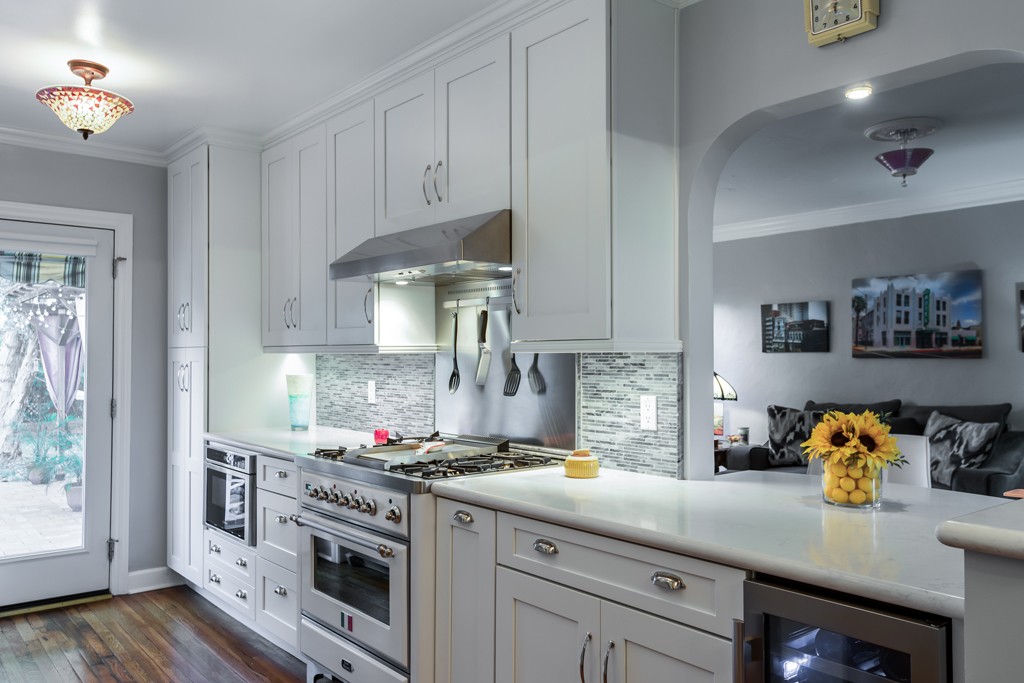
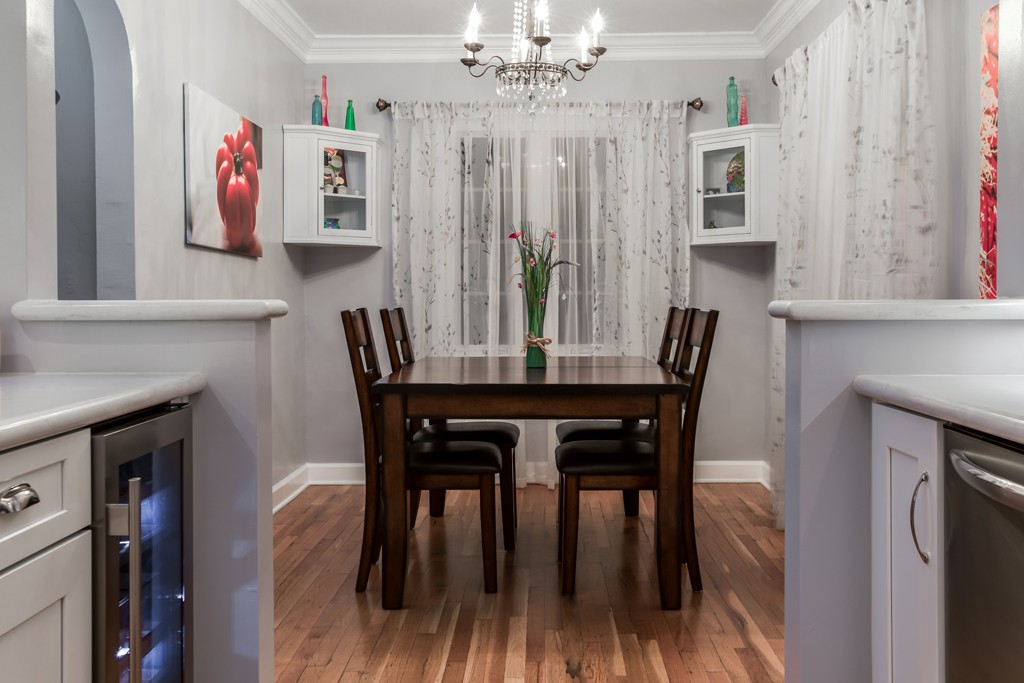
To resolve these issues, the design introduced a new arched pass-through opening between the kitchen and living room. This architectural feature creates both a visual and physical connection between the spaces while still respecting the historic character of the home.
Today, the pass-through serves as an informal gathering spot where guests can sit, enjoy a glass of wine, and chat with the homeowners while meals are being prepared.
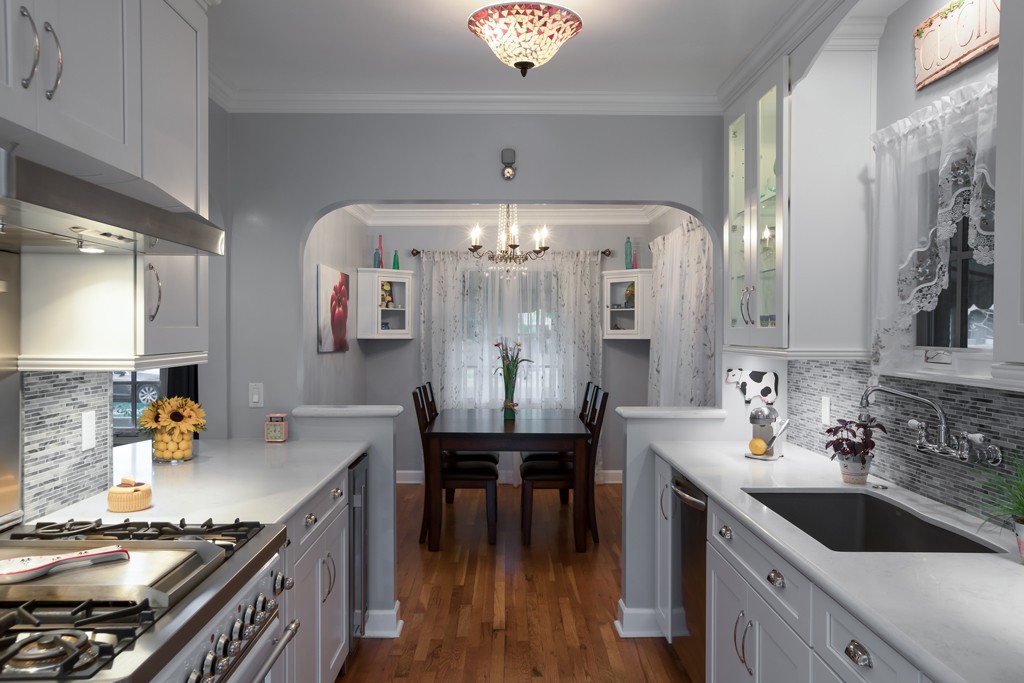
The doorway between the kitchen and dining room was also widened and framed with pony walls. This subtle architectural adjustment dramatically improved circulation between the spaces without altering the home’s original architectural style.
These changes helped the kitchen feel more open and integrated while maintaining the charm of a historic home.
Brightening a Dark Galley Kitchen
Before the remodel, the long galley kitchen felt enclosed and dim. Dark countertops and backsplash materials absorbed light, making the narrow space feel even smaller.
The redesign focused on brightening the room while preserving a timeless aesthetic appropriate for the home.
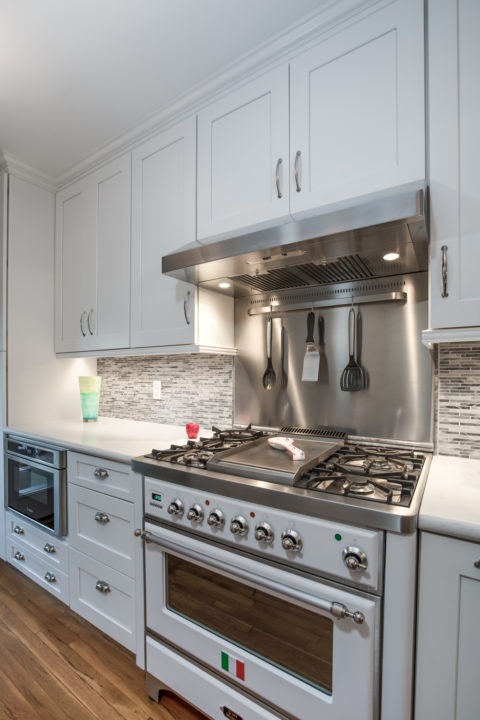
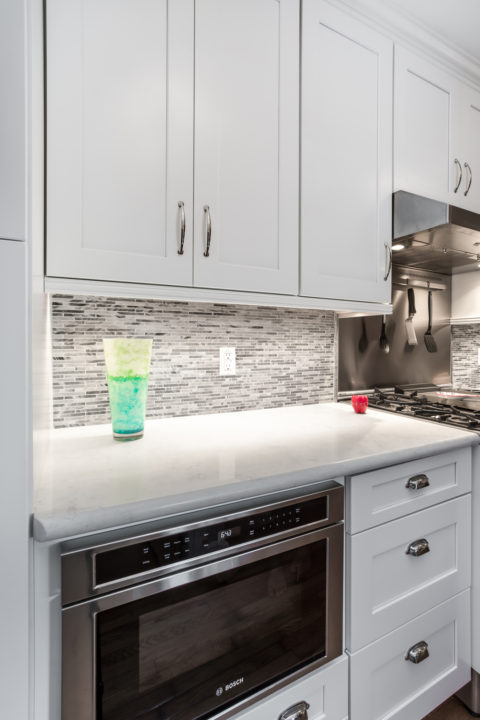
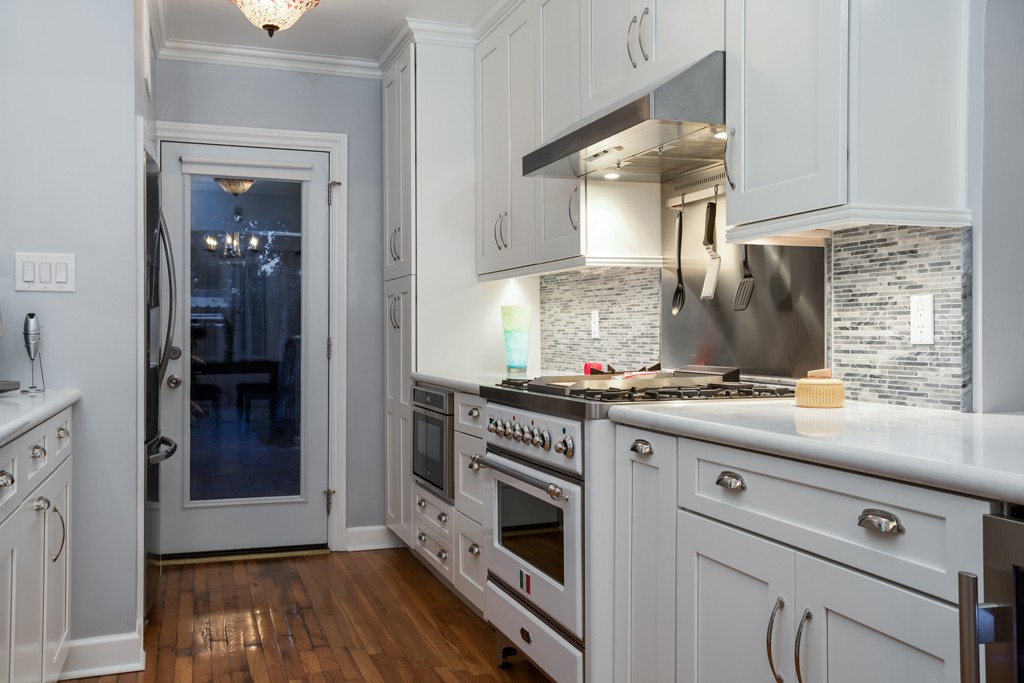
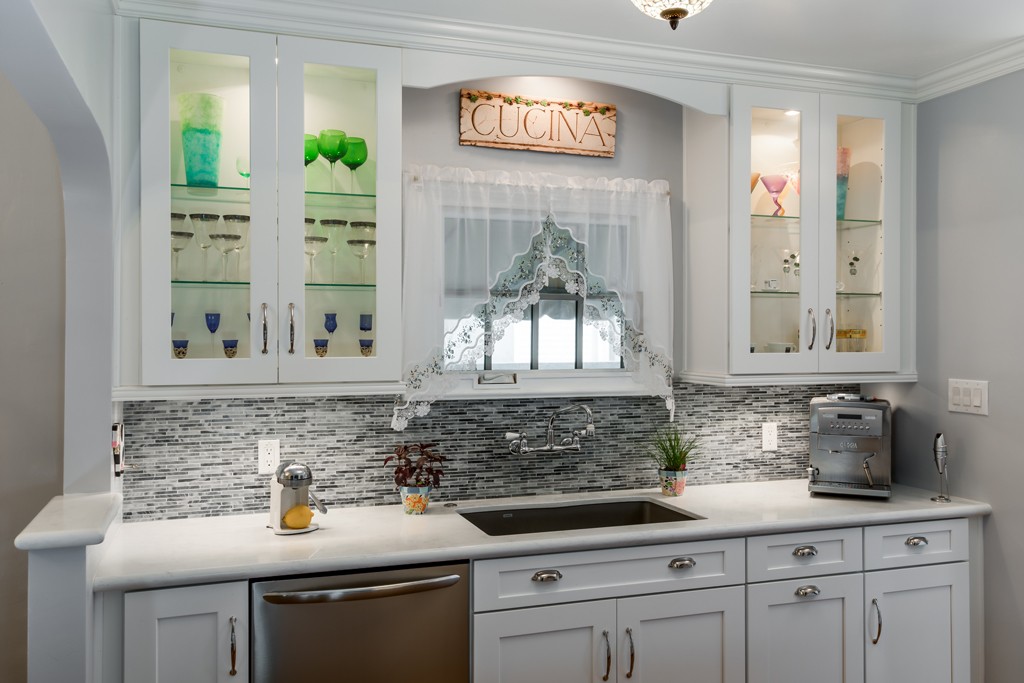
New painted shaker-style cabinetry in a soft linen tone immediately refreshed the space. Extending the cabinetry all the way to the ceiling increased storage capacity while eliminating the visual clutter that often appears above standard-height cabinets.
White quartz countertops were selected to further enhance brightness. The subtle veining in the quartz adds visual texture while reflecting natural light throughout the kitchen.
Together, these finishes transformed the once dark kitchen into a bright and welcoming environment.
A Stone Backsplash as the Design Focal Point
While the cabinetry and countertops provide a clean foundation, the backsplash became the kitchen’s visual centerpiece.
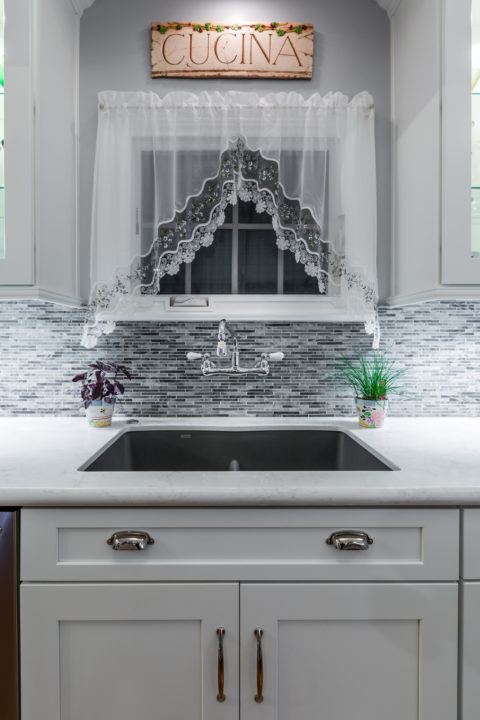
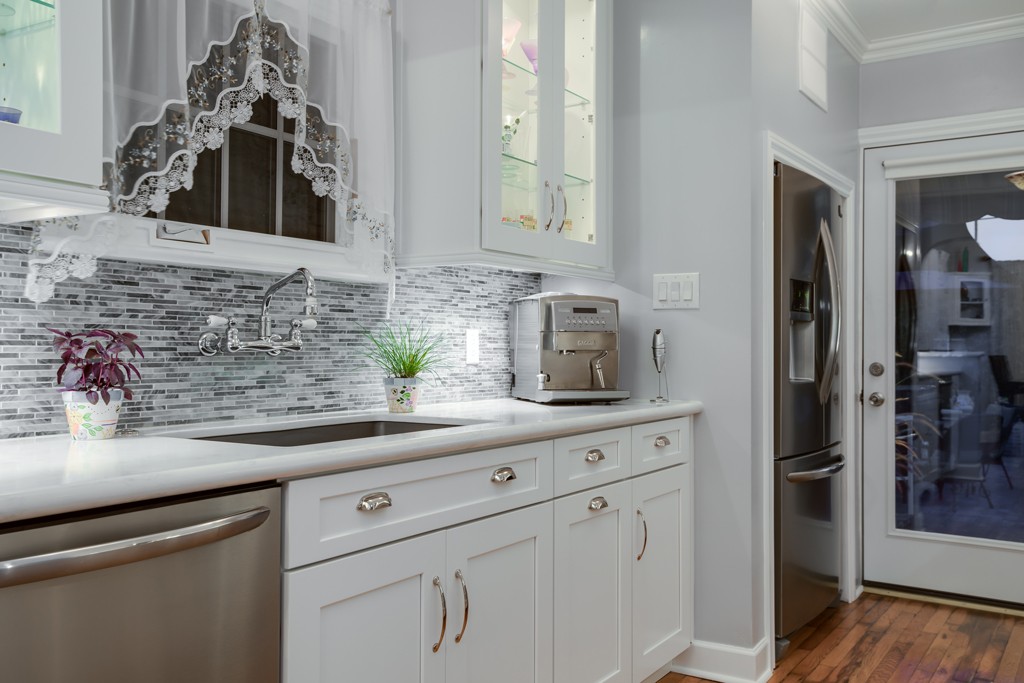
A stacked stone backsplash was installed using shades of white, gray, and taupe. The layered stone adds depth and dimension while complementing the neutral palette used throughout the cabinetry and countertops.
Because the backsplash carries strong visual texture, the surrounding elements were intentionally kept simple. Smooth quartz surfaces and classic cabinet profiles allow the stone to remain the focal point without overwhelming the space.
The result is a kitchen design that feels both modern and timeless.
Vintage-Inspired Details That Respect the Home’s History
Preserving the character of the home remained a priority throughout the renovation.
Cabinet hardware was selected in a vintage style reminiscent of the late 1930s. These small details help the remodeled kitchen feel consistent with the rest of the home rather than appearing like a modern insertion.
A wall-mounted kitchen faucet with porcelain handles reinforces the historic influence while adding a charming focal point near the sink.
The project also required replicating original millwork details throughout the space. Crown molding, baseboards, and trim were carefully matched to the home’s existing architectural style. These elements ensure the finished kitchen feels authentic to the home’s era.
Smart Storage and Appliance Improvements
Even though the kitchen footprint remained compact, the renovation significantly improved functionality.
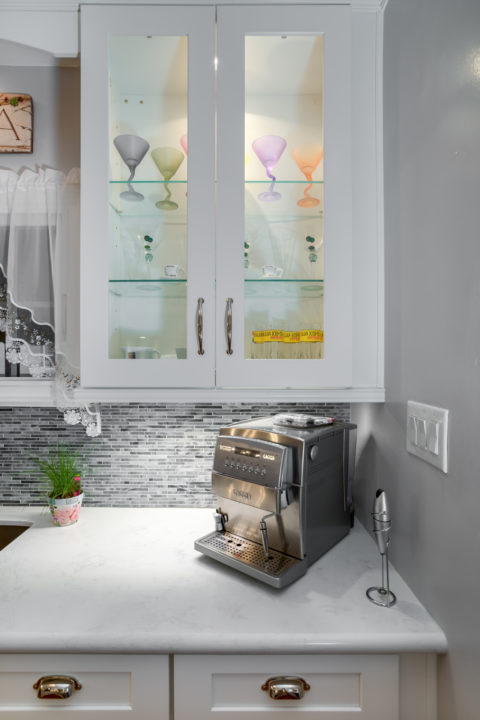
Extending the cabinetry to the ceiling created additional storage for cookware and pantry items. Glass-front cabinets were incorporated to display glassware and decorative pieces.
A new under-counter wine refrigerator was installed near the pass-through opening, giving the homeowners easy access to beverages when entertaining guests.
The kitchen also received upgraded cooking appliances, including a larger gas range that better supports the homeowners’ passion for cooking. Installing the new range required running a new gas line and installing a ventilation hood to ensure proper air circulation.
These updates allow the kitchen to function more efficiently while supporting the homeowners’ lifestyle.
Lighting That Enhances the Entire Space
Lighting improvements played a major role in making the kitchen feel brighter and more welcoming.
In addition to existing ceiling fixtures that reflect the home’s vintage character, modern LED lighting was introduced throughout the space.
Under-cabinet LED strip lighting now illuminates the countertops and highlights the texture of the stone backsplash. Interior cabinet lighting creates a subtle glow inside the glass-front cabinets, showcasing dishware and decorative items.
Together, these lighting layers create both practical functionality and a warm visual atmosphere.
Overcoming Hidden Challenges in a Historic Home
Historic renovations often reveal unexpected issues once construction begins.
During demolition, the team discovered an outdated electrical system hidden behind the pantry cabinetry. The old fuse panel had to be replaced with a modern 100-amp breaker panel capable of safely supporting the upgraded appliances.
Plumbing also required attention. Galvanized pipes beneath the sink were replaced with modern copper supply lines to improve reliability and longevity.
Another challenge involved blending new wood flooring with the existing hardwood floors in adjacent rooms. The installers carefully “tooth-in” the new boards so the flooring appears continuous across the entire space.
These hidden improvements ensure the kitchen functions safely and efficiently for many years to come.
A Kitchen Designed for Gathering
Today the kitchen feels dramatically different from the space that existed before the remodel.
The once narrow galley kitchen is now bright, welcoming, and connected to the surrounding living areas. The new pass-through encourages conversation between rooms, the widened doorway improves circulation, and the updated finishes bring timeless elegance to the historic home.
Most importantly, the kitchen now supports how the homeowners truly live—preparing meals, entertaining guests, and sharing everyday moments with friends and family.
This 2018 CotY award-winning kitchen remodel in Phoenix’s Willo Historic District demonstrates how thoughtful design and skilled craftsmanship can breathe new life into a historic home while preserving the character that makes it special.
Related Historic Remodeling Projects
Homeowners interested in historic remodeling may also enjoy exploring:
- Award-Winning Spanish Colonial Kitchen Remodel in Willo
- Historic Spanish Colonial Exterior Remodel in Willo
- Award-Winning Bath Remodel in Willo Historic District
- Historic Home Renovation in Phoenix’s Willo Neighborhood
Project Specifications
| Specification | Details |
| Project Name | Historic Galley Kitchen Remodel |
| Project Location | Willo Historic District — Phoenix, Arizona |
| Home Style | Historic 1938 Willo Home |
| Project Type | Historic Kitchen Remodel |
| Remodeling Method | Design-Build Remodeling |
| Builder | Homework Remodels |
| Completion Year | 2018 |
| Recognition | 2018 NARI Contractor of the Year (CotY) Winner |
| Special Features | Arched pass-through opening, stacked stone backsplash, ceiling-height cabinetry, quartz countertops, under-counter wine refrigerator |
HISTORIC WILLO KITCHEN REMODELING
For high-end home design, build, and remodeling in the greater Phoenix area that reflects your vision, Homework Remodels will help you love your home again. Start your project by calling us at (602) 478-5102 or emailing steve@homeworkremodels.com to discuss your remodeling project. We offer no-obligation in-home consultation. Our NARI-certified award-winning designers and craftsmen are eager to work with you to make your vision for your home a reality! To help you plan your remodel, you can find informative blogs on our website here.